
Introduction
Recognizing, conserving, and developing local culture is crucial for maintaining community and species diversity, preserving knowledge systems, and protecting ecosystems. As a historically agrarian society, China has long organized social and economic life through the village. Liang Shuming has argued that imaginaries of the Chinese nation remain closely tied to the village (Liang, 2021), despite various periods of modernization that have transformed the country over the last 150 years.
Going back to the late 19th century, but specifically more recently since China’s reopening in the late 1970s, modernization and urbanization have led to dramatic changes. These changes have resulted in regional imbalances and a deepening of the divide between rural and urban, with the dominance of capital in big cities causing significant resource depletion in surrounding areas. Meanwhile, the homogenization and standardization of spatial practices such as architecture have diminished people’s sense of place and belonging. In agricultural societies such as China, the homeland has historically been a site of cultural identity. Disconnection from one’s homeland entails not only separation from life-sustaining land and nature, but also from cultural traditions and historical memories accumulated over millennia. Such disconnection, particularly on a spiritual level, is often seen as a root cause of atomization and alienation experienced in China. While this study focuses on China, similar challenges can be found globally.
As the Chinese countryside has become a national strategic priority and focal point of public discourse, it has also become an interdisciplinary platform attracting actors from diverse fields. These engagements have led to renewed proposals for urban–rural integration and community reconstruction, aimed at revitalizing cultural traditions and addressing contemporary societal fragmentation (Deng et al., 2016). Under the impetus of rural reconstruction as state policy, a range of fields such as architectural design (He, 2018), landscape (Tian, 2016), tourism development (Wen & Xiaomei, 2025), heritage conservation (Huang & Yinglan, 2023), and industrial planning (H. Liu, 2018) have increasingly participated in shaping rural development. Such dynamics are not without tension since they are oftentimes bound to rely on an outside-in model of involvement that runs the risk of failing to recognize and leverage the nuances and complexities of the specific locality. In response to this, more immanent approaches oriented towards ecological symbiosis have attained a broad level of consensus (Xiao, 2024). Current discourse revolves around questions of how, e.g., locality and indigeneity (本土性) (Zhang, 2021) and authenticity (原真性) (S. Liu, 2023) inform the dynamic of practice and implementation on site. Addressing these issues requires a return to Chinese cultural and aesthetic traditions for conceptual grounding and for activating their potential for renewal. Central to this is the idea of “home” as a foundational ontology being realized in the locus of the countryside (Ji, 2024) as both affective ontology (情本体) and the ontology of home (家本体), combining both feeling and belonging in the foundation of traditional Chinese metaphysics, value orientations, and aesthetic dispositions (Zhang, 2021).
Since the early 2000s, in the latest wave of rural construction in China, architectural intervention has become a key component within broader social, cultural, and economic programs. Early exemplars such as the Xucun Project (许村计划) (Xiang, 2025) and the Bishan Project (碧山计划) (Zuo, 2019) are widely cited for reactivating traditional rural architecture while simultaneously reconfiguring its operational logics. Discourse emerging from these projects regards rural architectural knowledge as a situated, indigenous technology (Xiong, 2020), which is critical for preventing the erosion of vernacular characteristics that homogenize the relational ontologies of rural cosmologies into a universalized whole and thus erase rural subjectivity. More recent case studies, including the Cangdong Plan in Kaiping, Jiangmen (Tan & Yimin, 2017) and the Anonymous Construction Society’s initiatives in Qiandongnan (Chen, 2021), reflect diverse strategies for integrating local craft practices and situated knowledge. The Anonymous Construction Society undertakes ethnographic studies of vernacular timber construction in southern China and advocates design approaches that are locally and ecologically attuned. In this context, it cites Bernard Rudofsky as an early precursor in architectural discourse on premodern design, adaptability, and cultural specificity (Rudofsky, 1987).
In what follows, we examine the Zhouqian Art Community (ZAC) in Zhouqian Village, Shixing County, Guangdong, where artistic rural construction manifests through the overlap of spatial design, architecture, and artistic initiative. We use this case to analyze the dynamics of locality, kinship, moral order, and homeland, grounding the discussion in Chinese cultural history and metaphysics. From this situated analysis, we develop the garden as an expanded, interdisciplinary framework for reimagining urban–rural relations in their technological, ecological, and cosmological dimensions.
Methods
The authors have been involved in aspects of planning and early facilitation of the ZAC and in research on-site in Zhouqian Village. Pan Mingcong has been an integral part of the team throughout the planning, construction, and operational stages. Michael Just has participated in fieldwork and events on various occasions over the course of the process. This role afforded unusually close access to decision processes and participants. To mitigate interpretive bias, we cross-checked field observations with interviews and public records and used participant validation with residents for feedback.
We take participation as the starting point for a post-qualitative (St Pierre, 2017) methodological framework that is performative, grounded, embedded, relational, and centered around lived experience. Our method places ontological perspectivism at the core of an anthropological research practice beyond the human and emphasizes that locality, ethics, epistemology, ontology, and technology are mutually constitutive. We summarize this integrated stance as cosmology. This anthropological research practice, which intersects with artistic research as artistic rural construction, is understood as a worlding practice focused on the event, not on objects or representation (Fox & Alldred, 2015). The core research questions we investigate are not based on pre-formed code but are underpinned and enacted through diverse enabling constraints: what may amplify a body’s agency, what relations are made possible or are foreclosed, and which capacities are enabled or limited? (Fox & Alldred, 2022). This research approach, furthermore, draws on participant observation, socioeconomic analysis, archival research, and interviews, but we leverage these methods within a relational, perspectival onto-epistemology rather than as mere conduits for decontextualized data extraction. Although there is an overlap with grounded theory in its emphasis on engagement and emergence, its objectivist orientation treats categories as discovered rather than co-constructed while minimizing reflexivity, which does not align with our constructive realism (Wallner, 1994). Constructivist grounded theory (Charmaz, 2014) and situational analysis (Clarke et al., 2018) offer reflexive heuristics that may bring social constructionism and constructive realism into relation. We do not take a comparative approach in what follows, but rather focus our analysis on the ZAC and, from this situated case, articulate speculative, relational insights into rural–urban dynamics and rural reconstruction.
The Rural Reconstruction Movement (RRM) emerged in China in the early 20th century as a response to the challenges of modernization, such as the disintegration of communities and rural poverty. This culture–land connection appears in key movement texts such as Liang’s Theory of Rural Reconstruction (Liang, 1937). While the RRM involved scholars and activists of various disciplines as an interdisciplinary movement, it has also had a specific impact on socially oriented artistic practice in China. By facilitating transformative change from within, rather than its imposition from the outside, artistic rural construction is an interdisciplinary practice based on sustained and close engagement with local communities, involving diverse fields of the social sciences and humanities. Emphasizing traditions and ways of life as relational, artistic rural construction treats restoration as necessarily collaborative, reflecting the complexity of its entanglements. Artistic rural construction should thus not be reduced to a method since its operational schema is not predefined and cannot be readily applied. Rather, it could be approached as what Gilbert Simondon calls a technics, a mode of co-evolution that transforms the abstract environment into an associated milieu conducive to individuation (Simondon, 2017).
Homeland, Cosmology, and Rural Reconstruction
Genealogies of Homeland
In classical Confucian thought, moral self-cultivation is linked to household and political order. “The Great Learning (Daxue)” (大学), sections 4–5 (Gardner, 2007, p. 5) expresses this as to cultivate the person, regulate the family, govern the state, bring peace to All-under-Heaven (修身齐家治国平天下). In late imperial and many rural settings, this ideal was realized through filial duty and elder reverence (孝), patrilineal descent, and ancestor veneration that bound individuals to households and to lineage corporations (宗族). In South China, lineages often maintained ancestral halls, genealogies, and ritual calendars, adding a corporate and ritual dimension to the notion of “family” that goes beyond the nuclear household (Ebrey & Watson, 1986; Faure, 2007; Freedman, 1966). Such forms of organization were, however, characterized by variations in household forms and differences in lineage strength by region and period. Rather than through a particular doctrine, family morality manifested through specific and situated dynamics of everyday obligations and ancestor rites (Ebrey & Watson, 1986; Ikels, 2004; J. Watson & Rawski, 1988). Fei Xiaotong’s “differential mode of association” (差序格局) describes these dynamics of obligations as graded, radiating outward from kin and native-place ties (Fei, 1992).
The shifting relations of family, lineage, and state form one genealogy of what is now called “homeland” (家园). In Chinese discourses, homeland carries layered cultural, historical, philosophical, and spiritual connotations. It can denote a place of origin grounded in ancestral lineage and Confucian kinship ethics; a realm of preservation and integrity, often idealized in contrast to the alienation of urban life; the nation-state as collective homeland (祖国); and more fluid, relational understandings resonant with Daoist notions of attunement to place and more-than-human harmonious coexistence. In these imaginaries, harmony (和) is often associated with the “ideal”, but this ideal should not be understood as an absolute state. Rather, it functions as a context-specific, cosmological approximation of mutual flourishing in difference: “seeking harmony without sameness” (和而不同) as stated by Confucius in the Analects 13.24 (Confucius, 1998, p. 168).
Rural Homeland as Relational Cosmos
A rural home, homeland in the sense of indigeneity, the relationality to land, knowledge, and tradition, is not a nostalgic imaginary but, in the words of Eduardo Viveiros de Castro, a project of the future (Viveiros De Castro, 2011). It is a complex network of relationships, an integrated community where economy, culture, cosmological order, and social life are organically intertwined. Fei Xiaotong’s Peasant Life in China (Fei, 1939) and Lin Yaohua’s The Golden Wing: A Sociological Study of Chinese Familism (Lin, 1948) both highlight the inside-out formation of relational ties as a key principle of organization in Chinese village communities. While such relationships have historically often been hierarchical and gendered in their Confucian orientation and grounded in kinship networks and the family unit, the rural homeland resembles an organic, ecological, and interconnected system whose self-organization, rather than governance from the outside, holds the key principles to its revitalization and transformation. The question of how to approach this revitalization touches upon a multiplicity of fields, reflecting the interdisciplinarity of the RRM as much as the planetary significance of the topic: Rural revitalization cannot be limited to economic and infrastructural development but is the reconstruction of a spiritual home beyond the human. Home is understood here primarily as a web of relationships that is tied to locality and cosmology in a cosmotechnical sense (Hui, 2018): homeland is thus not just location but rather an order of the world that implies specific ways of being, doing, knowing, making, and relating. What is to be revitalized is, indeed, an entire cosmos. Importantly, this process of revitalization must continually reinvent itself, along with a changing environment.
Spirit and Place
The spirit of place has profound implications in traditional Chinese cosmology. Whereas the genius loci in its Western origins developed in connection to the enlightenment and humanism as a primarily secular, cultural concept with anthropocentric connotations (Norberg-Schulz, 1979), the Chinese Spirit of Place is dynamic and relational, encompassing the co-evolution of humans, their physical environment, ancestors, and spirits. This connection between the physical world, humans, and the spiritual realm, as well as the moral, cosmological order of place, is expressed in the Chinese saying “Raise your head three feet, and there are divine spirits” (举头三尺有神明).
For Yi-Fu Tuan, “sense of place” indicates the meanings and attachments through which people transform space into place (Tuan, 1977). He notes that the land is inscribed with “the ancient story of the lives and deeds of the immortal beings from whom [the native] is descended,” so that “the whole countryside is his family tree” (Tuan, 1977, pp. 157–58). In this view, a village is not merely a physical site but an ancestral home as living genealogy.
A Third Path of Rural Development
The Qingtian Paradigm (青田范式) is a theoretical framework developed by the contemporary artist Qu Yan through long-term practice in rural China, particularly in Qingtian Village, Guangdong (2015–2021), following earlier work in Xucun, Shanxi (Qu, 2019, 2021). Qu articulates nine relational domains that underpin rural civilization, outlining a practical route to revitalization: (1) clan temples for kinship consolidation; (2) academies and schools for the transmission of learning; (3) deity temples for the cultivation of loyalty, righteousness, ritual propriety, and trust; (4) settlement form and hydrological systems for human–environment coupling; (5) village rites, covenants, and customary law for interpersonal order; (6) domestic architecture as an organizational principle for household lineage and home; (7) mulberry–fish-pond agriculture as an example of circular ecological sustainability; (8) craft and local production that represents human relations with artifacts and technology; (9) mutual aid mechanisms for material sufficiency and shared prosperity (Qu, 2021).
A central question in Qu’s project is how an artist-practitioner can help reactivate this relational web through long-term, embedded work that privileges co-production over external authorship. The intricate interdependencies and diverse situated knowledges of rural relationships imply that engagement cannot proceed from a single vantage but requires participation in everyday practices, shared maintenance, and collaboration with village institutions. Framed this way, rural reconstruction and its manifestation as artistic practice function as a critique of the alienating effects of urbanization and modernization. By analogy with Viveiros de Castro’s discussion of futures grounded in relational ontologies (Viveiros De Castro, 2011), the aim is not a return to a premodern past, but the articulation and recovery of other futures rooted in vernacular, extra-modern relations. As such, rural reconstruction carves out a third path of development, one that differs from both administrative governance and capitalist accumulation. Moving beyond the extractivism of both socialist and capitalist modernization implies a reconstruction of rural homelands in a way that fosters community-driven growth. In this framework, growth is not reducible to economic expansion but is an intensification of relations among people, land, and more-than-human life. It emerges not from extraction but from the capacity to relate in new ways.
Practice and Locality: The Zhouqian Art Community

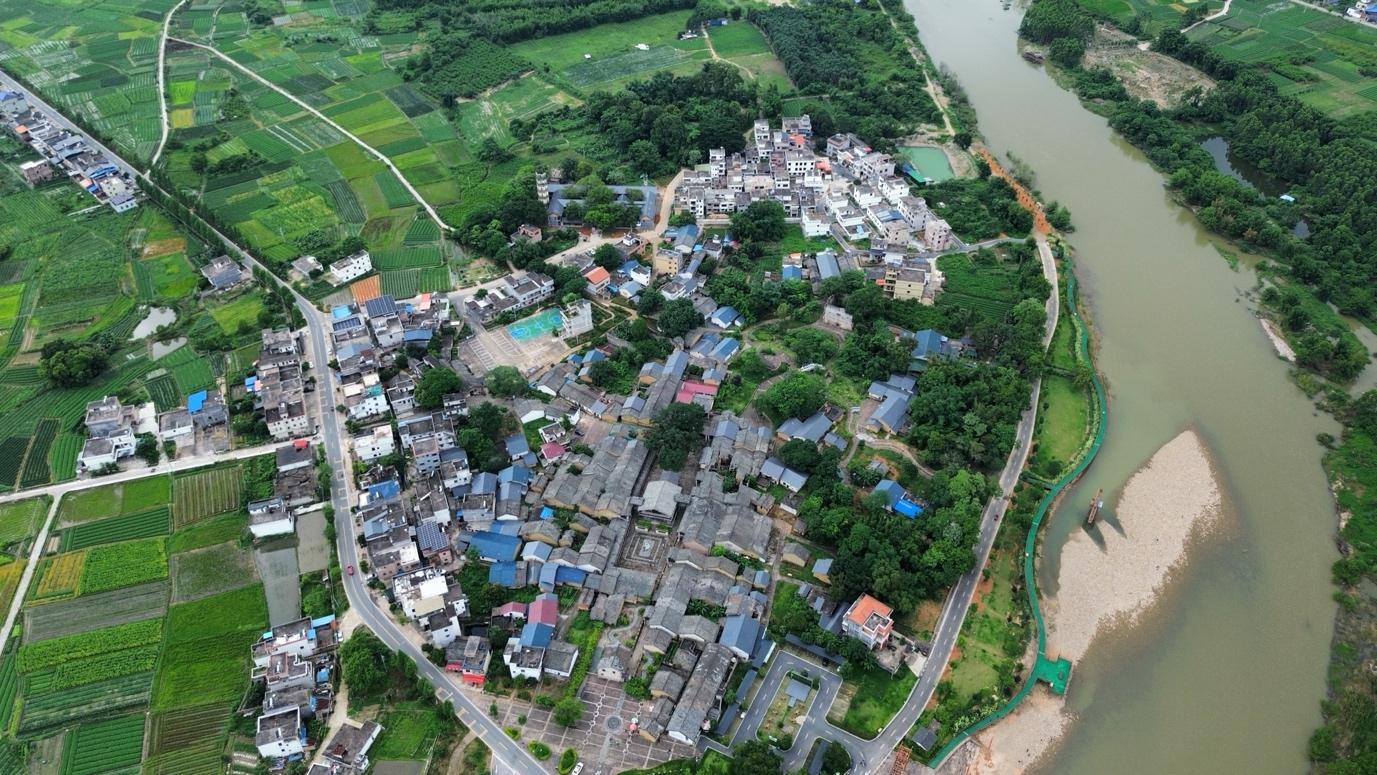
Zhouqian Village, located in Shixing County (northern Guangdong), is nationally listed as a “Traditional Village” and is characterized by river-valley topography, a relatively intact agro-ecological setting, and distinctive local cultural practices. In late 2022, the Shixing County government invited Qu to develop a revitalization concept for Zhouqian Village. The ZAC was designed under Qu’s direction in consultation with village representatives, local specialists, and collaborating organizations, while structural engineering and technical documentation were undertaken by the appointed contractor.
Zhouqian Village appears in the fifth batch of China’s “Traditional Villages”, one of six batches compiled between 2012 and 2019 and reportedly totaling 8175 villages nationwide (Ministry of Housing and Urban-Rural Development of the People’s Republic of China, 2019). Within this policy framework, Zhouqian Village’s renewal functions as a case study of artistic rural construction as the intersection of bottom-up cultural initiatives with administrative frameworks and funding mechanisms.
Architectural Lineage: Protective Boundary and Dynamic Interface
Shixing County is a hilly, mountainous region with constrained arable land. Local records describe a historical landscape of fortified settlements organized along community and lineage lines. Over roughly three centuries, from the late Ming to the mid-Qing, more than five hundred fortified enclosures (围楼) were reportedly constructed in Shixing, with approximately 249 remaining in good condition (Shixing County Government, 2025). Typical assemblies include perimeter stone walls approximately 0.8–1.2 m thick with loopholes, a limited number of gates, and corner watch elements. Inside, timber structures subdivide narrow bays for living and storage, and infrastructure such as wells and granaries supports prolonged refuge during periods of conflict.
Outside the enclosures, villagers commonly occupied earth-brick dwellings with timber frames and tiled gable roofs. At the center of residential clusters, the ancestral hall (祠堂) enshrined common ancestors and functioned as a venue for festivals, rituals, and lineage governance. With increasing regional stability, the defensive role of the enclosures has largely diminished, and numerous examples have deteriorated or were repurposed. Simultaneously, the uptake of reinforced concrete, blockwork, and standardized roofing accelerated a shift from communal family living arrangements to predominantly nuclear units. Despite these changes, ancestral halls remain durable institutions organizing ritual life and clan authority. This settlement regime grounded daily life both physically and spiritually: the enclosure supplied physical defense and spatial consolidation, while the ancestral hall structured ritual practice and corporate decision-making.
In contrast, the market in Zhouqian Village presents a more open, inclusive, and collaborative space. For roughly three centuries, it functioned as the local marketplace and ceased regular operation in the middle of the last century. The remaining structures, such as market square, adjacent buildings, and frontages, serve as a template for architectural reuse and public-realm programming. Reactivating the market as a public interface allows for periodic trading, performances, and communal events, and resident–visitor and urban–rural exchange. The long-term viability of this dynamic is contingent on management that privileges local vendors, small food operators, and equitable access over short-term tourism gains.
The enclosures, ancestral halls, and marketplace, even though many are now partially detached from their original functions, together exemplify a crucial dynamic of calibrated openness and regulated interaction. At one pole, fortified enclosures maximize closure, limiting destabilizing intrusions; at another, the marketplace foregrounds openness, exchange, and encounter. Ancestral halls occupy an intermediate position, reinforcing internal cohesion while remaining selectively permeable to guests, deities, and external authorities. Long-term persistence relies on forms of closure that maintain identity and filter disruptive forces, while ongoing evolution depends on openings that sustain reciprocal relationships and enable adaptation to changing social and environmental conditions. In what follows, we show how a design approach for Zhouqian Village draws on this historical intelligence embedded in built fabric, spatial organization, and everyday practices. The approach develops interfaces that mark local identity and cosmological order yet remain porous and locally governed, thereby supporting sustained environmental coupling between the community, its architectures, and the wider socio-ecological context.

Background and Lingnan Inspiration
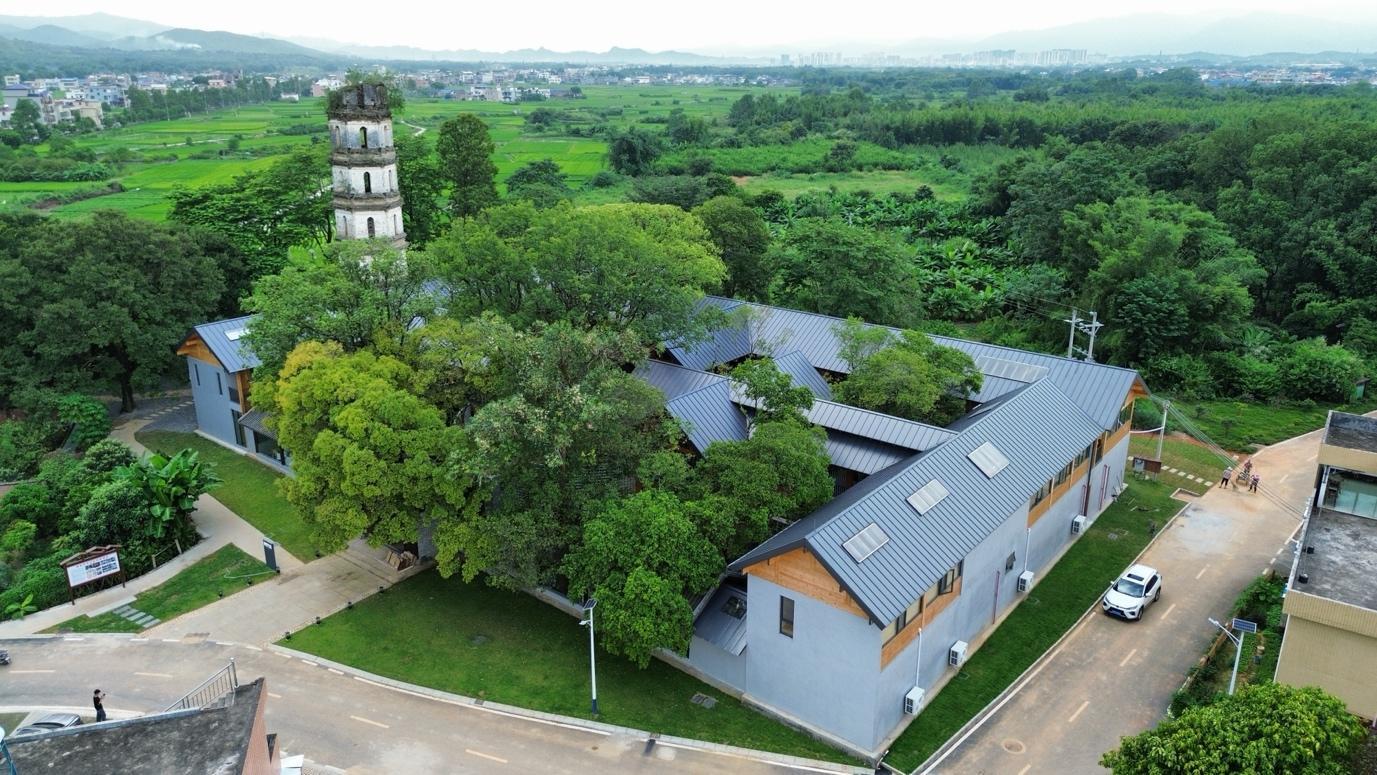
The ZAC spans approximately 3,000 m², with the main building designed as a rectangular structure facing south. It measures 63.9 meters in length from east to west and 33.8 meters in width from north to south, encompassing an enclosed area of about 2,000 m². A Ming Dynasty pagoda (1592) stands on the site’s western side as the remaining trace of a temple that occupied the grounds from around 1500 until the 1950s, when the site was converted into an elementary school. The concept underpinning the transformation of the abandoned Zhouqian elementary school into the art community is based on the creation of a new model of Lingnan garden, distinct from both the grandeur of Chinese imperial gardens and the refined Jiangnan/Suzhou tradition. Lingnan (岭南) is indicative of the area “south of the Nanling mountain range”, anchored in Guangdong’s climatic and cultural context. The gardens are characterized by their compact yet intricate design, embodying the philosophy of “within a few feet, recreate heaven-and-earth” (咫尺之间,再造乾坤), the literati’s ability to capture the infinite, the vastness of heaven and earth (乾坤), within the finite. They also reflect Lingnan culture as vitality and the harmonious coexistence with nature through their emphasis on subtropical evergreen plants and year-round vitality. By incorporating these architectural and horticultural logics and aesthetics, the project seeks to cultivate dynamic, evolving place-making that allows the adaptive reuse of historical fabric to inform and intersect with ongoing community practice.
The restoration process, of which the physical structure of the ZAC is only the first step, is based on long-term, open-ended development. It began with a process of spatial analysis to assess the impact of a comparatively substantial development project on village dynamics, followed by the renovation of the site of the former elementary school and the evaluation and selection of various parts for preservation and integration. While the steps to open the ZAC in August 2024 necessarily followed clear guidelines, the design of its operations is an ongoing process. Restoration of the village’s ecological environment, the ZAC’s integration with rural life, and the reestablishment of cultural spaces remain open-ended efforts for the years to come. The revitalization of the village landscape as tradition and renewal, located between its emergence from both the ground as earthliness and the sky as the heavens, is an approximation towards the contextualized ideality of the homeland cosmology encompassing locality, the moral order, and the spiritual.

Design, Structure, and Space
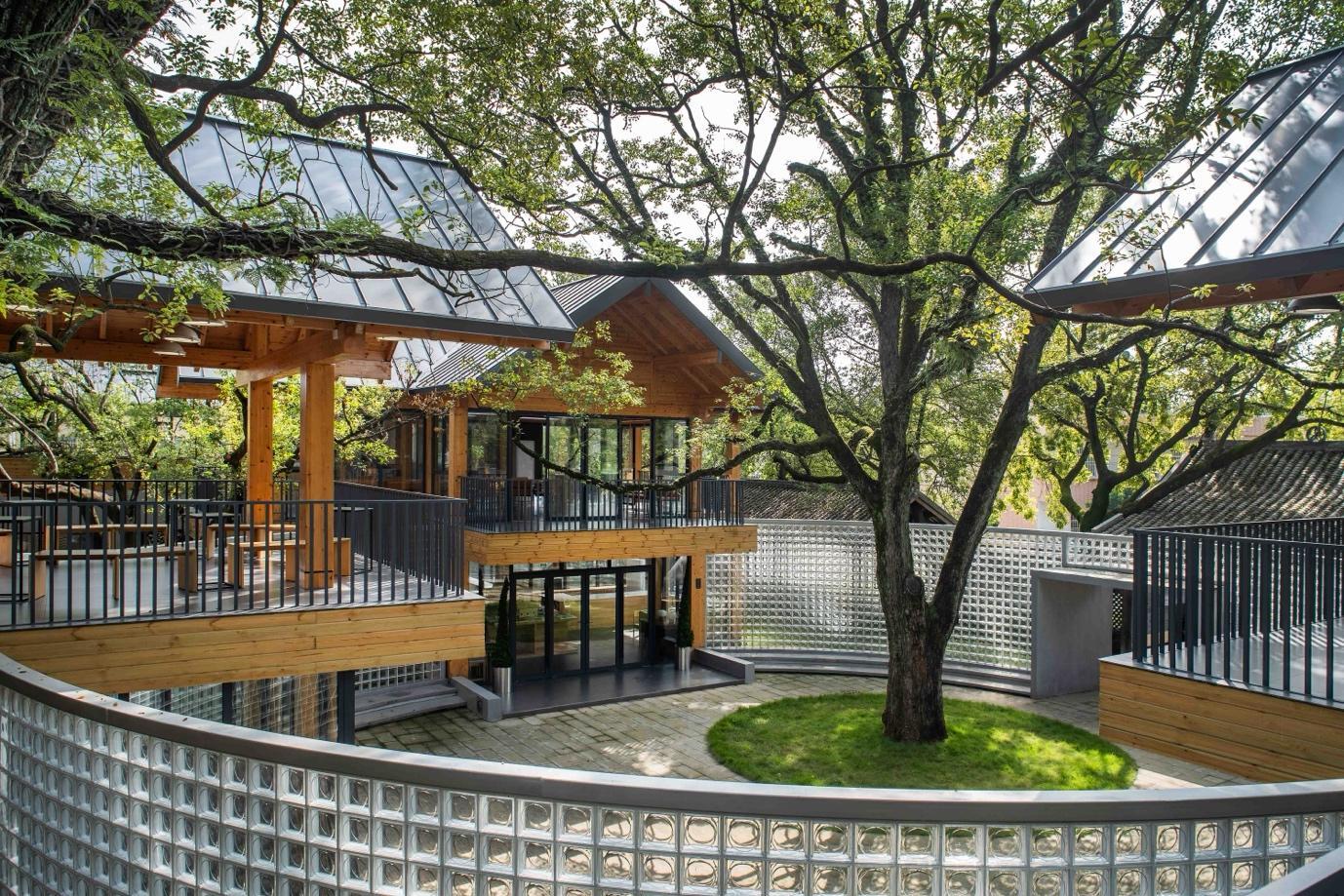
The design consists of a two-story building on a rectangular site organized around a central courtyard. A circular glazed curtain wall encloses the courtyard, creating a rounded inner elevation that reinterprets elements of the former elementary school. The second floor is supported by round timber columns, minimizing the visual obstruction of solid walls to increase visual porosity and enhancing indoor-outdoor continuity while maximizing space utilization. A traditional double-pitched roof is re-clad with a standing-seam aluminum-magnesium-manganese system to improve drainage and durability. Retaining the existing perimeter corridor preserves the school’s circulation diagram, enhances accessibility, and mediates between interior and exterior space. By preserving the principal façade and the main entrance, the project anchors new interventions in the inherited structure through a careful consideration of multiple and specific dimensions of village history.
The ZAC integrates various facilities as a mixed-use ensemble designed to operate interdependently rather than as stand-alone units. Activities afforded by these elements include: exhibition (village art gallery), learning and making (library, artist studios, handicraft workshops, rural study classrooms), food and hospitality (cultural and creative store, café, eco-kitchen, restaurant, teahouse, guest accommodation), and public meeting rooms (atrium, boat lounges, cypress gardens).
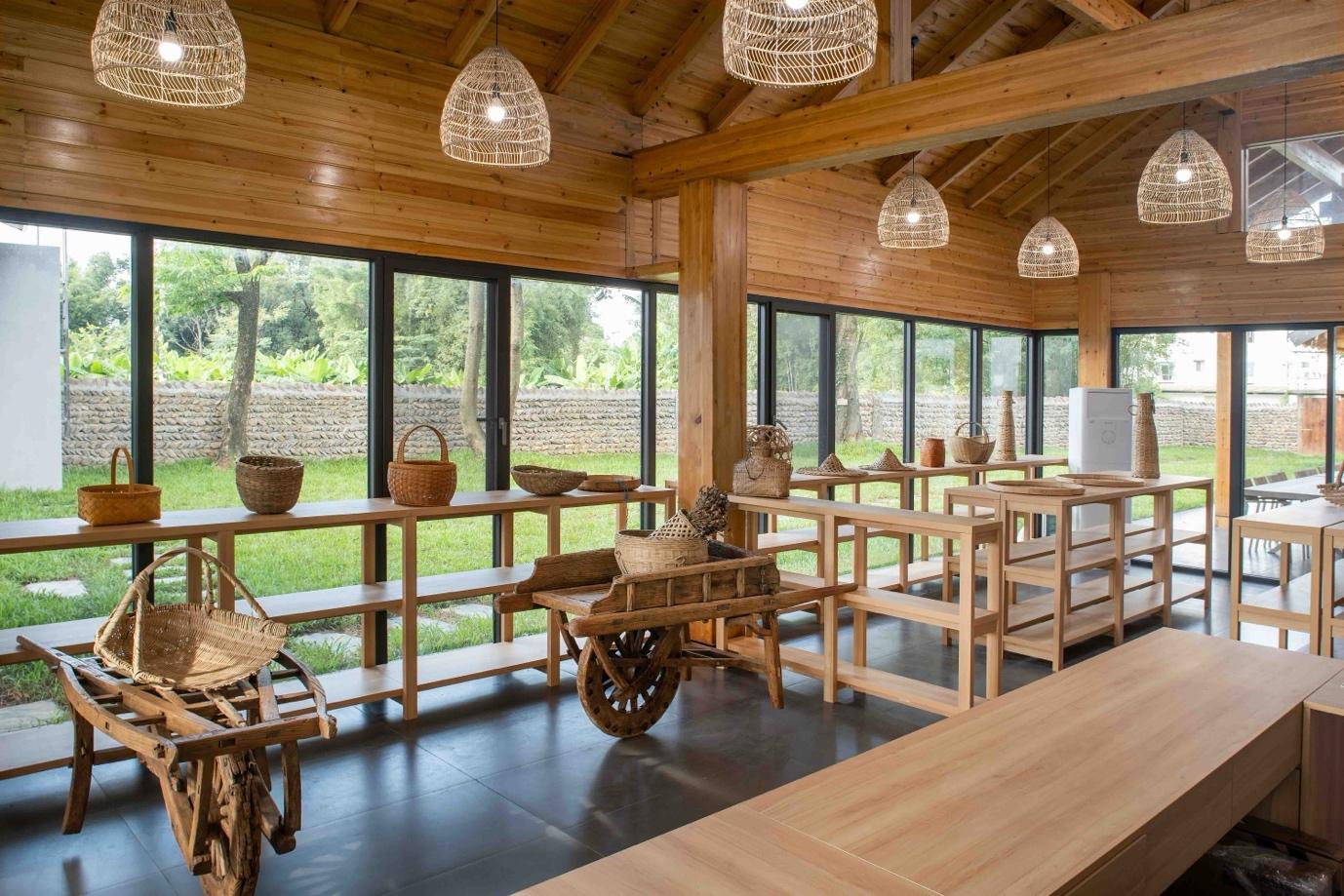
In the northern zone, four key clusters include the art residency, exhibitions, kitchen, and education. The study and education area includes a village library on the ground floor, while the first-floor houses classrooms and handicraft workshops where traditional folk-art instruments are displayed. The art residency consists of two artist studios, providing space for on-site creative practice. The food services offer cuisine made from locally sourced ingredients, and a communal eco-kitchen supports participatory cooking. The exhibition cluster includes the village art gallery, curated in alignment with the orientation of the larger program, and a cultural-creative store that offers agricultural products, handicrafts, and locally inspired artworks.
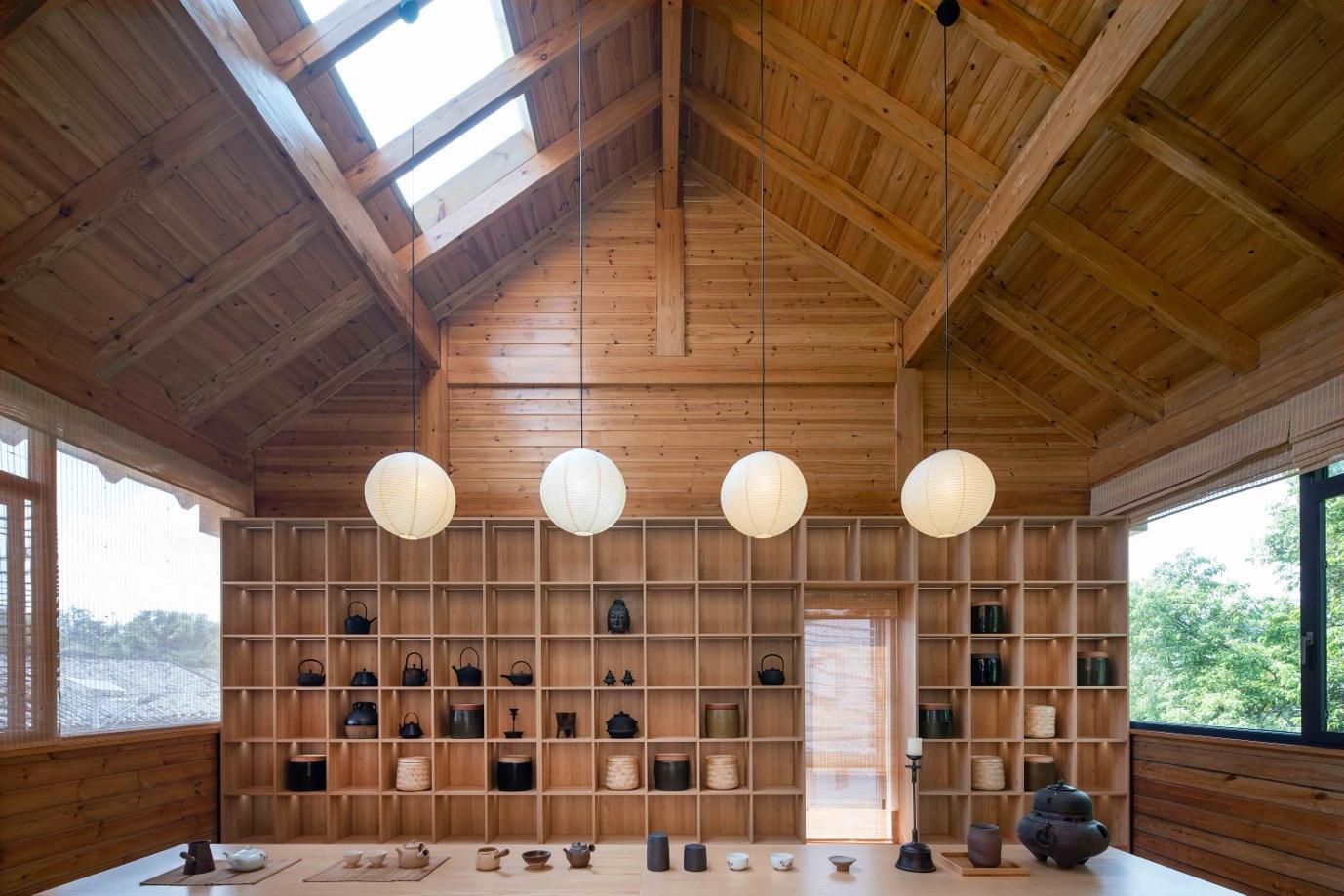
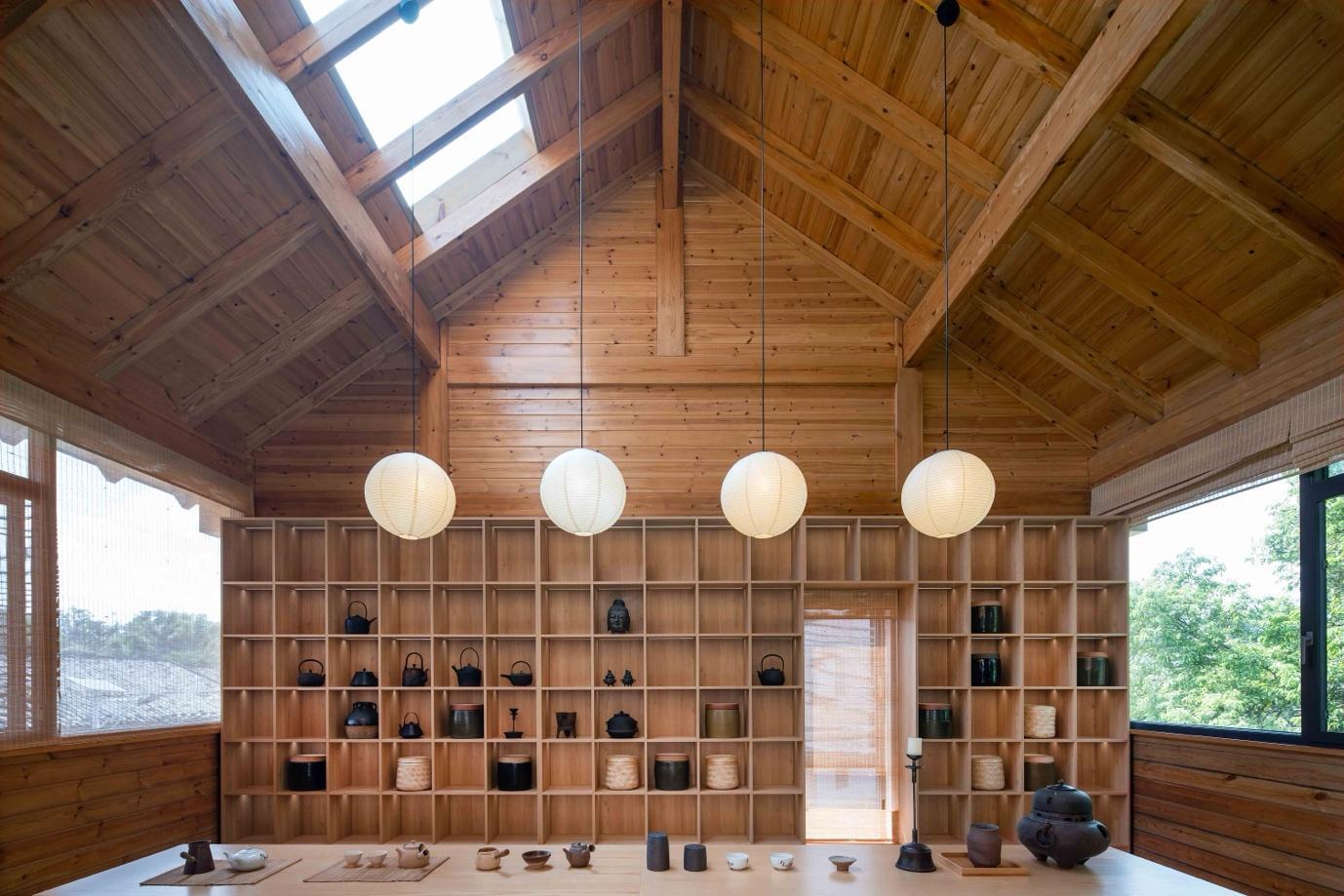
The east side includes the dining area, a traditional tea house and a café, while guest accommodation occupies the western zone. The original gatehouse of the elementary school is preserved with minimal structural intervention aside from necessary repairs and material replacement. Roof apertures accommodate existing trees that pass through the roof plane. The overall layout follows a circular flow, ensuring smooth accessibility from multiple directions and the maintenance of visual connectivity between program areas. This spatial connectivity follows Lingnan garden logics, emphasizing adjacency and shared circulation so that no single component operates in isolation.
Reclaiming Space – Producing Space
The site of the abandoned school, the reconfiguration of its layout, and the conceptualization of its transformation became the project’s point of departure. This transformation of rural architecture, aimed at the preservation of traditional culture while fostering new forms of rural life, can be understood as an instance of what Henri Lefebvre refers to as the appropriation of space (Lefebvre, 1991). It is not only a reversal of the homogenizing and commodifying tendencies of modernization and capitalist development, which render space a closed, abstract means for accumulation, but also a reinterpretation of the past that sustains space as a commons, constitutive of the production of relationships. In practice, this opens possibilities to support local artisan craftsmanship grounded in knowledge of the land and the intelligence of materials, to develop cultural and creative products, to host community-based cultural events, and towards a pedagogical approach that aims to connect ancient knowledge to current conditions.

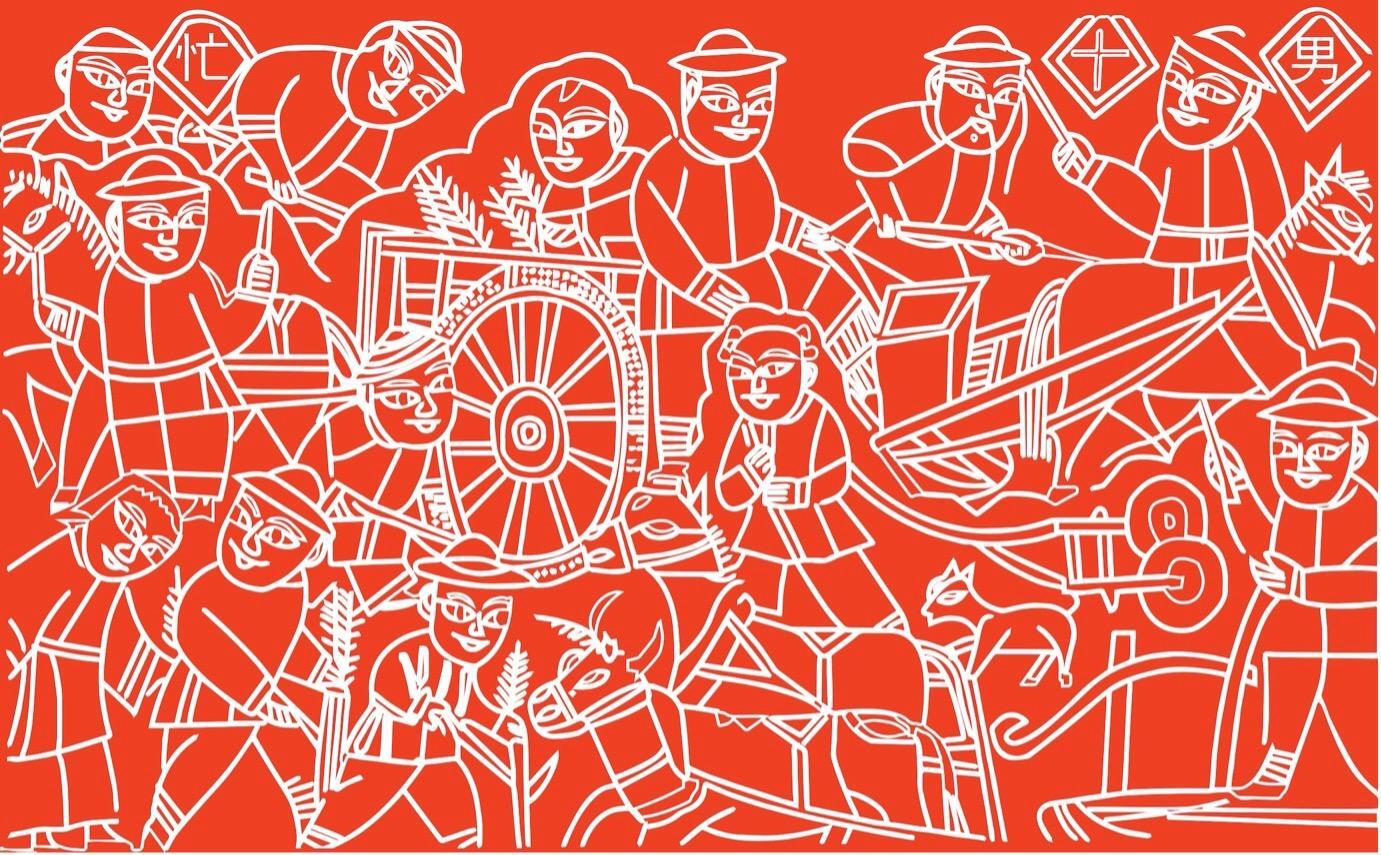
Through programmatic design, the ZAC prototypes modes of local exchange and everyday life. It seeks to strengthen ties among villagers and the land as an agro-ecological setting by coupling cultural production with agriculture, craft, and public space. The graphic design of the ZAC (Fig.5) translates folk-art conventions into continuous white linework against a monochrome ground. The composition interlaces farmers with animals, tools, carts, and crops as a single contour, visualizing how the human is intricately connected to, and indeed produced by, both the forms of technology and automation that arise out of local conditions and the diverse forms of life with which it coexists. The space that the ZAC intends to produce and call attention to is therefore not solely human, but a shared milieu in which humans, other beings, and technical systems each enact their own modes of worlding.
Rural Reconstruction
Folk Art, Material Knowledge, and Archival Practice
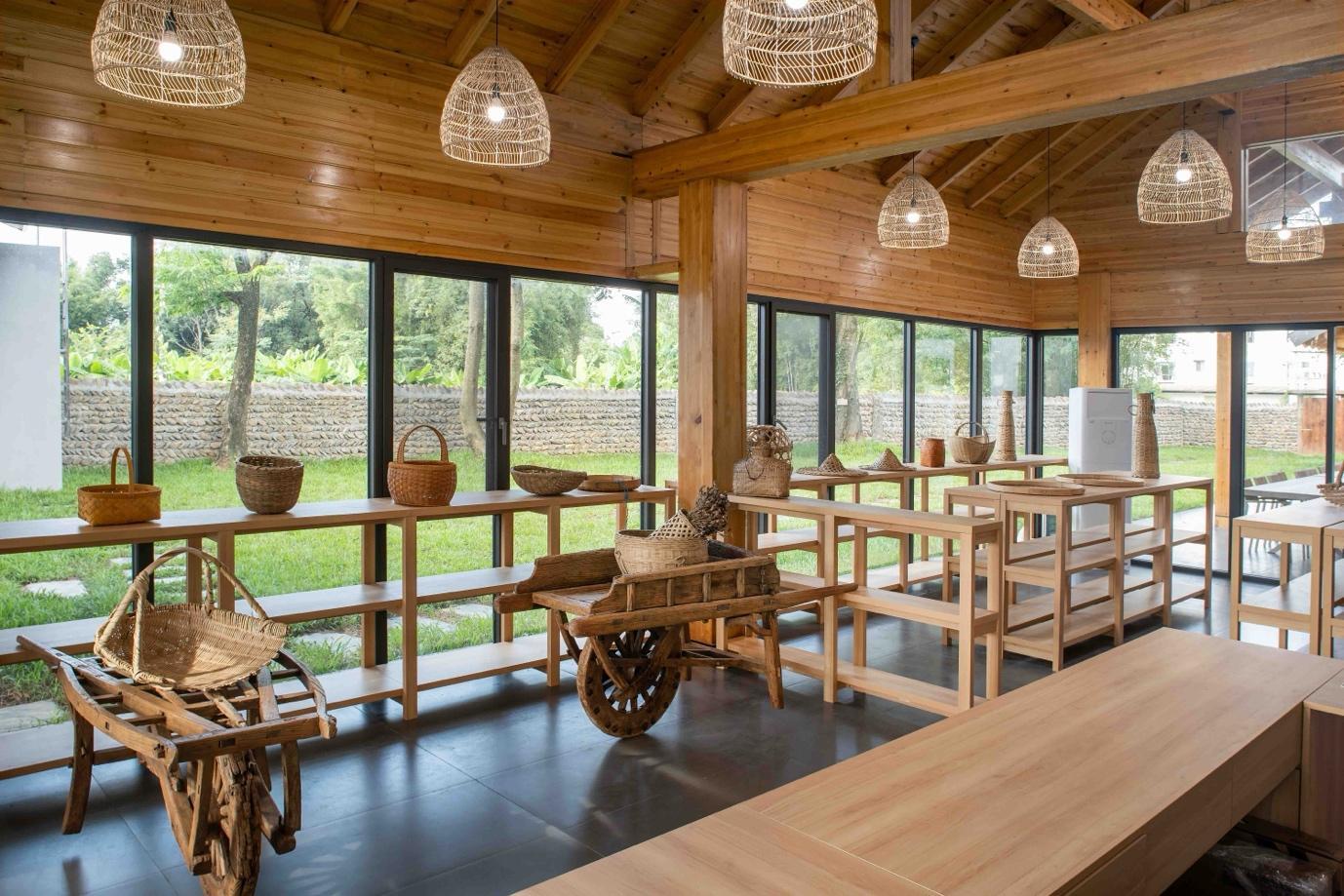
Folk-art, craft practices, and material culture have long structured rural life in China, but many traditions were disrupted in the twentieth and twenty-first centuries by industrialization, market integration, and schooling reforms. As mass production reduced the viability of handcrafted, small-scale making, the decline of communal rituals and collective work likewise eroded place-based knowledge embedded in materials and techniques. Recognizing the significance of this heritage for community building, intergenerational identity, and ecological knowledge is central to preservation and renewal. The approach adopted here combines documentation and conservation of material culture, tools, and artifacts with practice-based education such as workshops, apprenticeships, and courses that develop skills and repertoires. An archival program establishes a community-governed repository for objects, local materials, samples, manuals, and oral histories, with cataloging and digitization that link each entry to makers, sites, seasons, and techniques.
The conservation of tradition is not seen as preservation of the past but as a library for adaptation: embodied, materialized knowledge informing a dynamic and organic approach to inheritance and renewal. The transformation of matter into material and the fabrication, exchange, and sale of products are not primarily concerned with objects as static modes of persistence but become a relational practice in which matter is actively facilitating new ways of individuation through its affective capacities. Revitalizing the Zhouqian market, restoring its commercial vibrancy, and reintegrating folk craft into everyday life support both the revival of traditional handicrafts and the economic and cultural sustainability of the village. Here, art merges with a functionalism that locates its aesthetics not in tangible products and representation but in the ways of life implied in the economy that they are a part of. Culture is not being represented, but it is actively being produced.
In August 2024, the opening ceremony of the ZAC brought together academics, local officials, artists, and village representatives (P. Liu, 2024). The launch coincided with an exhibition of photographs donated by Qu Yan, Weng Fen, and He Chongyue that document rural life in different periods and locations across China (P. Liu, 2024). Later that year, an international conference held at the ZAC (SICRI Network, 2024) included events and performances in the former market square with a close integration of villagers. The events temporarily reactivated public space and gave strong indications of contributing to an increased sense of villagers’ trust in the institution. Community responses reported during and after the events included expressions of heightened place attachment and interest in further participation, though systematic assessment will require ongoing co-research with villagers to trace how relations evolve across the village’s socio-ecological assemblage.
The cultural program underpinning the very concept of the ZAC is framed as an inquiry into interdependence among place, livelihood, and artistic practice. For students and returning residents, exhibitions and workshops situate local craft and everyday aesthetics within broader debates on rural revitalization and transformation. The ZAC serves as a platform that supports both locally generated work and external projects, bringing together village participants with regional, national, and international collaborators. Partnerships with universities and research groups bring specific capacities and resources to the village under the assumption that cultural, artistic, and knowledge production on site contribute to village development and vice versa.
Artistic initiatives and traditional festivals periodically transform the village core into a dynamic social platform. Vernacular ritual practice, in which agency as the capacity to affect and be affected may be attributed to sites, objects, and nonhuman beings, is treated as an operational framework that organizes spatial use and stewardship. These events mobilize existing infrastructures such as the market square, ancestral halls, and water edges as interfaces that enable and intensify encounters between humans, nonhuman life, artifacts, and materials. The program creates opportunities to place local cosmologies in dialogue with diverse strands of current research, providing a scaffold for interdisciplinary inquiry in which event programming and spatial design define constraints that enable the lived experience of relations among human and more-than-human actors.
Education and the Preservation of Cultural Heritage
In Chinese intellectual history, the cultivation of knowledge and scholarship is central to the co-evolution of the self, ethical life, social order, and cosmological orientation. Confucian traditions frame knowledge as self-governance while Daoist strands emphasize embodied, immanent knowing realized through intuitive presence. Place-based education is a key element to rural revitalization and sustainable village development. In Confucian terms, this is moral cultivation oriented toward ren (仁), learning to act benevolently within networks of kin, neighbors, and local ecologies. Enabling young people to recognize the value of local rituals and traditions goes beyond standardized schooling and academia but requires the lived experience of immersion in village life and participation in its customary practices. Historically, private schools (私塾) formed the basis of rural education and assured the conveyance of village histories across generations.
The ZAC’s Cultivation and Study Hall and the Village Academy function as sites for situated teaching and collective practice. They bring together students from local and regional schools and universities for learning, archival work, and community workshops. In addition to preserving this educational tradition, the academy offers courses on rural culture and creativity, ecological food systems, traditional village studies, and pottery making. Knowledge is embedded in material, locality, and practice, and expertise resides first with villagers. They are actively involved as teachers, engaging not just students but diverse participants from local, regional, and international backgrounds, creating a comparative space to reflect on rural futures beyond the Chinese context.
Finances and Investment
The ¥14 million construction cost was funded by the Shixing County government (P. Liu, 2024), which remains the primary stakeholder. A long-term partnership ensures day-to-day operations are managed by a government-affiliated company, whose main source of revenue comes from official events hosted on site. Funds are then allocated to sustain ZAC’s ongoing educational, cultural, artistic, and academic programs. This funding and governance pattern reflects a broader dilemma in rural investment: Chinese governments at all levels have provided public funding for the countryside for more than a decade (General Office of the State Council, 2023). However, when decision rights and revenues stay centralized, the internal potential for self-organization, renewal, and creative expression of the countryside may be inhibited rather than activated. In response to a dynamic where both too much and too little support can be equally problematic, the ZAC proposes art-led programming as an operational interface between administrative objectives and village priorities. Activities are co-designed with villagers, budgets are distributed locally, events are inclusive and publicly advertised, and visiting practitioners work in paired roles with village mentors.
The ZAC’s operating model relies on public finance and community-based operation. Tourism and service revenues benefit the county, but noncommercial programming depends on designated support from higher levels of government. This dependence links cultural operations to intergovernmental transfers and urban tax revenues, a common feature of China’s mixed economy. The arrangement underscores a public-service orientation but also raises questions about financial sustainability, local revenue sharing, and benefit reinvestment.
External recognition and official site visits may facilitate continued funding, but such signals are secondary to the inside-out dynamics of sustainable governance and community participation. The strategic role of artistic rural construction is to direct funds into lasting spatial infrastructures and shared routines rather than one-off events. Place-making in this sense involves grounding new programs in existing institutions and embedding them into the daily routines of the community. Community participation has evolved over time. The initial caution, particularly among elderly villagers, is consistent with a history of top-down projects, but subsequent engagement has increased as programs demonstrated continuity and inclusivity. Villagers’ participation and agency in revitalizing local culture are central to place-making and are supported through clear roles in programming, maintenance, and benefit distribution.
Relationship-Building, Local Co-Creation, and Ethics
Establishing a Multi-Stakeholder Consultation Mechanism
From the first site inspection at the former Primary School (8–9 Nov 2022), through the design and conceptualization led by Qu (Nov 2022–May 2023) and the start of construction (June 2023), to the opening (31 Aug 2024), the development advanced through successive rounds of coordination among county and township authorities, village representatives, and external partners. The Guangzhou Academy of Fine Arts (GAFA) joined as a partner in organizing teaching on site (late Sept 2024), supporting documentation and outreach (Oct 2024), and co-hosting the “From Mainland to Islands” conference (1–6 Nov 2024) (SICRI Network, 2024). In 2025, GAFA and ZAC launched a government-funded cultural-creative program, while a state-owned hotel company assumed day-to-day site operations. Stakeholder involvement progressively broadened over time to include officials, village elders, and youth, local businesses, designers, and educators.
Negotiating diverse stakeholder priorities was essential to completing the initial phase, but it also revealed the need for a robust consultation mechanism. This consultation mechanism is rules-based and institutionalized, but likewise is intended to remain flexible and adaptive. Representation includes county and township officials, village committee members, and respected elders, youth delegates, local business and cooperative representatives, and external practitioners and educators in arts and culture. Meetings are held regularly and are publicly posted. Decision criteria are agreed in advance and revised annually. They cover ecological operation and maintenance costs, community integration, external relations, protection of the site’s historical fabric and sacred presence, fair local share of revenues and opportunities, and accessibility. Villagers have a clear way to voice concerns, and conflicts of interest are disclosed and managed. Programs proceed by trial, reflection, and evaluation by the community, and adjustment. The mechanism follows a process-oriented view in which structure and operation co-emerge rather than precede one another.
Inclusivity and the Integration of Villagers
Early experience at the ZAC suggests that inclusion works best when past attachments are linked to new uses and when residents actively participate in this renewal on their own terms. This development must be in alignment with the plurality of actors that constitute the village so that the degree of their identification and participation corresponds to the activation of self-organizing processes of creative renewal. Such measures can help channel commitment to the ZAC into forms of collective engagement, keeping change accountable to the site’s historical and spiritual significance. The groundwork for this had to be laid from the beginning. The construction phase drew attention and anticipation from villagers. After completion, residents remarked on the transformation of the former primary school and praised the design, material, craft, and integration of site-specific elements. The project’s scale evoked both wonder and caution, yet it also made the village’s capacity for transformation visible. In the weeks after the opening, a striking observation was made: Conversations among villagers shifted to practical questions. Households began using the ZAC as a reference in their plans for renovating or rebuilding their homes. This points to the need to move from observation to participation, including residents in co-designing programs, maintenance, administration, and ongoing community outreach that extends the project’s benefits across the village.
Ethics of ARC
Artistic rural construction in Zhouqian Village is guided by a place-based, localized ethics that treats land as an ecology of multispecies relations linking cosmology, memory, diverse embodiments, livelihood, environment, and the plurality of ways of engaging with this environment technologically. Comparative decolonial frameworks in their orientation towards repatriation, restitution, and restoration can be instructive: “if colonization is fundamentally about dispossessing indigenous peoples from land, decolonization must involve forms of education that reconnect indigenous peoples to land and the social relations, knowledges and languages that arise from the land.” (Wildcat et al., 2014, p. 1). Yet, they are not directly transferable, and such comparisons must be made with caution, given considerable differences in historical conditions. What remains relevant is the premise that relationships to land and place are constitutive of community life.
The ZAC’s approach is focused on reconstruction as regeneration. Artistic rural construction here assumes a position not of intervention but of what Brian Massumi has called a “helpmate to emergence” (Massumi et al., 2009, p. 39). In this context, artistic rural construction can be described as an animist practice, not primarily in asserting minds beyond conventional cognitive substrates but in that it seeks to catalyze meaningful interaction between diverse species and embodiments (Bird-David, 1999). It aims to activate the village cosmology in connecting memory, knowledge, and tradition to a dynamically changing locality and its diverse beings. Regeneration, in this usage, is not a return to a fixed form, but the living capacity to institute new norms through variation and readjustment to the milieu (Canguilhem, 2001).
We note that the process-relational, onto-ethico-epistemological research approach that this study is based on aligns with artistic rural construction’s ethical stance as manifested in the project of the ZAC. If regeneration implies sustained renewal from within and growth as the intensification of relationships, strategies must be grounded in lived, ongoing presence and participation. If knowledge is to be recovered as the information for new ways of life to emerge, then, as Simondon writes, “the knowledge of individuation is the individuation of knowledge” (Simondon, 2020, p. 245). Extractivism, by contrast, shortcuts this irreducible process of life-living (Manning, 2016) by drawing and appropriating economic, cultural, and symbolic value while remaining outside of the relations that produce it and therefore, in Haraway’s terms, un-response-able to them (Haraway, 2016).
The Garden: Ecologies and Technologies of Rural-Urban Futures
The Japanese architect Kengo Kuma has described our present as “the era of the garden, not of the architecture” (Kuma, 2024). Kuma’s shift from architecture to the garden, or rather, to architecture as becoming-garden, is echoed in the conceptualization of the ZAC as Lingnan garden, not as a metaphor, but in its actual relational dynamics and physical structure. Returning to the philosophical and aesthetic principle of the Lingnan garden as “expressing the infinite in the finite”, gardening as a worlding practice moves beyond the constrained juxtapositions of heterotopia (Foucault, 1986) toward an immanent, expansive “world of many worlds” (de la Cadena & Blaser, 2018, p. 4). If the garden can thus be thought of primarily as coexistence (Clément, 2015), we suggest that coexistence is a technics in that it is a mode of individuation: a way of arranging the environment for mutual relation and creation (R. A. Watson, 2023). Coexistence is cosmologically situated: different worlds enact different ways of living together. As a technical practice, it couples technics with moral and cosmological orders as cosmotechnics in Yuk Hui’s sense (Hui, 2018) .
Putting worlding and coexistence first opens avenues for connecting the rural and the urban through a more-than-human lens. The Lingnan garden operates in a twofold way by compressing many worlds into a finite site and by unfolding those relations across its adjacent environment. From this perspective, the garden, in its potential for integrating diverse intelligence, embodiments, forms of knowledge, and temporalities within its cosmology, becomes a middle ground (Deleuze & Guattari, 1987): not as synthesis, but a milieu of formative differentiation where rural and urban forms meet, exchange, and transform. Urbanist strategies can learn from these garden logics by privileging porous edges, seasonal time, and situated diversity over efficiency-led standardization. Rural reconstruction can draw on the same logics to integrate automated systems as instruments of care and stewardship without reproducing abstraction and homogenization. We thus propose the Lingnan garden as a figure for rural-urban futures in which technologies, ecologies, and cosmologies are co-designed rather than opposed.
Considering the short initial operational period (Sept 2024–Nov 2025) following roughly two years of planning and construction, our observations from the ZAC are necessarily preliminary. Nonetheless, early activity demonstrates that this specific approach to artistic rural construction may offer a useful way to connect rural architecture, relational and community-based artistic practice, and the diverse ecologies of village life. We saw instances where these connections appeared to renew relationships not just among residents but in the manifold ways of relating to the environment, the land, and the spiritual realm, as outlined in Qu’s approach. We bracket questions of impact to be evaluated at a later stage and focus on the conditions for transformation. We suggest that the ZAC makes a difference to the extent that it propagates information as meaningful change and integrates feedback into new iterations. In Simondonian terms, such transformation proceeds by transduction, that is, through a process in which each local change reconfigures the conditions for subsequent change (Simondon, 2020). In Bateson’s terms, what circulates here is “a difference that makes a difference” (Bateson, 1972, p. 321), so transformation is necessarily ecological: it depends on how differences are registered and taken up across a milieu. Rather than a proof-of-concept, we present the ZAC as a situated case that outlines conditions under which similar initiatives might support rural revitalization and where substantial local adaptation will be required.
In this reading, the ZAC functions as a case for how economic and infrastructural improvements can be linked to the regeneration of social ties and cultural identity. The orientation toward organic renewal and inside-out growth, based on the principle of guiding rather than controlling, remains a working ethic rather than a fixed rule. The cosmological, or cosmotechnical, imagination of the Lingnan garden matters here because it frames locality as neither strictly rural nor urban but a negotiated convergence.
The implementation to date has also revealed tensions that need careful navigation. Inclusivity cannot be assumed: arriving at a shared sense of purpose proved uneven, and participation varied by generation, gender, and socioeconomic position. Future work should broaden representation in decision-making and extend attention beyond humans to the local ecological community (soils, water, crops, animals, insects, and vegetation) to ensure that ecological as well as social alignment is maintained, in line with the garden’s more-than-human ethos of coexistence.
Because artistic rural construction is embedded in village life, maintaining artistic and community autonomy is essential to prevent top-down governance from crowding out grassroots agency. A persistent dilemma lies between cultural integrity and economic viability. To address this, subsequent phases should specify what “regenerative” tourism means in practice: capped visitor numbers, revenue-sharing formulas that privilege residents, support for local production and repair, seasonal rest periods for ecologies, and mechanisms for community consent. In this sense, regenerative tourism becomes part of cultivating the rural-urban interface itself by setting limits, redistributing benefits, and allowing for periods of rest and repair.
Facing the Ancestors: Conclusions and Further Research
For Mircea Eliade, space becomes sacred place through a “center”, an axis mundi that orients a community’s world (Eliade, 1991). Thus, when space is created meaningfully, it becomes sacred place as the origin of a world-image. This understanding resonates with practices of ancestral veneration and homecoming in China, where place anchors relations to origin and lineage. Eliade holds that space and time are not uniform: the sacred ingresses into the ordinary, organizing boundaries around centers. This is less a matter of variation or differing perspectives than of a universal recurrent human pattern that each community realizes in its own forms. For Bateson, the sacred is immanent in relational patterns within ecological systems (Bateson & Bateson, 1987). In this view, ethics implies keeping self-correcting processes, adaptability, and diversity intact, balancing human aims and living systems rather than trying to control and maximize outputs. Combined, these perspectives suggest that the sacredness of a spirit of place depends both on ritualized centers that orient a community and on the webs of more-than-human relationships that sustain a place over time.
The spirit of place is implied in the very name of the ZAC, where “Zhouqian” emphasizes locality, “art” highlights relationship-building, and “community” represents inclusivity. For Rosi Braidotti and Rick Dolphijn, a more-than-human community changes the very construct of the human itself, as it has been shaped through modernity, by affording diverse modes of coexistence of and becoming-with all elements of the environment (Braidotti & Dolphijn, 2017). Dolphijn takes recourse to Michel Serres’ concept of “earthliness,” which has a strong overlap with sacredness in its emphasis on the interconnection of life, locality, and cosmology (Dolphijn, 2024). Serres refers to the Earth as “the universal womb of all possible life” (Serres, 1995, p. 20), highlighting ubiquitous creative potential that diverse cosmologies and spirits of place recognize and actualize in specific ways.
If spirits of place and earthliness tie communities to deep time, Donna Haraway offers a complementary perspective: for her, ancestrality is futurity (Haraway, 2023). The future does not lie ahead but it lies within: “How to face the ancestors rather than face the future?” The project of the ZAC suggests that expansion requires a turning inward, as a compression that creates the transformative intensity of a middle ground. In facing the ancestors, the ZAC is not a closed archive, but a field of resonance, an open-ended relational cosmos. This orientation reframes the act of rural reconstruction from development to care, in Haraway’s sense of response-ability. It does not treat reconstruction as progress but as an evolutionary process, a situated ethical dialogue and engagement with the living, the land, the material, the immaterial, and the technological. We suggest that this engagement in reconstruction as regenerative process requires listening. Receptivity and attentiveness are here proposed as situated forms of intelligence, where intelligence corresponds to the capacity for care (Doctor et al., 2022).
We believe that several of the perspectives discussed in this study can contribute to efforts in architecture, landscape urbanism, art, speculative design, and related fields to reimagine rural–urban relations and renew practices of both village and city life. Further exploration of the garden, in its diverse specific manifestations as transformative middle ground, is a promising avenue for overcoming the limitations of the urban-rural divide. The use of compression-expansion dynamics as models for both rural and urban design and operation can help move beyond static notions of both, while emphasizing memory and tradition on the one hand, and creativity and technology as drivers of transformation on the other. This discourse also touches upon important problems in a variety of fields, which concern tensions between perspectival locality, automation, and abstraction.
To face the ancestors is not to look backward but to look inward and stay with the trouble (Haraway, 2016) of a lived present in which pasts and futures remain entangled. The ZAC reminds us that the village is a speculative prototype of new models of coexistence. As such, it is not merely a site of heritage but a generative milieu for the technics of co-evolvement.
Funding
P.M. received funding by the Guangzhou Academy of Fine Arts Individual Academic Enhancement Project (25XSC11): Artistic Rural Construction – An Ethnographic Study of the Zhouqian Art Community. M.J. was supported by the University Grants Committe, HKSAR, and the Research Activities Fund, Chow Yei Ching School of Graduate Studies, City University of Hong Kong.
Acknowledgements
We thank Qu Yan (Guangzhou Academy of Fine Arts), Eric (Huaguan), Secretary of the Shixing County Party Committee and Chen Min, Secretary of Shengnan Town, Shixing County, for their support. The work at Zhouqian Village would not have been possible without the collaboration of the ZAC team led by Zeng Yanni, and the residents of Zhouqian, in particular Uncle Yao and Uncle Zhang. We also appreciate the thoughtful comments of the anonymous reviewers and the editors of Folk, Knowledge, Place, which helped us to clarify the structure and argument.