


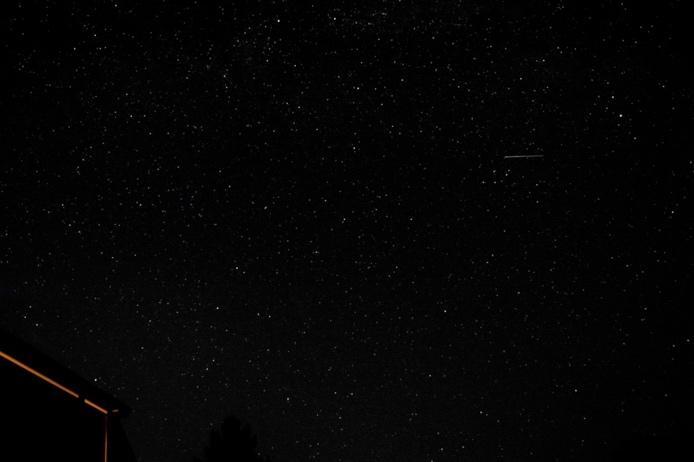
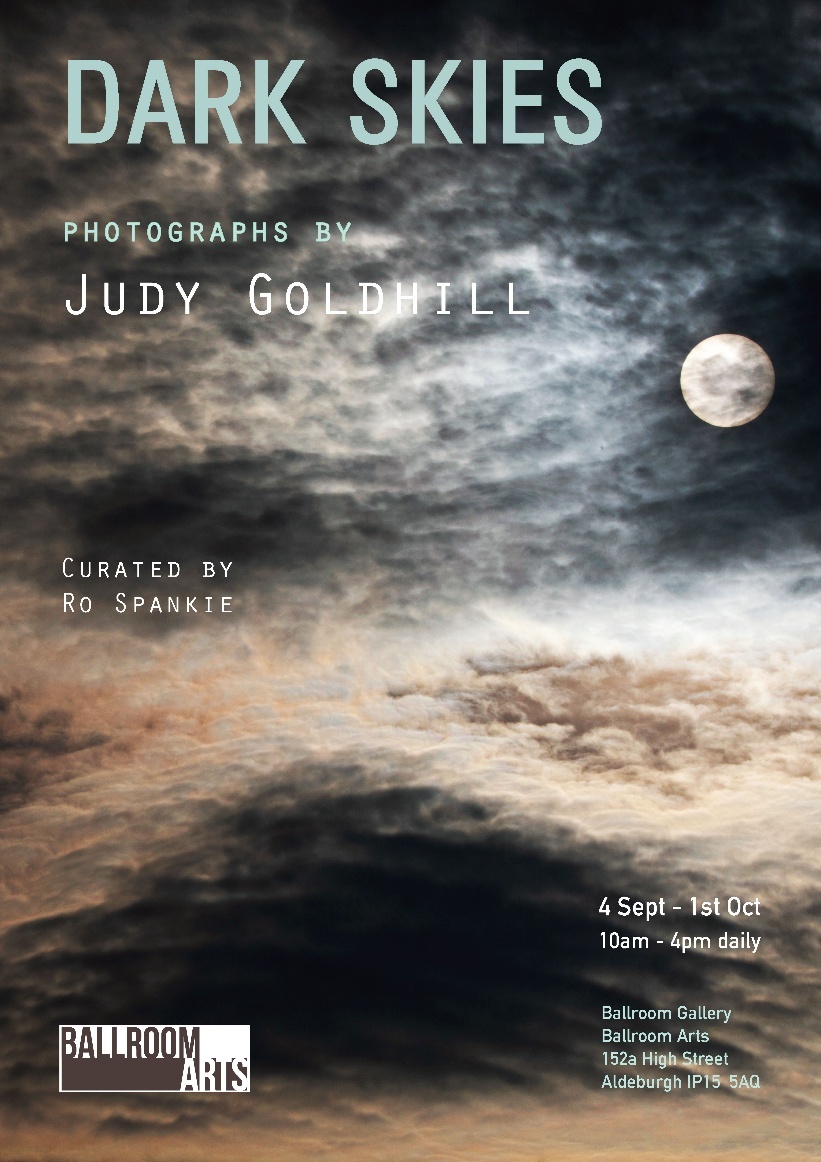
Introduction
I explore our complex relationship to darkness and the night through a shift in my own perception. A conversion that stemmed from attending a conference on darkness in 2019. The experience of attending this conference shifted my focus from metaphorical association to environmental concern and resulted in the curation of an exhibition of the work of artist and photographer Judy Goldhill entitled ‘Dark Skies’. First in Hay Castle, Hay on Wye in Wales (23.11.23-08.01.24) and subsequently at the Ballroom Gallery in Aldeburgh, Suffolk, in England (04.09.24-01.10.24). My observation from this exploration of darkness through the lived experience of different geographies and mediums was that my cultural references to darkness are largely inherited and refer to a past that no longer reflects the environmental degradation of the present, suggesting that culture is slower to change than the places and spaces that it describes. The recommendation is that it is time to urgently re-examine and re-frame the narrative around darkness to reflect the natural and human-made environment as found today.
Part 1: Shadow Space
‘Night, the beloved. Night, when words fade and things come alive’
Antoine de Saint-Exupéry. Flight to Arras, 1942.
The seeds to the 'Dark Skies’ exhibition were sown in 2019 when I presented a paper at a conference on ‘Darkness’ in Longyearbyen Svalbard, organised by Island Dynamics an international group of academics concerned with the field of island studies. It was a multi-disciplinary conference encompassing science and humanities, ranging from AI to medieval poetry, from science fiction to the photographic darkroom. An architect by training, my expertise is adaptive re-use, a discipline focusing on the alteration and adaptation of existing buildings. This is a creative practice that allows for a re-imagining of an obsolete present to anticipate future needs rather than simply preserving the past. I use the term ‘re-imagination’ because while buildings are architectural in their form, they are also carriers of wider cultural meaning. Shifting cultural perception is a core part of the practice.
My presentation considered the creative potential of darkness, through the description of the Norwegian artist Emanuel Vigeland’s adaptation of his light-filled studio into his windowless mausoleum, arguing that by reducing reliance on the visual realm, darkness allows space for the imaginary. The reasons for this, I argued, are both physiological and psychological, stemming from the fact that the way we see in the dark is very different from how we see in light. The human eye adjusts quickly to light but adjusts very slowly to the dark, sometimes taking up to half an hour to adapt (Scientific American, 2007; Fain et al., 2001, p. 117-151). Neuropsychologist Richard Gregory suggests that in such situations, being unable to rely on acute vision, one resorts to intelligent guesswork. The brain, building and extrapolating from previous experience, uses past knowledge to create plausible internal reconstructions of the present external reality (Gregory, 1966). This visual imaginary incorporates not only an individual’s past experiences but also their wider cultural memories, emotions, and understandings. As Anthropologist David Howes has argued, “perception is informed not only by the personal meaning a particular sensation has for us, but also by the social values it carries” (Howes & Classen, 2014, p. 1).
I compared the physiological model of internal reconstructions created from pre-existing knowledge to the psychoanalytic structure of the conscious and the subconscious. For psychoanalysts, the subconscious or ‘shadow space’ as Carl Jung called it, is traditionally conceived of as a dark and unknown part of the human psyche, associated with largely negative traits that empower an individual’s past to disturb their conscious mind and actions in the present (Jung, 2003). For Jung, darkness is not only an external environment, but also one that exists within us.
How else could it have occurred to man to devise the cosmos, on the analogy of day and night, summer and winter, into a bright day-world and a dark night world peopled with fabulous monsters, unless he had the prototype of such a division in himself, in the polarity between the conscious and the invisible and unknowable unconscious? (Jung, 2003, p. 187)
What interested me was Jung’s suggestion that the shadow has a positive side – it is seen as the seat of creativity and the source of our imagination.
So for reasons that are both physiological and psychological, darkness has an ability to transform the everyday into the unknown, creating a space to project our desires and our fears, both real and imagined, which is a quality that frightens but also fascinates us. Darkness fills us with dread yet compels us, our imaginations allowing myth, fantasy, and reality to become one. Reconstruction of the visual realm in the absence of light is an act of imagination and creativity.

Part 2: Noctalgia in the Polar Night
The relationship of conference themes to their location is a potentially rich but under-researched area. Many academic events are held in nondescript university buildings or conferencing facilities; the location is irrelevant to the ideas presented and discussed. In contrast, Darkness 2019 was held in Longyearbyen, Svalbard, in January. A month when this archipelago of islands, situated between mainland Norway and the North Pole, experiences 24-hour darkness. My biggest takeaway from this prolonged experience of the absence of daylight is the memory of standing outside, in a state of wonder at the incredible beauty of the cold, dark, polar night. The lived experience linking the conference theme to geography and season. Despite the sun remaining stubbornly below the horizon, there were subtle shifts in the darkness between twilight, night, dawn, and day, including the faintest glow of daylight somewhere beyond the horizon during the day. The light of the moon, the stars, and even the aurora borealis meant that once one’s eyes adjusted, one could make out ghostly moon shadows on the white, icy landscape. The metaphorical shadow space of the psyche was embodied in the icy shadowlands around me.
As I listened to the environmentalists who presented, I realised that my understanding of darkness as something dark and unknown, filled with dread and awe, was informed by cultural suppositions that referred to memories, emotions, and understandings of previous eras rather than the lived experience of the present. Rather than bringing a sense of foreboding, the undisturbed darkness I was experiencing was something fragile and threatened, an environmental phenomenon that is being lost to urban light pollution. The reality was that the constellations above me were vulnerable and tenuous, endangered by artificial light, punctuated by the presence and movement of numerous planes and satellites. As environmentalist Francis-Baker writes, “evolutionarily speaking it was once an advantage to be scared of the night, but in a world of lightbulbs, and burglar alarms, this fear has become more of a nuisance than a benefit” (Francis-Baker, 2019, p. 40).
Why does darkness matter? For millennia people have been accustomed to being in the darkness of the night, and/or winter. Our cultures reflected the embodied knowledge this fear brought; from world religions privileging light over darkness, to terms such as ‘enlightened’ being used to describe progress. Over the last 150 years, following the invention of the incandescent light bulb, negative associations of darkness mean that humanity has globally banished the night with artificial light, wasting money and energy, contributing to climate change, blocking our view of the universe, as well as disrupting ecology, wildlife, and impacting our physical and mental health (Dark Sky International, 2025). What shocked me was that, living in London, a city whose night skies are obscured by light pollution, I had not noticed the speed these changes were taking place.
‘Shifting baseline’ is a term popularised in 1990s by marine biologist Daniel Pauly (Pauly, 1995) to describe the impossibility of accurately appraising the present without a clear sense of the past. Or to put it another way, we simply don’t notice we are living in an increasingly degraded environment – be it sky glow, poor air quality, or polluted river water – because we have forgotten how it used to be. In the 2023 Star Count, conducted by the CPRE (Campaign to Protect Rural England) found that just five percent of the 4000 participants who took part had experienced a “truly dark starry sky,” that is a sky that enabled them to count more than 30 stars (CPRE, n.d.). A shifting baseline leads to collective amnesia and is perhaps the reason why I had forgotten the childhood experience of sleeping out under the stars, or the excitement of being allowed to stay up to watch as dusk was slowly enveloped in darkness, allowing for a clear view of the Perseid meteor shower. Was amnesia the reason why I had stopped sleeping outside or was it because the meteor shower was no longer visible?
Knowing, forgetting (or possibly repressing), and caring are intertwined. A recent Government briefing revealed that, as a nation, in the UK, we spend 80% to 90% of our lives indoors (Indoor Air Quality, 26.09.2023). What little time we do spend out of doors will mostly be in daylight. Thus, it is fair to conclude in the twenty-first century, unlike our ancestors, the majority of the population have never experienced being outside long enough or been in the right location to experience total darkness and with it the beauty of night skies. Combined with the CPRE research on the poor quality of that experience, this may suggest why perceptions of darkness today are inherited from our forefathers rather than learned from lived experience. Darkness still frightens us, but today we simply turn on the light, blocking our ability to look outward into space, but, also, I suggest inward at ourselves. As David Attenborough has articulated, no one will protect what they do not care about, and no one will care about what they have never experienced. (Can the Earth Cope? Horizon, BBC Studios, 2009) This twenty-first century Catch-22 has important implications for how we can move forward to preserve and protect our night skies.
Part 3: But dark is good
“Pity the dark: we’re so concerned to overcome it and banish it, it’s crammed full of all that’s devilish, like some grim cupboard under the stair. But dark is good, we are conceived and carried into darkness are we not?” (Jamie, 2005, p. 3, emphasis added)
Exactly a year after the Darkness conference in Svalbard, the COVID-19 pandemic resulted in a global lockdown. I was fortunate enough to spend a lot of this time in a small town called Hay-on-Wye on the edge of the Bannau Brycheiniog (Brecon Beacons) in Wales. The beacons consist of 520 square miles of National Park and contain a UNESCO Global Geopark as well as an International Dark Sky Reserve. This means the region not only offers beautiful, unspoiled countryside but is also an area with very little light pollution. The night skies are spectacular.
In the centre of Hay-on-Wye sits an ancient, fortified manor house known as Castell Y Gelli, or Hay Castle, which reopened following a major refurbishment in 2022. The refurbishment included the creation of a wonderful timber-beamed gallery space in the attic. In August of that year, I put a proposal to the Hay Castle Trustees to curate an immersive exhibition celebrating darkness both as a literal and as a figurative phenomenon. I wrote that I wanted to test the immersive medium of exhibition design as a way of re-examining and re-framing the narrative around darkness. My proposal was accepted, and I was offered the gallery space from 23 November 2023 to 7 January 2024.
I already knew the artist/photographer I wanted to work with. I had worked with Judy Goldhill previously on an exhibition called ‘Travelling Companions’ at the University of Cambridge (Travelling Companions, 2020). It was an exhibition which asked a range of invited guests to consider the objects and ideas we carry with us through life, objects and ideas that I referred to as ‘travelling companions’. These objects ranged from representations of self, of home, of someone loved, to more practical things that the individual can’t travel without. A surgeon chose a carved bone talisman, an artist chose a piece incorporating an upside-down representation of her childhood teddy bear and doll, while a musician chose certain electronic cables that are vital to a performance. In contrast, the photographer wrote that her travelling companions were her retinae through which she looked at the stars. Goldhill has held artist residencies in the major astronomical observatories in the Atacama Desert of northern Chile, on Mauna Kea, Hawai’i with the Gemini North, W.M. Keck, and Subaru Observatories, and in Tucson, Arizona at the U.S. Kitt Peak National Observatory located on the sacred mountain of l’oligam Du’ag. For Goldhill, the night skies offered sites of wonder and a sense of the far away, but also the familiarity of home, the stars acting as navigational tools and travelling companions on her journeys. Her photographs capture the aesthetics and fascination of modern astronomical discoveries. Yet they also describe how the constellations of stars in the night skies trace out the ancient myths and stories of our ancestors’ imaginations. It was Goldhill’s ability to connect science and humanities, technology and myth, that interested me. (See the Travelling Companions Catalogue (2021).
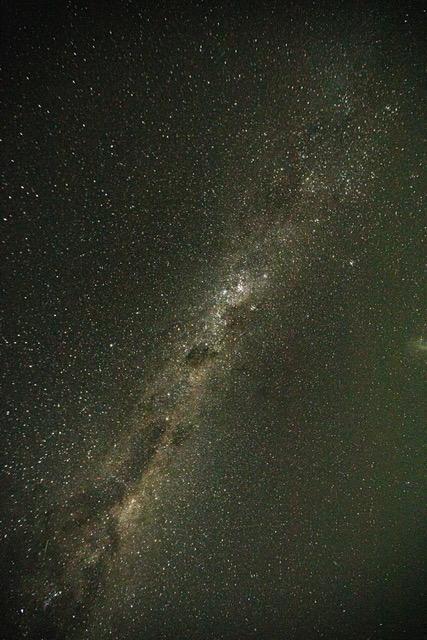
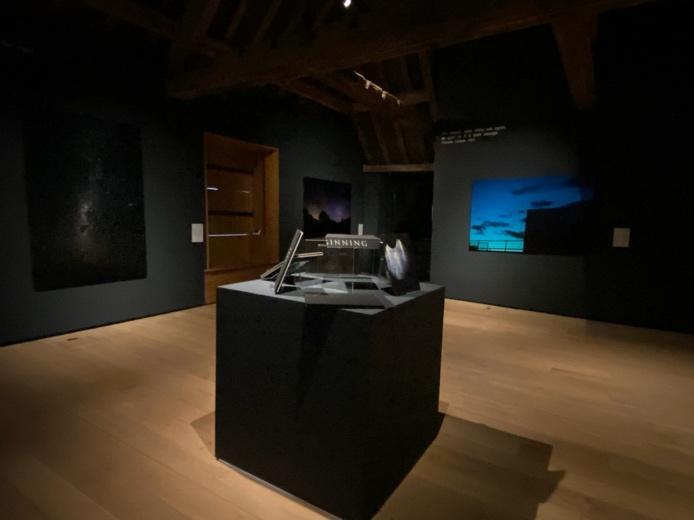
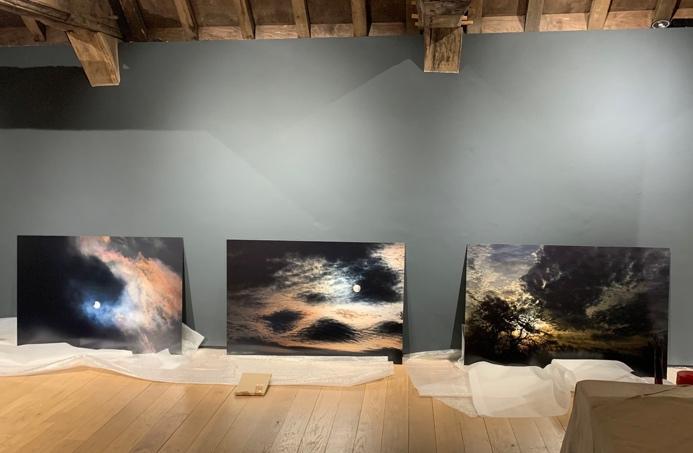
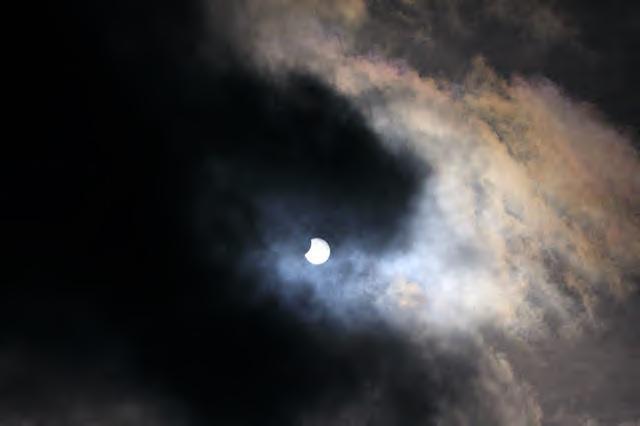
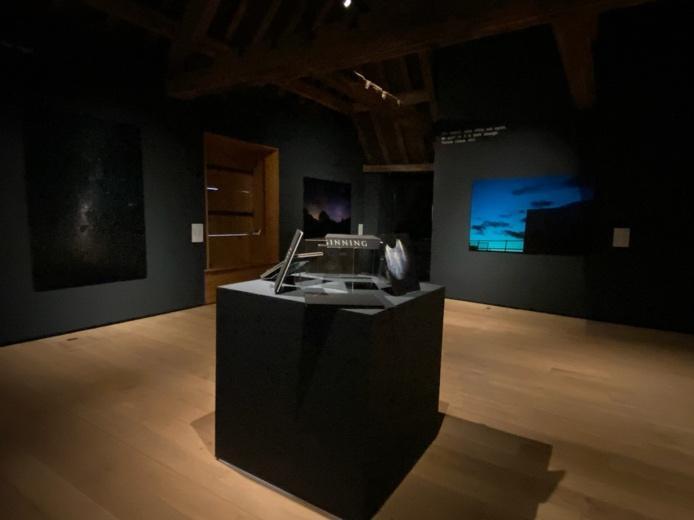
Designing an exhibition is a very different thought process from writing a paper. The design process allows for the use of non-verbal elements to prompt the visitor’s imagination, while the exhibition format allows one to create an immersive atmospheric experience through the carefully selected use of image, lighting, sound, signage, and spatial layout. The concept was simple: to display Goldhill’s photographs of dark skies, alongside astronomical descriptions and quotes referencing darkness from literature. With this in mind, as I looked through hundreds of her photographs, I selected pictures of phenomena that can be seen with the naked eye over Britain. These ranged from views of the moon against winter landscapes (see Figure 4), a total solar eclipse (see Figure 5), impressive views of a comet, or the Northern Lights, to rarer phenomena, such as the Milky Way (see Figure 2).

Moonlight and sunlight have the same basic spectrum because moonlight is just reflected sunlight. As moonlight scatters in the atmosphere at night, it creates the softest shade of dark blue sky. In reference to my research on perception presented at Darkness 2019, we painted the entire gallery space the darkest blue we could find. ‘Railings’ is a colour that the paint manufacturer describes as ‘soft black with blue undertones’ and created an effect as near as we could find to the actual colour spectrum of being in moonlight.
The photographs were printed in a large format onto aluminium sheets and displayed frameless, fixed an inch off the wall, lit only by dim spots chosen for their spectral veracity and accuracy of perceived colour. The effect created was that the images seemed to float off the walls, blurring a sense of depth. The photographs were accompanied by a soundscape of night-time field recordings made in the Bannau Brycheiniog by local sound artist Alastair Duncan. This soundscape varied from sounds so subtle they were barely audible, such as a breeze, to sudden noises like a twig snapping that could make the visitor start, and helped create an immersive visual and sonic field.
Accompanying annotations contextualised each image, starting with where and when the image was taken, alongside astronomical detail, and accompanied by quotes from literature chosen from different eras, ranging from Ovid 16 BC to Jamie 2005 (See example of how this layering of image and text worked in Figure 5: Solar Eclipse). The idea was to get visitors into the gallery space, a darkened space where it would take time for their eyes to adjust. While this adjustment was only a matter of minutes, it created a pause, slowing them down, allowing us to simulate the heightened sensory awareness of being in darkness through image, sound, and text. The combination of the photographs and the reflections and thoughts in the text inspired positive internal reconstructions. It was an attempt to use design to close the gap between darkness as a physical experience and its related cultural expectations, shifting the visitor’s associations of darkness to the extent they would be curious enough to go out into the Bannau Brycheiniog at night and look up. For the photographer’s description of the exhibition, see Goldhill’s website (Dark Skies, n.d.).
.jpg)
We worked on the annotations to the photographs with Stephen Pompea, Visiting Professor of Astronomy at Leiden Observatory, and an internationally known leader in science education, whom Goldhill had met on a residency. A long-time dark skies advocate, Pompea had been instrumental in establishing the Gabriela Mistral International Dark Sky Sanctuary in northern Chile, the first in the world, named after the Nobel-prize-winning Chilean poet. He intuitively understood the importance of combining hard science and literature.
Dark Sky International publishes infographics highlighting that light pollution is growing at about 10% per year due to poorly shielded lights from fishing fleets, buildings, streets, and motorways sending light to the sky, either directly or through scattering off the ocean, ground, or atmospheric particles (Dark Sky Infographics, 2023). We discussed how to communicate that the negative effects of light pollution are similar to the negative effects of water and air pollution on the environment and human health. Health in both physical and psychological senses, as the inability to experience darkness and look up at the constellations can lead to what Pompea describes as ‘Noctalgia’ or night grief (See annotation to Figure 2: Milky Way).
Pompea suggested we consider the new communications satellites being sent into low-Earth orbit in alarming numbers as a new form of trespass. For example, SpaceX’s Starlink project has launched about 7,000 satellites in orbit. He pointed out,
“These satellites change our view of the night sky, adding many new bright, moving elements to the fixed stars. Astronomers are trying to find ways to remove this photobombing effect, since the satellites may ruin their searches for new astronomical objects that move or change brightness.” (personal communication, 13.11.23)
In reference to Hardin’s 1968 essay, Pompea described the satellite launches as a “tragedy of the commons” type problem, which raises questions about how the orbital space around the earth is to be viewed, as this space is an international territory belonging to all on earth, but in reality is being colonized by these wealthy owners of satellite systems. While the communications systems created by these satellites may be useful for a decade or two, the effect of these satellites will persist much longer, adding a human-made element to what were pristine skies.
.jpg)
Besides its beautiful location, Hay-on-Wye is renowned for its bookshops and its literary festival. The exhibition Dark Skies ran from November to January and was part of the Winter Literary Festival, when darkness engagement activities such as fireside ghost stories, lantern making workshops for children, and night walks were run. As part of these associated events on 24 November 2024, I chaired a panel discussion between Judy Goldhill, the photographer, Stephen Pompea, the astronomer, and Catherine Mealing-Jones, the CEO of the Bannau Brycheiniog National Park Authority. The panellists shared their thoughts on why we need darkness, the negative effects of light pollution, and the importance of dark sky reserves. At one point during the evening, the discussion was interrupted by protesters concerned about a planning restriction on an industrial unit that, for security reasons, would be lit throughout the night, spoiling the night sky. The incident reminded everyone that darkness as an environmental aspiration is a work in progress and remains contested.
In September 2024, Dark Skies was exhibited in the Ballroom Gallery in Aldeburgh in Suffolk, on the east coast of England. The Ballroom Gallery sits on the seafront facing out into the darkness of the North Sea. While the content was the same, for this iteration, the evenings were still light, and gallery walls were painted white. We held a similar panel discussion. This time, many of the audience were holiday makers camping by the sea and were already convinced dark sky advocates.
.jpg)
To Conclude
“I have loved the stars too fondly to be fearful of the night”
Sarah Williams. The Old Astronomer, in Twilight Hours, 1868. P. 68.
Changing mediums changes the way one thinks about something. The singularity of an academic paper can lead to a hermetic worldview, while the creative and collaborative nature of working on the exhibition allowed me to develop and expand my ideas on darkness. My presentation at Darkness 2019 referred to themes around psychoanalysis, culture, and perception that I had been working on for a number of years. However, the experience of being isolated in a hotel in the polar night with 100+ conference delegates transformed my perspective on darkness, suggesting my perception and understanding of darkness is as informed by inherited cultural associations as my own lived experience. In this, I am not alone. I suggest that it is this inherited attitude to darkness rather than innate predispositions that is blinding us to the fact that darkness is being eroded. I am struck by the fact that, as is the case with so many aspects of environmental degradation, cultural narratives around darkness are changing so much slower than the reality of increased light pollution. For much of the night and for more of the planet, light pollution grows rapidly and unabated, wasting money and energy, contributing to climate change, blocking our view of the universe, as well as disrupting ecology, wildlife, and impacting our own health. With reference to Jung’s notion of the shadow, I would add, we are also losing an environment to project our thoughts and imagination. The embodied experience and situated encounters of Darkness 2019 awakened me to re-examine and re-frame the narrative around darkness as something culturally relevant, fascinating, and yet also something that is vulnerable.
The two Dark Skies exhibitions were a manifestation of this transformation in my thinking, charting my journey from inner space to outer space. Psychoanalysts look for patterns, recurring themes, events, or thoughts that act as triggers, and that therefore have more significance than might outwardly appear. They look for clues that the subconscious is infiltrating and disturbing the order of the conscious mind. Their professional therapeutic practice is one of caring, helping their clients to recognise these patterns and shift their personal narratives so the past doesn’t block the future.
The act of curating also involves caring; the etymology of the word traces back to the Latin word ‘curare’, meaning ‘to take care of’ or ‘to look after’. ‘The first patterns to be recorded are now known as constellations, the arrangement of stars that helped our ancestors measure the seasons, giving birth to the hundreds of ancient stories surrounding the night sky today’ (Francis-Baker, 2019, p. 101). In curating Dark Skies, I looked for patterns and recurring themes, attempting to create a positive representation of darkness to reflect our current understanding of the natural and human-made environment. In promoting the creative potential of darkness, I did not ask visitors to Dark Skies to forget the creatures of the night, both real and imagined that make darkness so fascinating but rather I asked them to also consider the night as a natural environment full of beauty and wonder that allows them to place themselves in the universe and travel outwards both in space and time. By shifting the collective narrative and encouraging the public to go out and experience dark skies, they too can imagine and, in turn, will care. My hope is that this effort will provide the motivation needed to appreciate the importance of dark skies and to encourage the actions needed for preservation of this important shared heritage.
Acknowledgments and Funding
The author would like to thank Judy Goldhill, artist/photographer, and Affiliate Professor Stephen Pompea, Department of Astronomy and Steward Observatory, University of Arizona, and Visiting Professor, Leiden Observatory, University of Leiden, for collaborating in the creation of the two exhibitions described and discussions leading to the writing of this paper.
She would also like to thank the University of Westminster for funding, which allowed her to attend the Darkness 2019, an Island Dynamics Conference, Longyearbyen, Svalbard, 13-17 January 2019, Tom True Executive Director of the Hay Castle Trust and the Bannau Brycheiniog Sustainable Development Fund for funding towards the exhibition Dark Skies shown at Hay Castle.