
1.0. Introduction
The term Chinoiserie originates from the French word Chinois, meaning “Chinese,” and refers to the European decorative art style inspired by Asian art and culture. Emerging in Europe during the 17th century, it remained popular through the 19th century as it continued to develop in tandem with the broader Orientalist movement. The Orientalist movement, in turn, reflected Europe’s fascination with the East, which was directly influenced by the expansion of global trade and the eventual colonisation of parts of Asia by Western powers (Darwin, 2002, p. 45). This brought European societies more into direct contact with Asian goods, ideas, and imagery, which fuelled a romanticised and often stereotyped vision of “the Orient” in art, literature, and material culture (Varnava, 2017a, p. 55). By the 18th century, China was producing porcelain specifically for the European market (Margaret & Jenyns, 1950).
Within this context, Chinoiserie developed as a highly fashionable decorative style. So popular in fact that European artisans and patrons such as Boucher and von Keller drew inspiration from Chinese motifs, incorporating porcelain, lacquerware, silk textiles, and intricately crafted furniture into domestic interiors (Berg, 2003, pp. 235–236). These objects were often adapted to suit European tastes, transforming their original cultural, religious, or ceremonial significance into purely decorative commodities. Thus, in the grand houses and salons of Europe, Chinoiserie became a symbol of refinement, cosmopolitan sophistication, and participation in global trade networks, despite having little connection to the realities of Chinese life or craftsmanship (Berg, 2003).
Its popularity reached far beyond European high society and into the homes of the Ottoman population. Chinese porcelain itself began to be imported in various Ottoman provinces, including the Bilad al-Sham (Greater Syria), in the later part of the Ottoman period (1700–1918) (Milwright, 2008). The trade between the Ottoman Empire and China via the Silk Road is further evidenced by an Ottoman wreck dating to the mid-18th century, the Sadana Island Shipwreck, which carried Qing dynasty Chinese porcelain created specifically for the Middle Eastern market. The route started in China, passed through India, the Persian Gulf, and the Red Sea, reached the Eastern Mediterranean, and possibly ended in Istanbul (Milwright, 2008; Vroom, 2023, p. 1237).
The demand for Chinese porcelain in the Ottoman world was significant enough that it also influenced local ceramic production. For example, Kütahya ware, which rose in popularity in the 18th–19th centuries, shows stylistic and technical features inspired by imported Chinese porcelain (Vroom, 2023). Furthermore, many European traders lived and worked in the main port cities of the Ottoman Empire, leading to further circulation of these artistic pieces. Chinese porcelain was also imported in the early 20th century in Asia Minor, as evidenced by artefacts from a collection of Greek refugees in Corinth (Μέγγου, 2021). According to Μέγγου, the plethora of objects that are silver-plated or made of crystal and porcelain is a clear indication of the prosperity in which the Asia Minor Greeks were living, as well as their trade connections with important European cities (Μέγγου, 2021). In this example, we can see that Chinese porcelain became a common trading item in the early-middle 20th-century Eastern Mediterranean, leading to it eventually reaching Cyprus.
The case of Chinoisier in Cyprus offers a distinct perspective on the integration of Chinese-inspired aesthetics across the peripheries of Empires. The island was not a superpower engaged in colonial expansion in Asia. It did not control trade routes nor directly participate in the imperial systems that structured Britain, France, or Germany’s engagement with the East. This was largely due to the local Cypriot population not being able to exercise sustained political autonomy since the medieval period. From as early as the twelfth century, when the Kingdom of Cyprus was established under Lusignan rule, the island passed through successive periods of foreign domination, such as the Venetians and the Ottomans (Ktori, 2018). This limited its capacity to develop an independent imperial or commercial agenda. Instead, Asian goods reached Cyprus indirectly, mediated through broader Ottoman and later European commercial and cultural networks. The presence of Chinese porcelain, lacquerware, and other Asian imports in Cypriot elite homes was therefore not the product of imperial ambition, but of Cyprus being a space of cultural transmission through imperial centres. Furthermore, it reached its height in Cypriot commercial fashion, after it had passed as an aesthetic movement on the mainland, reaching the peak of its popularity during the 20th Century.
Hence, as will be argued, what was occurring in Europe was the large-scale integration of Asian goods into imperial economies and ideologies; what was happening in Cyprus was the reception of those goods as filtered symbols of European modernity. Chinoiserie arrived not as an expression of Cypriot engagement with Asia itself, but as part of a wider aspiration to align with Western European tastes and social codes. Thus, while European powers used Chinoiserie within a framework of empire and global dominance, in Cyprus, it functioned primarily as a marker of status, refinement, and participation in a European cultural sphere.
2.0. The Case of Cyprus
2.1. Geography and successive regimes
Cyprus is located in the eastern Mediterranean at the crossroads of Europe, Asia, and Africa. Its geographic position, between Anatolia, the Levant, and North Africa, made it one of the most strategically valuable islands in the region. Control of Cyprus meant access to major maritime trade routes and military oversight of the eastern Mediterranean basin. From as early as the 11th century, the island also functioned as an important stop for Christian pilgrims travelling to the Holy Land, further enhancing its geopolitical and religious significance (Ktokri, 2018; Steffen, 2021). This also meant that due to its strategic position, Cyprus experienced successive waves of foreign rule continuously reshaping its political structures, social hierarchies, architecture, and material culture.
During the medieval period, Cyprus came under the control of the Lusignan dynasty following the establishment of the Kingdom of Cyprus in 1192, remaining under Lusignan rule until 1489 (Steffen, 2021, pp. 25–26). During this period, the island functioned primarily as a strategic and logistical outpost within wider crusader and eastern Mediterranean networks, rather than as a permanent homeland for its Western rulers (Ktokri, 2018).
In 1489, Cyprus passed into Venetian control. For Venice, the island functioned primarily as a strategic and commercial outpost designed to protect eastern Mediterranean trade routes. To do so, the Venetian rule strengthened military fortifications, one notable example being the walls of Nicosia. Urban planning, defensive architecture, and mercantile priorities reflected Venetian imperial aesthetics and commercial pragmatism, where fortified urban centres and commercial infrastructure were designed to secure trade routes and project maritime power.
The Ottoman conquest of 1571 marked another major transformation. Cyprus was incorporated into a vast imperial system centred in Istanbul, and although it retained certain local administrative features, it was integrated into Ottoman provincial governance. The Ottomans reshaped religious hierarchies, fiscal structures, and land tenure systems, while introducing Islamic architectural elements such as mosques, baths, and caravanserais. In 1878, administrative control shifted again to the British Empire and, in 1924, Cyprus became a crown colony. British governance introduced bureaucratic reforms, new educational systems, and colonial urban planning. Architectural styles reflected neoclassical and British colonial influences, particularly in public buildings and elite residences. English education, administrative rationalisation, and exposure to broader imperial networks further transformed local aspirations and material culture.
To understand how Chinoiserie-inspired objects arrived in and were received by Cypriot society, it is necessary first to consider the structures of Ottoman governance and social organisation. The island’s political, economic, and social systems, shaped by imperial administration, the millet hierarchy, and local elites such as the Archbishop and Dragoman, determined how foreign goods circulated, who could access them, and the social meanings attached to their display. It was within this framework that the first Chinoiserie-inspired pieces reached Cyprus, arriving indirectly through Ottoman and broader European trade networks. Analysing these structures provides the context for understanding why the reception of these objects reflected local hierarchies and cultural frameworks rather than the colonial or imperial ambitions that shaped their circulation in major European powers.
2.2. The Ottoman governance and social structure
While this artistic movement was flourishing in 17th- and 18th-century Europe, Cyprus, at the time, remained under continuous Ottoman rule, from 1571 until 1878. The Ottoman Empire functioned under the Millet (nation) system, where non-Muslim communities, like Orthodox Christians and Armenians, were allowed to reside within the empire by paying an additional tax, the cizye (poll tax). Each nation was permitted to govern its own affairs and retain its cultural autonomy and self-organisation; additionally, each group was represented to the sultan by a local Dragoman (official representative/translator). In the case of Cyprus, the Greek Orthodox Millet was represented by the Archbishop, and a Dragoman (Barkey & Gavrilis, 2016; Varnava & Michael, 2013).
In Cyprus, the Greek Orthodox population formed the majority and was organised within the Rum Millet. The Archbishop of Cyprus served as the official representative (ethnarch) of the Orthodox community, acting as intermediary between the local population and the Ottoman authorities. Alongside him operated the Dragoman of Cyprus, a powerful lay official who functioned as translator, diplomatic intermediary, and administrative liaison. Together, these figures embodied the structural division of authority between Ottoman state officials and Orthodox leadership (Barkey & Gavrilis, 2016; Varnava & Michael, 2013). As a result, ecclesiastical authority became deeply intertwined with civil administration. Local Christian elites often gained prominence through service as tax farmers, intermediaries, or commercial agents within Ottoman networks.
However, this autonomy was conditional and hierarchical. Muslims enjoyed legal and fiscal advantages, while Christians bore heavier taxation and restrictions within the imperial order. Social mobility for Orthodox Cypriots was therefore closely tied to their ability to navigate Ottoman administrative structures. It is thus argued that this led to the emulation of Ottoman culture, in the forms of dress and furniture, by the Greek Cypriot population in efforts to be perceived as socially respectable, politically legitimate, and aligned with the hierarchical norms of the imperial order.
2.3. The first objects
Although the trade between the Ottoman Empire and China through the Silk Road is also evidenced by an Ottoman wreck dating back to the mid-18th century, the Sadana Island Shipwreck, which carried Qing dynasty Chinese porcelain that was created specifically for the Middle Eastern market. The route started in China to India, the Persian Gulf, the Red Sea, the Eastern Mediterranean, and possibly ended in Istanbul (Milwright, 2008; Vroom, 2023). The importation of Chinese porcelain cups was significant enough that it influenced the development of Kütahya ware that rose in popularity in the 18th-19th centuries (Vroom, 2023).
Throughout the 18th to the 19th centuries, pottery in Persian, Arab, Japanese, and Chinese styles was gaining popularity in the European market. This competition led many European companies to start producing oriental-inspired pottery already from the beginning of the 18th century (Berg, 2003, p. 242; François, 2008, p. 100). In the 18th century, the Ottoman upper class co-opted the high aesthetic culture and manners of the European royal court, and the princesses began collecting works of art and fine Chinese and European porcelain (Ριζοπούλου-Ηγουμενίδου, 2020). At the same time, Chinese porcelain began to be imported in various Ottoman provinces, including the Bilad al-Sham (Greater Syria), in the late part of the Ottoman period (1700-1918) (Milwright, 2008).
Cyprus was, since the end of the 18th century, a transit port for pottery, taking the sea route connecting Marseille to the Levantine ports. It is very likely that a part of the earthenware cargo was unloaded and sold on the island (François, 2008, p. 95). More specifically, consular reports from 19th-century Cyprus documented the importation of porcelain and earthenware originating from France, Austria, Italy, and Turkey, arriving through the ports of Larnaca and Limassol (François, 2008; Milwright, 2008). There is not enough data for the number of imports in Cyprus in relation to the ceramics market to have a concrete picture (François, 2008). It was through this network that the first oriental inspired pieces reached Cyprus.
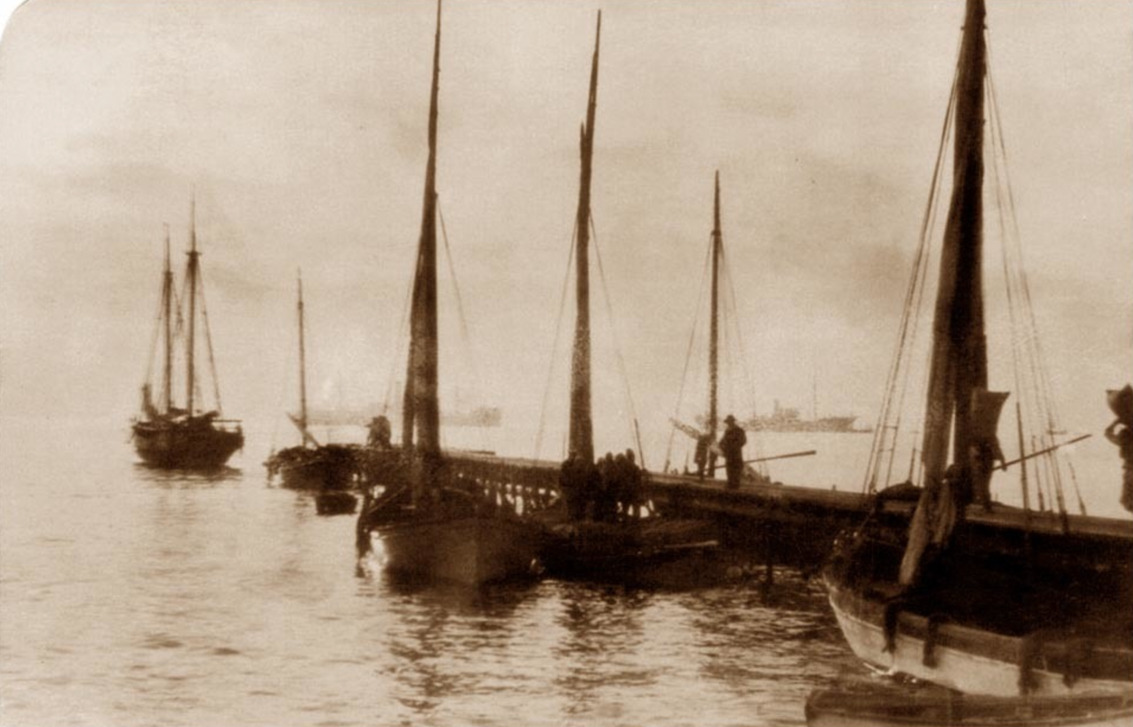
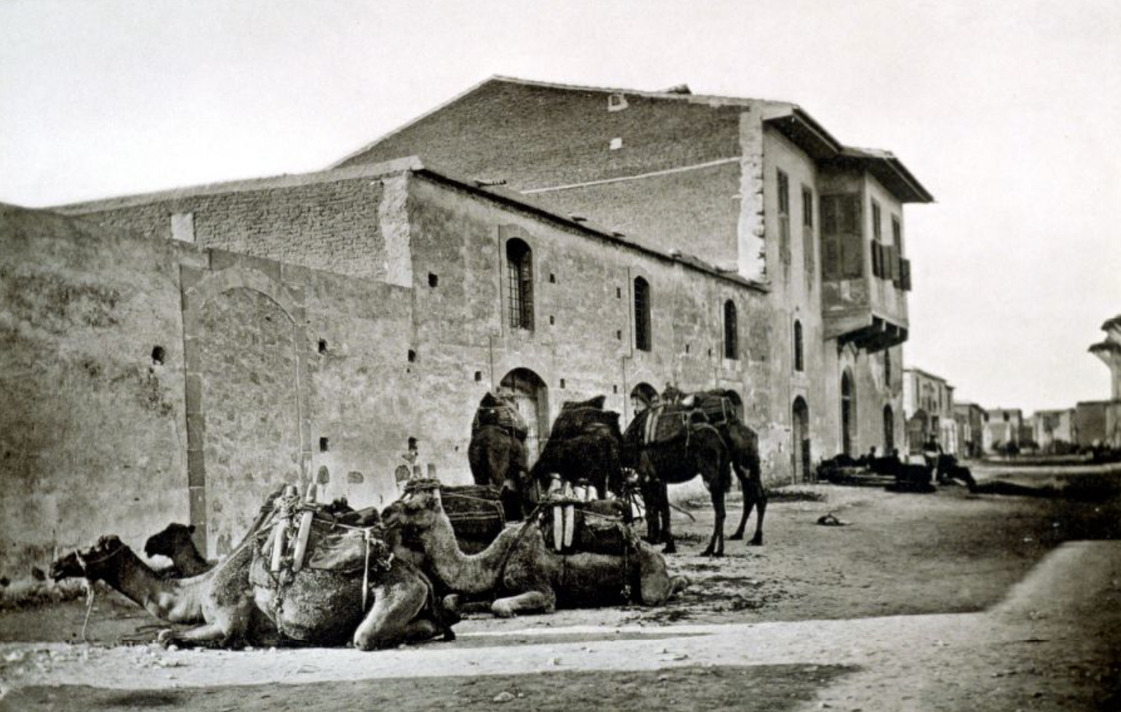
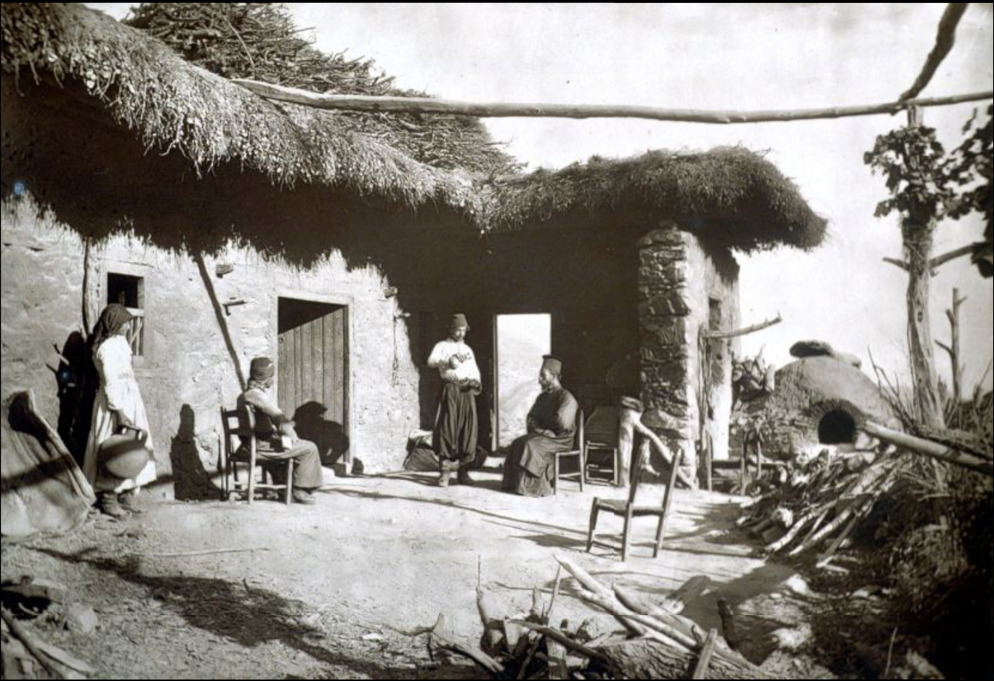
Indeed, since the island experienced 300 years of Ottoman rule, it integrated culturally within the broader context of the Ottoman Eastern Mediterranean. The upper classes of Cyprus adopted the Oriental dress that was common throughout the rest of the empire (Rizopoulou-Egoumenidou, 2010). But at the same time, since Cyprus was a stopping point for European traders, travellers, and pilgrims to the Levant, there was a small influence and import of Western European items, and especially after the 18th century, we can identify an influence of Western Orientalist trends on the most affluent segments of society. On occasion, certain Chinese decorative objects, imported through Mediterranean trade networks, occasionally appeared, particularly in the homes of wealthier urban families.
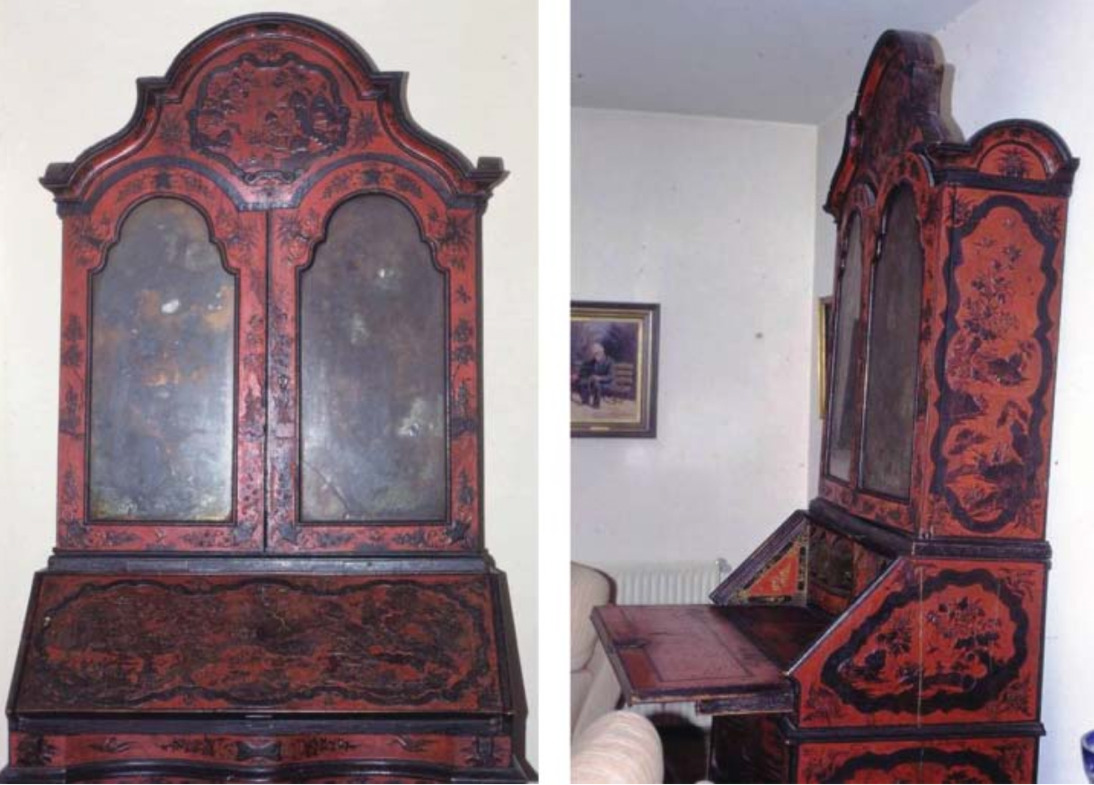
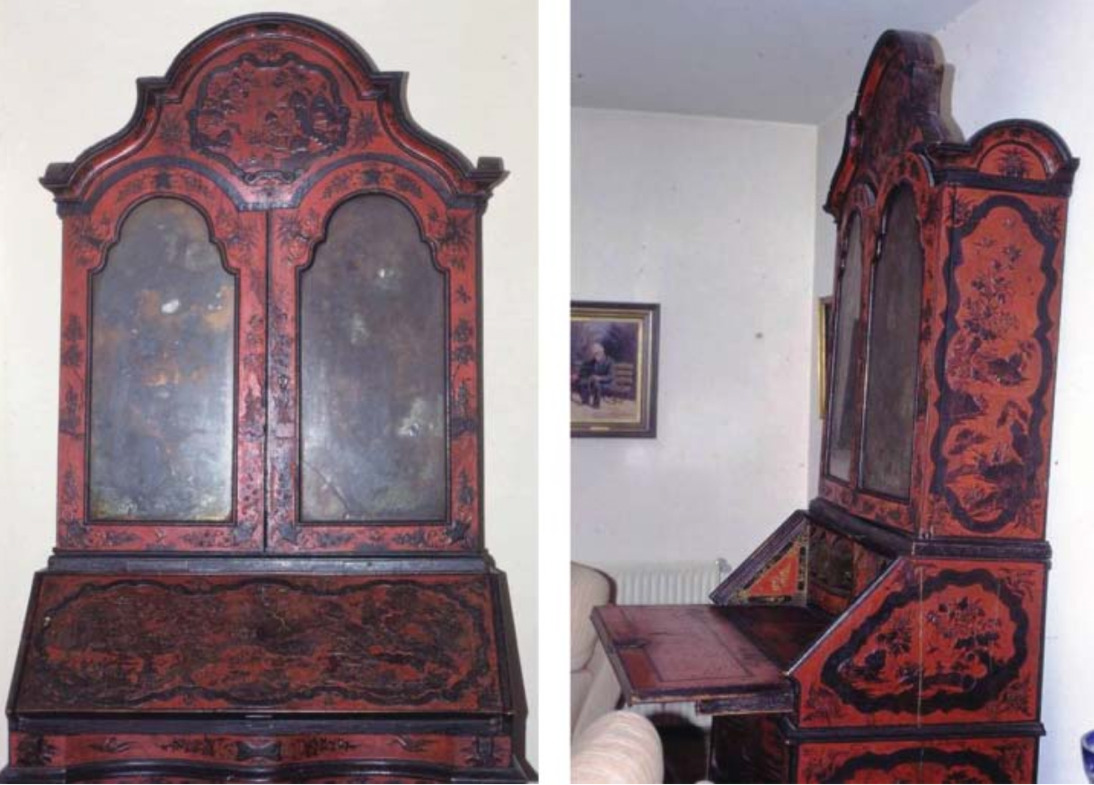
For the Cypriot upper class during this period, it was common to have household items made locally or imported from Europe and the Orient. However, this was not exclusive to the urban elites, as such items were also found in the houses of prominent people in the small towns and villages (Rizopoulou-Egoumenidou, 2010). Already from the Ottoman period, the local elite started purchasing imported European items that were decorated with Oriental ornamentations. Venetian lacquer-work was a commonly sought object. A rare surviving example of furniture is a late 18th-century ‘red scrinio’, a Venetian lacquer-work with Chinoiserie patterns of Evangelos Peristianos, a Cypriot trader who lived in the Scala of Larnaca that held the status of a Venetian subject (Rizopoulou-Egoumenidou, 2010, p. 92, fig. 3a-b). It was painted with red paint (Venetian lacquer) and decorated with Chinoiserie patterns in black paint on an embossed gypsum coating (gesso) (Ριζοπούλου-Ηγουμενίδου, 2020).
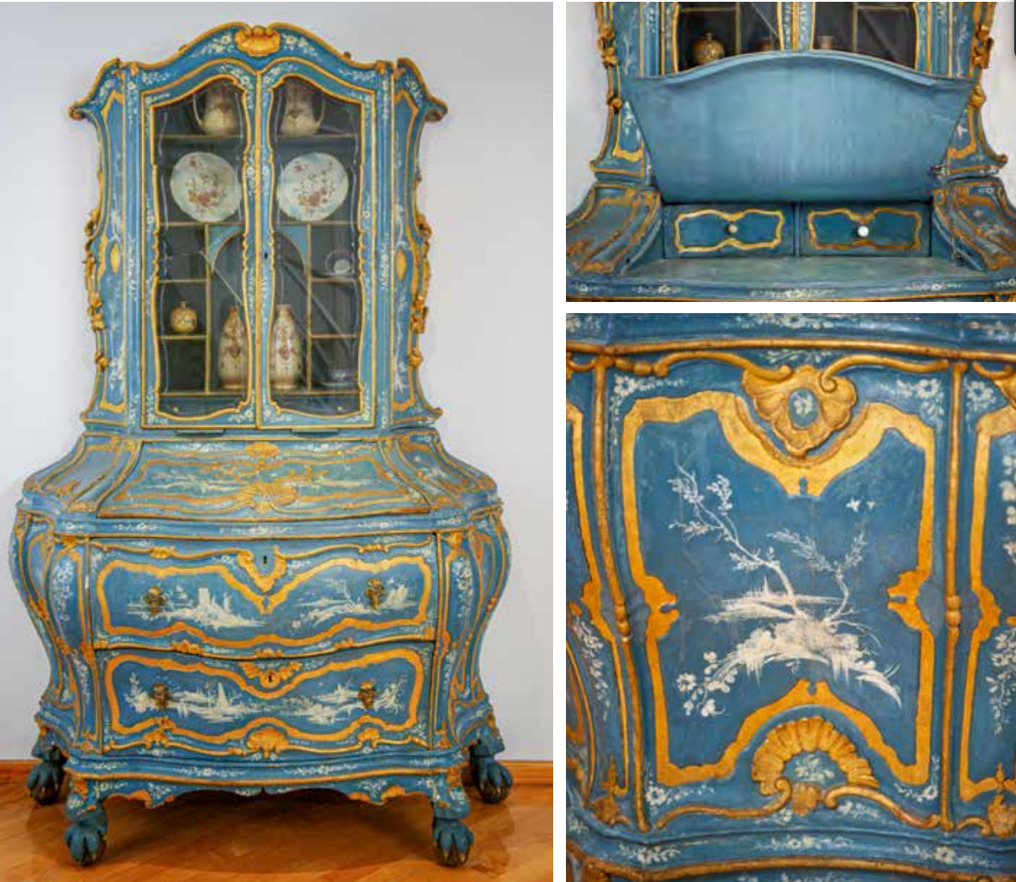
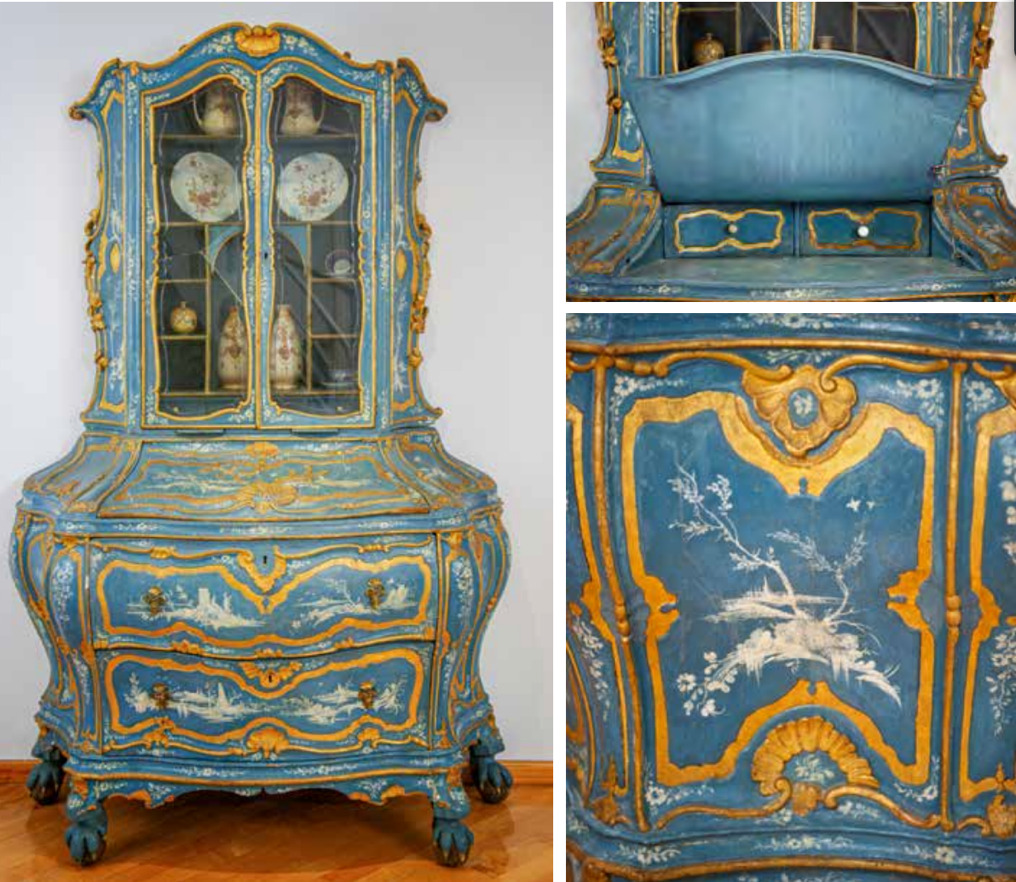
Another surviving example of furniture with a Chinoiserie pattern is a Venetian “bureau trumeau” dated 1750-1775, with delicate Chinoiserie decoration on a light blue background from the house of Dragoman Hadjigeorgakis Kornesios. The bureau is painted in light blue lacquer, and the decorative frames have been covered in gold leaf. Additionally, Chinoiserie landscapes with a lagoon, trees, and flowers have been painted in white; one of the landscapes shows an obelisk, while another shows the lagoon of Venice. It stands on four dragon legs that hold a sphere that were added at a later time. Based on its morphological characteristics, it belongs to the style of Venetian Rococo (Rizopoulou-Egoumenidou, 2010; Ριζοπούλου-Ηγουμενίδου, 2020). Furthermore, in Kornesios’ mansion, there were 48 plates of porcelain. In the Cypriot dialect, porcelain is referred to by the term φουρφούρι, a borrowing from the Turkish word fağfur. As Ριζοπούλου-Ηγουμενίδου (2020) notes, this word functioned as a catch-all category encompassing porcelain from a wide range of origins, whether Chinese, Persian, or European.
The use of a single, undifferentiated term complicates efforts to trace the provenance of specific objects, since local classifications did not distinguish between imported wares of different geographic or cultural origins. This linguistic generalisation also reflects the ways in which porcelain was absorbed into Cypriot material culture: not as an exotic or regionally specific commodity, but as part of a broader category of refined goods that could circulate through diverse trade networks and be reinterpreted within local contexts of use and display. Nevertheless, for the majority of the Cypriot population, porcelain remained rare in everyday use. Indeed, archaeological evidence from the Ottoman-early British period sites in Cyprus shows that there have been discoveries of imported European porcelain imitating Chinese styles. For example, a cistern in the Manor House of Potamia and date to the mid-late 19th century, they include fine earthenware and porcelain, some from Northern Europe, while the majority are British imports, such as Copeland & Garret coffee cups in oriental style, and Chinoiserie plates decorated with the pagoda and the weeping willow motif (Vallauri, 2004).
Although these discoveries demonstrate that imported ceramics circulated on the island, they do not indicate widespread use. On the contrary, the rarity of such items in the broader archaeological record suggests that porcelain functioned primarily as a marker of elite status rather than as a common household commodity. This impression is reinforced by contemporary accounts. Esmé Scott-Stevenson, wife of the British commissioner to Kyrenia, records seeing the local produce and goods being sold at the Lapithos fair in 1879, remarking that “in a third corner were the red terra-cotta and earthenware jars, pans, and plates used for all household purposes, as China is a luxury almost unknown among this still primitive people” (Scott-Stevenson, 1880).
Taken together, the material and textual evidence indicate that while imported porcelain and Chinoiserie-style wares were present in Cyprus, their circulation remained socially restricted. They were embedded within elite patterns of consumption and display, rather than forming part of the everyday material culture of the wider population.
Thus, Cypriot elites consistently modelled their lifestyles on those of the dominant powers of the mainland empire. The incorporation of porcelain and other imported goods, such as the previously mentioned "red scrinio’ and “bureau trumeau” into elite households. This reflects not a direct engagement with Asia, but an ongoing aspiration to align with the social and cultural standards of ruling authorities. However, with the takeover of Cyprus by the British Empire, trade networks intensified in the late nineteenth and early twentieth centuries, increasing quantities of foreign ceramics entered the island, expanding their presence within local markets and domestic interiors.
3.0. The British Colonial Period and the Transformation of Consumption
On 4 July 1878, during the Congress of Berlin, the Ottoman and British Empires signed the Cyprus Convention, a secret agreement that transferred the administrative control of Cyprus to Britain, in exchange for British military support against potential Russian aggression (Varnava, 2005, 2020). On 5 November 1914, following the outbreak of World War I, Britain, siding with the Triple Entente, declared war on the Ottoman Empire and annexed Cyprus as a Protectorate. The Ottomans officially recognised British possession of the island with the Treaty of Lausanne on 24 July 1923. Cyprus became a Crown Colony on 10 March 1925 and finally gained independence on 16 August 1960, following the London and Zürich Agreements of 19 February 1959 (Kitromilides, 2019; Sakellaropoulos, 2022).
3.1. British colonial modernity emulated by the Cypriot elite
Once Cyprus was incorporated into the British Empire, it gained more direct access to the global market and became a stopping point for shipping vessels to India through the Suez Canal, which opened in 1869, which was also under British and French control at the time (Orr, 1918; Varnava, 2017b). At the same time, British colonial and military officials, scholars, tradesmen, and ordinary citizens visited or resided on the island, which led to closer cultural connections with the West and the transfer of western ideals into the local elite (Bowen, 2002; Demetriou, 2011). As we have previously seen, Chinoiserie had already become part of the aesthetic of the Cypriot elite by the late Ottoman period. This trend increased even further during the British colonial period, with the expansion of trade with the empire and the direct contact with British and other European people who came to Cyprus.
In the late 19th and early 20th century, a period of gradual urbanisation started, with the creation of a new urban bourgeois class in the cities, especially the port cities of Limassol and Larnaca. This class pioneered the creation of the local private sector with the first commercial companies and industrial plants. At the same time, this class was educated enough to be eligible to take low-level government positions, since the higher positions were reserved for British officials (Katsiaounis, 1996; Rappas, 2011). This modernization was coupled with the arrival of modern technology, such as the telegraph and telephone lines, electricity, steam engines, printing presses, etc., that ushered a new age and created jobs in the cities, adding to the mainly agriculturally based economy a new industrial and commercial sector (Katsiaounis, 1996; Μωυσή & Στιβαρού, 2021). In the first decades of the 20th century, we have the establishment of shops that were selling glassware called ialopolia (glass shops) and apoikiaka (goods from the colonies) in the main cities of Cyprus (Βανέζη, 1922).
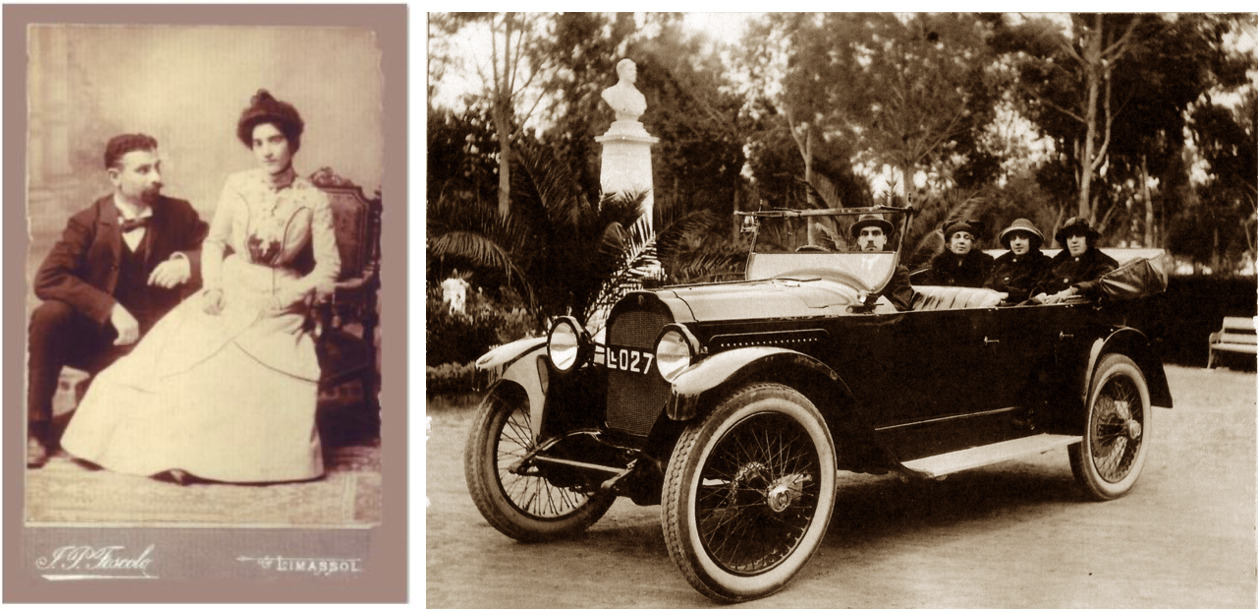
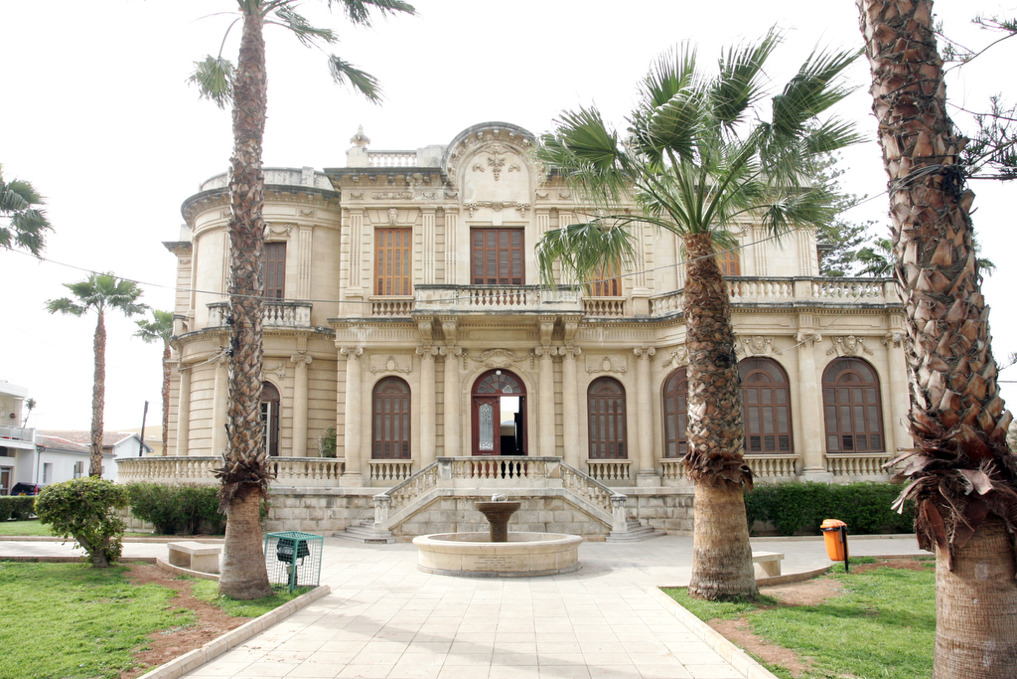
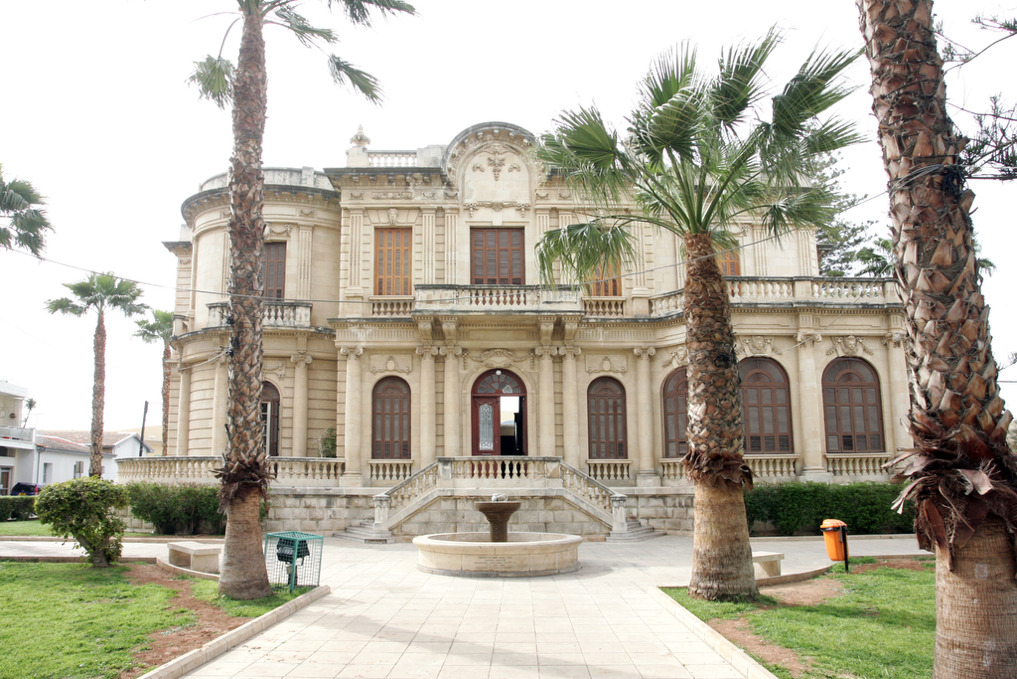
This new upper class began emulating European norms in order to be accepted by the new owners of the island, in the same way that their predecessors were emulating the Ottoman ways (Katsiaounis, 1996). Therefore, they started adopting European education, such as the inclusion of European languages and music lessons in the curriculum of their private schools, and the adoption of European dress that symbolized modernity and progress (Moyssi & Patsalosavvi, 2019; Rizopoulou-Egoumenidou, 2005; Μωυσή & Στιβαρού, 2021). Finally, they adopted European customs for hosting guests and consumer habits to recreate the European salons in their own houses and furnish them according to what was fashionable at the time, including Chinoiserie. When previously the architecture and the interior furnishings of the houses of the local elites were trying to reflect the Ottoman style that was prevalent at the time, with some of the best-preserved examples being the Mansion of Dragoman Hadjigeorgakis Kornesios and the House of Hadjilois, both in Nicosia (Rizopoulou-Egoumenidou, 2010). By the later part of the Ottoman period, one can see the appearance of Neoclassical architecture in Cyprus. Rich merchants and entrepreneurs started building large mansions based on the Neoclassical, the Rococo, and the Art Deco style, often employing Greek architects or Cypriot architects who were educated in Greece (Given, 2005; Ανδρέου, 2006).
In the early British Colonial period (1878-1910), most Cypriots lived in villages and worked in agriculture and husbandry. Therefore, they were not interested in imported products, such as Chinoiserie. This was due to the poverty affecting most of the population at the time; at the same time, the prevalent culture believed in only buying necessities and not luxury products, which were signifiers of the upper class (Panayiotou, 2013). The rural population continued to be almost exclusively agricultural and was living in difficult economic conditions until the 50’s-60’s (Katsiaounis, 1996).
The first objects from Asia or Asian inspired began to appear in the houses of Cypriot elites, especially as imports increased under the new rulership. This transformation was especially visible in domestic interiors, where imported Chinese porcelain, intricately decorated lacquer panels, and finely carved wooden furniture became highly sought after. These objects, already valued across Europe as markers of sophistication (Berg, 2003), were now adopted in Cypriot high society as tangible signs of cosmopolitan refinement and modernity. One of the most visible examples was fine China displayed on the dinner table as a means to impress company coming over for dinner. Still, the appreciation and procurement of Chinoiserie was mostly limited to household items and did not reach the levels it reached in the West, such as influencing architecture, literature, etc.
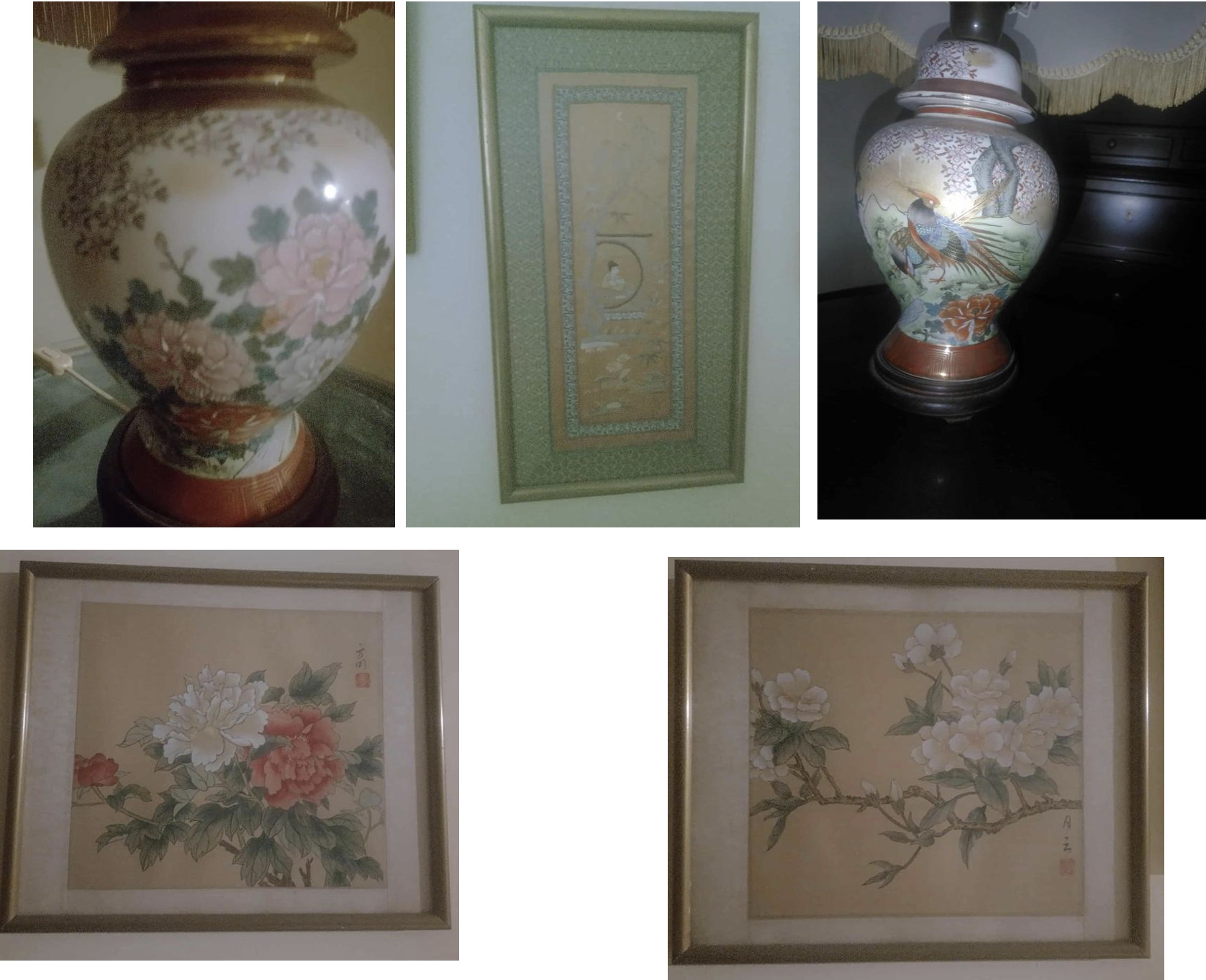
3.2. From elite objects of assimilation to precious wedding gift: Chinoiserie in Cyprus during the 1950s
Going toward the middle of the 20th century, Chinoiserie became more commercially available and affordable due to enhanced maritime commerce with China, Japan, and Europe. After the Second World War, there was a push for industrialisation that lowered manufacturing costs and led to mass-produced consumer goods that flooded global markets, while the improvements in maritime connections, such as diesel engine ships replacing steam ships, led to greater efficiency, and faster travel time between Asia and Europe (Sugihara, 2002; Xufeng, 2020). Cyprus, being a part of a global empire, positioned it in the middle of the main commercial maritime trade routes between the east and west and granted it access to such markets and products. Consequently, the growth of international trade made imported items increasingly available to wider segments of society. Porcelain sets became more affordable and were of lower quality than their predecessors and thus became exceedingly common in Europe by the 1930’s (Hrvatin, 2025). In Cyprus, this meant that porcelain tea sets, once luxury items, became easily attainable and accessible to working-class families. Throughout the 1950s, such tea sets became a standard and expected wedding gift, presented to newly married couples across the island, in both urban and rural settings.
Typically, a Chinoiserie tea set would be given as a wedding gift to couples both in the city and in the villages of Cyprus, especially throughout the 50’s. Depending on the area the village was located in, sometimes the family of the groom and other times the family of the bride were obliged to provide a house as dowry, while the family of the woman always had to provide the furnishings and household items like bedsheets, blankets, bed covers, towels, carpets, curtains, glassware, and cooking pots. These could be bought by travelling sellers ialopoulies (glass-sellers) or from the specialised shops in the cities. Having a dowry was extremely important at the time since it signalled financial stability and prospects for a better life, which would attract a well-off partner (Argyrou, 1996; Ioannidou, 2017).
By the 1950’s, it was easy to find European-made porcelain in Cypriot shops; the main shopping streets of Limassol were Agiou Andreou, Anexartisias, and Eirinis, while in Nicosia, it was Ledra Street and Ermou Street. While many shops that specialised in eidi proikos (dowry items) and apoikiaka (products from the colonies), placed advertisements in Greek and English language newspapers to showcase their local and imported products, that often-included Chinoiserie (“1.000.000 είδη. Εμπορικόν κατάστημα. Δημητράκη Ι. Τσιαούση,” 1947; Leads for Exporters, 1963). A newspaper article by a British reporter in Nicosia, Daphne Knight, tells of a stroll at Ledra Street, where she details the types and prices of various porcelain sets, such as Dresden China in red, white, and gold, and Royal Copenhagen. She explained that they come in sets of 22 pieces, and that they are the perfect wedding present or gift for a similar occasion (Knight, 1955).
Although with the influx of Chinese and Japanese porcelain sets in the Cypriot market, their value as a luxury item for the upper class was diminished, still the elites continued to procure these items, but in their more high-end versions, such as already antique vases. An interesting example comes from a newspaper article about a lady from Larnaca, Mrs Chloe Pelaghias, who was married to a UK-educated lawyer. This newspaper profile describes her as a person who loves books, theatre, and traveling like her husband. Additionally, among her interests is to beautify her home by buying old furniture, lamps, and Chinese porcelain from antique shops (Matoff, 1961).
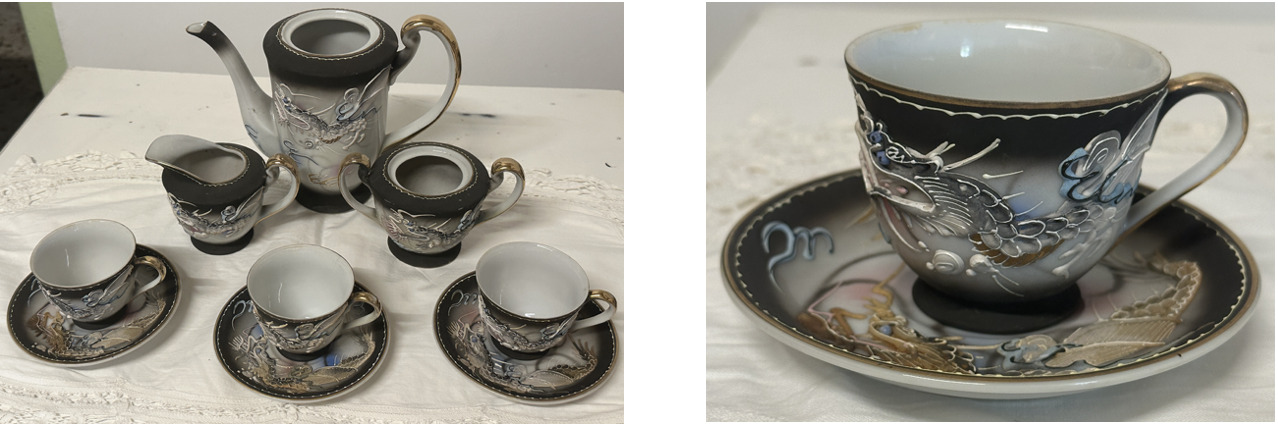
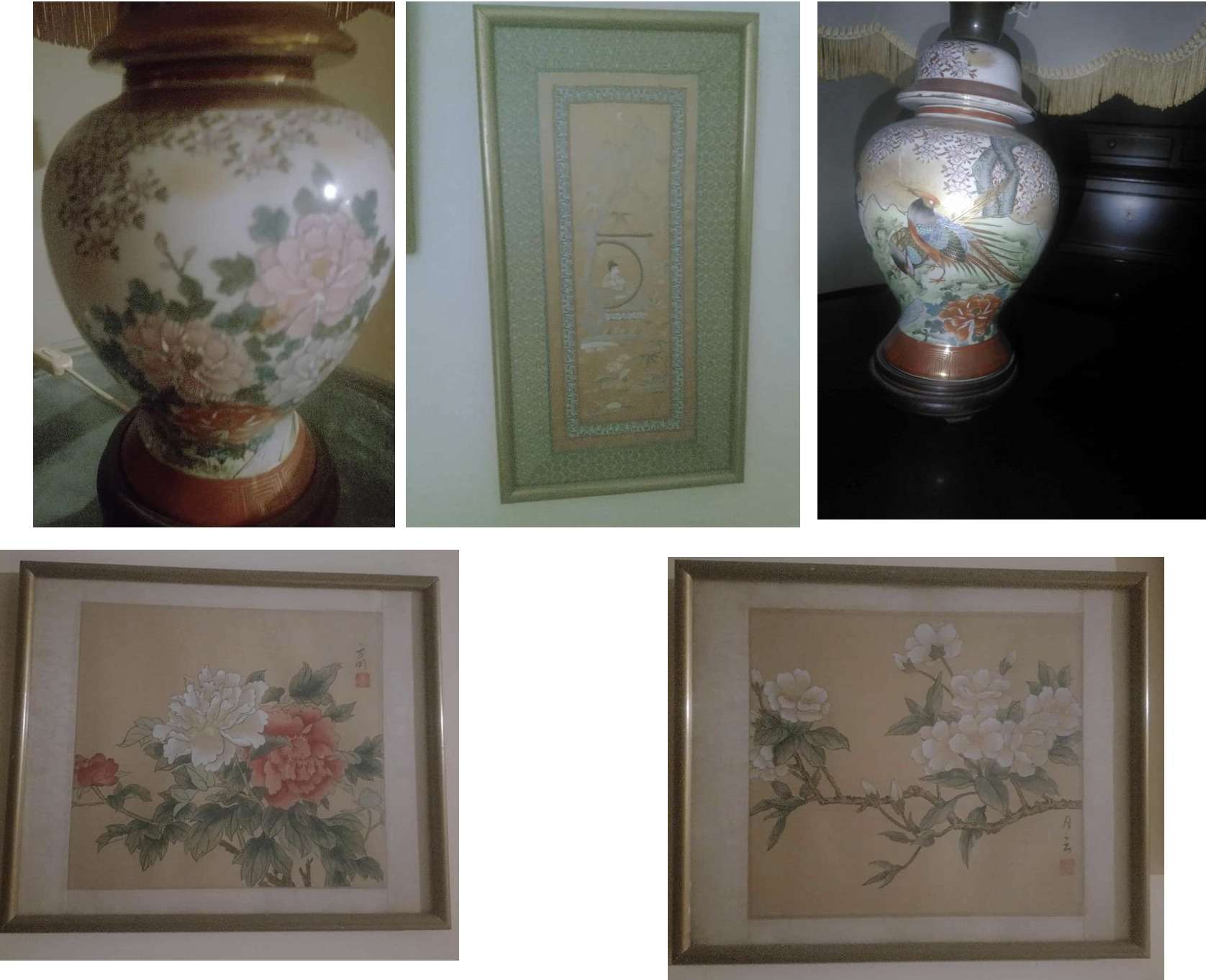
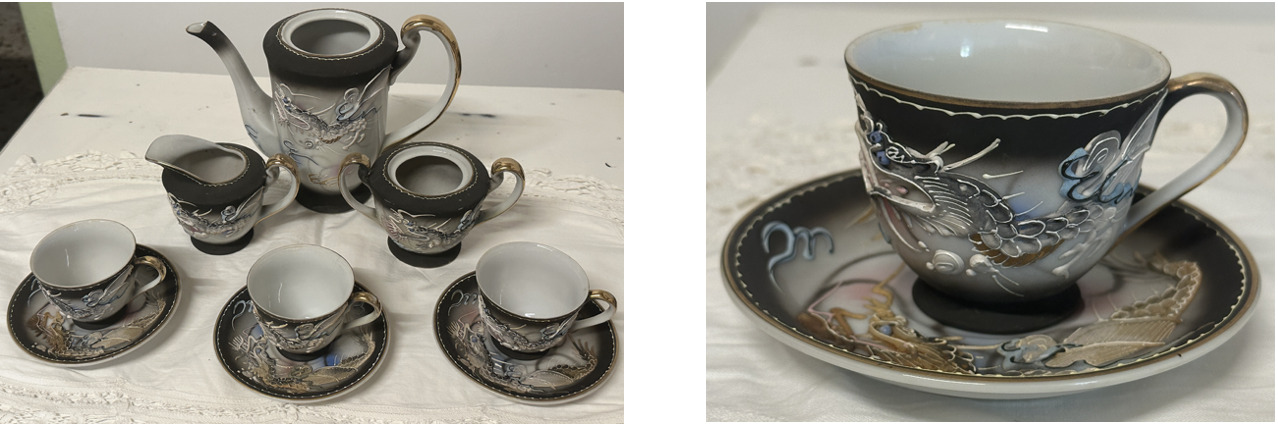
One of the most common styles from this period are the Japanese Moriage (raised decoration) dragon ware tea and coffee sets, decorated usually with dragons and other ornaments in relief to create a three-dimensional effect, and sometimes featuring a lithophane portrait of a geisha when held up against a light source (Hrvatin, 2025). A tea set usually had a teapot, two smaller cups for milk and sugar, and several teacups with their plates. Typically, these tea sets were kept behind glass in wooden showcases that were also a part of the bride’s dowry, and they were prominently displayed in the living room of the couple’s house. Essentially, these sets were used for display and not for drinking. Similarly, in Slovenia, such sets were displayed in a vitrine and used rarely for special family occasions (Hrvatin, 2025). Today, many such examples remain within these cabinets as part of a family heirloom, although, in many cases, some pieces from the set are missing, something very common in most households (Hrvatin, 2025).
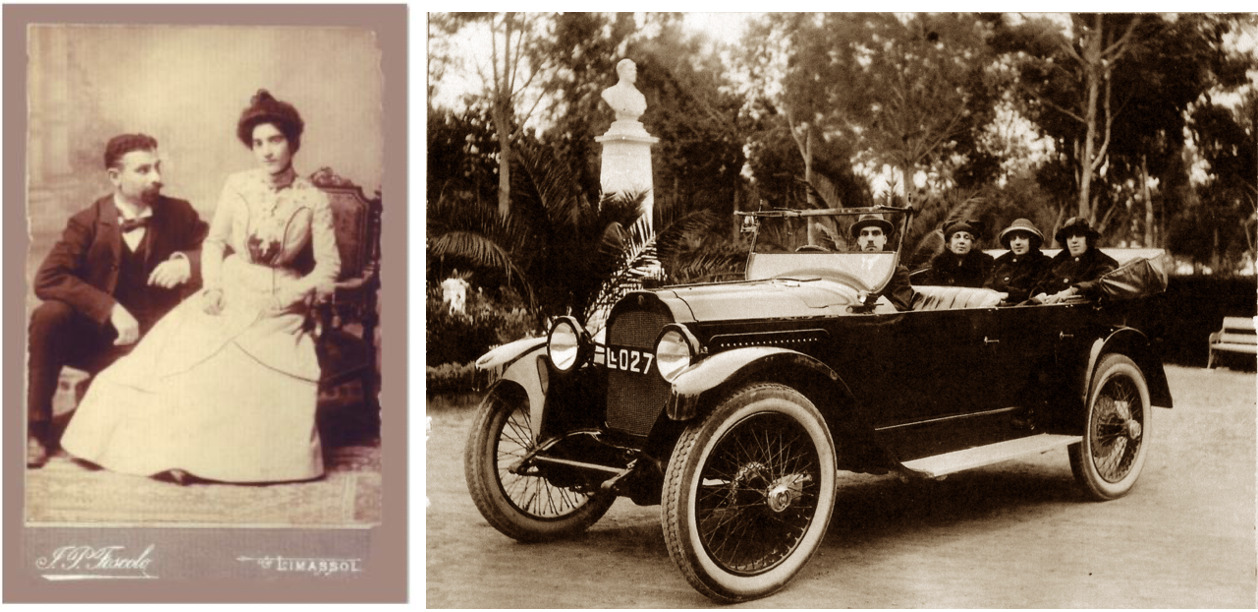
An example of Japanese dragonware comes as an heirloom from the wedding of the grandparents of one of the authors. It was presented as a gift by a family friend to the wedding of Kyriaki (Kika) Konstantinou and Charalampos Demetriou that took place in Moniatis in January 1958. They are still kept in the same cabinet that was part of the dowry of Kika, in the house that she built in 1960 in Limassol (Antri Demetriou, daughter of the couple, interview with Varvara Stivarou, 20 August 2025).
Through oral history, it is known that these sets started declining in popularity by the 1960s and 1970s. This shift coincided with the rise of new global cultural movements, the counterculture and hippie aesthetics, that promoted alternative lifestyles and tastes. Younger generations in Cyprus, much like elsewhere, aspired to align themselves with these new modern and international fashions, leaving the porcelain tea sets as heirlooms in family homes, often associated with the era of their grandmothers.
Thus, by the mid-twentieth century, Cypriots were far more aware of the broader geographical and political realities of the world than in earlier periods. “China,” “Japan,” and “Asia” were no longer abstract or entirely unknown entities, as expanding education, print culture, and imperial networks had made such places conceptually accessible. Yet this increased awareness did not necessarily translate into precise distinctions between Chinese, Japanese, or Korean artistic traditions. For most Cypriot consumers, these differences remained secondary. What mattered was not ethnographic accuracy but the recognition that these objects were imported, distant, and part of a wider global circulation of art and goods. Their value lay in their status as foreign decorative art, objects that signified refinement, mobility, and participation in modern consumer culture.
4.0. Conclusion
The history of how Chinoiserie became a popular import in Cyprus is closely intertwined with the island’s cultural orientation, shaped by its political leadership. These objects acquired distinct social and cultural significance within Cyprus’ own historical and colonial context. Initially, they were adopted by the local population as a means of emulating first the Ottoman elite and later the British bourgeoisie. By the 1940s, however, Chinoiserie had been fully adapted to local tastes, becoming not only integrated into Cypriot households as part of their material culture and aesthetic framework but also embedded within social customs. It assumed a role in pre- and post-wedding rituals, where porcelain objects functioned as markers of respectability and family status. Significantly, distinctions between Chinese, Japanese, or other East Asian origins were often blurred, as Chinoiserie from the very beginning operated as a broad, encompassing category rather than a precise geographical designation.
Indeed, in Europe, Chinoiserie and related decorative styles carried a complex ideological weight. As Hudson (Hudson, 2019) has argued, Chinoiserie served as a symbolic mechanism that enabled the nation to reconcile two contradictory impulses: the voracious consumption of Asian goods and the simultaneous exploitation and denigration of Asian peoples (Hudson, 2019). This, Hudson states, was achieved by deliberately detaching the objects from their cultural and material origins, rendering Asians as abstract, interchangeable figures with little to no agency in the Western imagination. In effect, Chinoiserie aestheticised and neutralised Asia, producing decorative motifs that masked histories of colonial domination and economic exploitation. Thus, in mainland Europe, such as Germany, France, and Britain, Chinoiserie operated as a form of cultural and ideological distancing.
In the Cypriot case, no such ideological process was necessary. The island was considerably far from the places where such conversations were taking place (Berg, 2003). Indeed, during the Ottoman period, Chinoiserie was not explicitly associated with “Asia” or with an exoticising cultural fascination, except perhaps among a small circle of early educated elites who were more directly exposed to European intellectual currents. For the majority of the population, these porcelain objects derived their value primarily from their association with the Ottoman upper class. Although Cyprus participated in regional trade networks, such objects remained relatively uncommon outside elite households. Wealth and access were largely concentrated among Ottoman officials and affluent families, and it was this proximity to social prestige, rather than a desire for the objects’ geographic or cultural origins, that shaped their appeal. In other words, what was being emulated was not “China” or “Asia,” but the status and social authority that ownership of such goods conferred.
A significant shift took place during the twentieth century, when Cyprus was under British colonial administration (1878–1960). Although the island had formally remained part of the Ottoman Empire until its annexation by Britain in 1914, from 1878 onward it was governed by the British Empire, and by 1925 it was officially declared a Crown Colony. This new political reality gradually reoriented the island economically, socially, and culturally toward Britain and the wider imperial world. As the twentieth century progressed, Cyprus experienced increasing urbanisation and a gradual move away from a predominantly agrarian way of life. The growth of towns, the expansion of education, and participation in imperial administrative and commercial networks contributed to the emergence of a new middle class.
This social group often sought to emulate British domestic standards and material culture as markers of refinement and upward mobility. In this context, Chinoiserie was appreciated not simply as an inherited symbol of elite prestige, but as an object that gestured toward a distant and globalised world. Thus, it functioned as a signifier of cultivated taste and participation in transnational circuits of consumption. Its appeal lay less in any precise understanding of its cultural origins and more in its status as imported decorative art, evidence of connection to a wider, modern world beyond the island’s boundaries and on equal footing with the colonial government rather than being oppressed by it.
With the end of the colonial rule, the importance of Chinoiserie would evolve one final time in the domestic sphere. For Cypriot families, porcelain tea sets came to function less as markers of an exotic elsewhere. Instead, it became a symbol of familial and community gift giving, following the current consumption trends, which was something new for the majority of the population. Their presence in Cypriot homes spoke to following the tradition of gift giving and, at the same time, participation in a wider, globalised consumer culture, rather than to any direct engagement with Asian culture or Western perceptions of Chinoiserie.