
Introduction
Although the medieval cloister was a realm of contemplation, order, and spiritual discipline (Stokstad, 1973), Romanesque cloisters (10-12C) displayed a paradox. Inside the tranquil geometry of monastic construction, a collection of monstrous animals, hybrid entities, grotesques, and uncanny creatures was carved into the stones that delineated the monks’ movements. These entities—lions with human faces, twisted demons, sirens, manticores, and other mythical creatures—contradict the principles of monastic purity and intellectual rigour. This conflict was expressed by St Bernard of Clairvaux (1090-1153) in his Apologia ad Guillelmum (1125), in which he condemned the presence of such images in monastic environments: “What is the point of this ridiculous monstrosity, this shapely misshapenness, this misshapen shapeliness?” (Bernard of Clairvaux, 1970). St Bernard’s criticism has become a benchmark for contemporary scholars to comprehend the role of visual culture in medieval monasticism.
Accordingly, this paper argues that monstrous creatures in Romanesque monasteries represented a fusion of folk knowledge and monastic intellectual culture, elucidating the permeability of knowledge systems and the complexity by which common images infiltrated sacred space. Instead of perceiving these monstrous animals as distractions or aesthetic superfluities by St Bernard, they need contextualisation within the broader traditions of oral storytelling, regional folklore, bestiary literature, and artisan workshop activities. In other words, these deformed creatures do not stand for anomalies but for vessels of cultural memory, ethical guidance, and regional identity—forms of knowledge that transcend the written texts of the monastic library.
During the Middle Ages, the notion of “folk knowledge” included various practices and beliefs such as oral traditions, local myths, animal lore, and regional cosmologies (Bynum, 2011; Le Goff, 1985). Folk knowledge pervaded medieval culture and was intertwined with Christian doctrine without limiting itself to the peasantry. Monks in monasteries engaged with folk traditions through preaching, confessions, hospitality to travellers, and contacts with lay brothers rather than isolating themselves from society (Burton, 1994). The monastery became a cultural crossroads where theological discussions by elites intersected with the lived experiences and imaginations of the local populace. Cloister sculpture, crafted by artisans in local traditions, emerged as a principal medium for incorporating traditional elements into monastery spaces.
In this process, bestiaries—medieval compilations of real and mythical creatures—had a significant influence on monastic perceptions of the natural and supernatural realms. Bestiary texts merged with classical sources, Christian allegories, and popular animal narratives, resulting in a hybrid form of knowledge that obscured the distinctions between scholarly and folk traditions (Hassig, 1995). Numerous grotesque creatures originated from bestiary literature, which, in turn, was shaped by oral and regional traditions. The portrayal of these entities in monastic art suggests that monks were familiar with these narratives and considered them essential elements of their intellectual and spiritual existence.
Accordingly, St Bernard’s criticism should be reinterpreted not as a dismissal of monstrous imagery but as a component of a broader Cistercian initiative to reform monastery aesthetics and discipline at that time. St Bernard’s aversion to monstrosity signifies anxiety that visual excess would divert monks from meditation and disrupt the ordered atmosphere of the cloister (Casey, 2012; Rudolph, 1990). He worries about the encroachment of popular culture into monastic life—a concern about its penetrability. However, the enduring presence of monstrous animal images in Romanesque cloisters proposes that artisans, benefactors, and possibly monks tolerated and even revered these creatures.
With this background, the integration of monstrous creatures into monastic culture can be assessed through three interconnected perspectives: (a) the transfer of folk knowledge into monastic environments; (b) bestiaries as intermediaries between popular and learned traditions; and (c) the material and social practices of artisans. Benedictine Romanesque cloisters (Moissac, Silos) along the pilgrimage road can testify to their unique yet shared roles as a visual store of local knowledge, moral exemplars, and cultural memory. Monstrous creatures illustrated a fluid, layered, and interrelated knowledge as conduits between folk imagination and monastic reflection, capturing the complex cultural exchanges to shape medieval visual and intellectual life. The liminality between the sacred and the secular, the elite and the popular, and order and imagination was unsolidified. It lay in between.
Interdisciplinary Methodology
This paper invites an interdisciplinary approach to investigate monstrous motifs in Romanesque cloisters. It aims to clarify the functioning of medieval knowledge systems across social and cultural borders and examine how visual culture facilitated the transmission of folk traditions into monastic spaces between the tenth and 12th centuries. Bestiary literature is examined as a bridge between classical natural history, Christian allegory, and folk animal lore. The monastic conceptions of monstrous creatures inspect bestiaries’ structure, themes, and symbolic functions. St Bernard’s Apologia, a criticism of monastic visual culture, as a textual analysis, defines the intellectual framework for interpreting and contesting cloister imagery.
These methods shed light on the interplay between written and oral traditions in medieval perceptions of the natural and supernatural realms. A visual analysis of Romanesque capitals focuses on the formal attributes of the carvings, their positioning in the cloister, and their iconographic association with bestiaries and folklore. This result generates an understanding of the modification and evolution of folk animals in monastic settings. Finally, the paper integrates ideas of liminality and cultural mediation to interpret the cloister as a confluence site of diverse knowledge systems. This theoretical paradigm clarifies why monstrous creatures endure in monasteries.
Bestiary and Popular Animal Lore
The medieval bestiary (Latin: bestiarium vocabulum) originated in antiquity and provides a meeting point of learned tradition, Christian allegory, and popular animal lore. It was adopted into monastery culture and facilitated monks’ understanding of the natural and supernatural realms. As a compilation of beasts, the bestiary gained popularity through illustrated manuscripts of accommodating diverse creatures during medieval times. Each creature was depicted and accompanied by a moral lesson, indicating that the world constituted the Word of God and each living entity bore its meaning.
To provide interpretations of actual and mythical animals, the medieval bestiary started with Physiologus, a Greek text (2-4C), a combination of natural history and Christian allegory (Curley, 1979). The text was augmented, translated, and integrated into Latin encyclopedias, such as Isidore of Seville’s Etymologiae (c. 625), and later into the illustrated bestiaries (12-13C). Bestiaries became a common genre in monastery scriptoria and were replicated, annotated, and modified to reflect regional differences in local interests and traditions across Europe by the High Middle Ages. Currently existing manuscripts and references in monastic literature prove that bestiaries are literary curiosities and tools for teaching, sermonising, and contemplation for monks. Their composition adhered to a uniform framework: (a) description of the animal, often inaccurate or fantastic; (b) behavioural traits, drawn from classical sources, travellers’ tales, or folk belief; and (c) moral or allegorical interpretation, linking the animal to Christian doctrine. This tripartite structure enabled bestiaries to fuse several forms of knowledge into a unified moral framework (Hassig, 1995).
The blending of classical, Christian, and folk traditions is characterised by eclecticism. Bestiaries drew on classical natural history, biblical references, Christian allegories, folk tales, and regional animal lore. These merged sources indicate the cumulative and interrelated perception of knowledge in medieval times, because bestiaries did not differentiate between empirical observation and imaginative narrative. Both were legitimate sources of moral truth, and several bestiary animals originated from folk tradition. For example, the siren, a mixture of woman-bird or woman-fish, embodies the perils of seduction. Classical mythology provided its foundation, whereas medieval interpretations relied on folklore of perilous water spirits.
Intermediary bestiaries between folk and monastic knowledge emerged due to their roles in connecting common knowledge with scholarly knowledge. Bestiaries’ moral lessons allowed monks to include folklore characters in Christian teachings without claiming the stories were literally true or not. This interpretative flexibility made bestiaries a valuable tool for monastic education. They were used to depict moral lessons in sermons and exempla, such as the lion signifying Christ. Monstrous creatures served as admonitions against transgression or spiritual peril. Medieval monastic culture relied on visual and imaginative mnemonic aids; thus, bestiaries were powerful mnemonic devices. In cloister sculpture, they facilitated meditation practices through persuasive images. Manuscripts were adorned with bestiary illustrations, which then shaped the visual lexicon of sculptors. Several cloister capitals portrayed animals from bestiary illuminations, connecting manuscript culture and stone carving.
The transmission of bestiary motifs in cloister sculpture occurred because of various factors that contributed to the process from manuscripts to stone. Artisans, despite their frequent lack of literacy, operated in settings where manuscripts were available. They might have found bestiary illustrations firsthand or received descriptions of the monsters from monks. As sculptural workshops established repertoires of motifs from bestiaries, these motifs disseminated across regions following artisans’ footsteps from location to location. Moreover, when monastic patrons solicited specific animals or scenes for educational purposes, artisans integrated recognisable bestiary creatures into their creations, even in the absence of such elements. Captivating monstrous creatures enabled artisans to show their craftsmanship; thus, the deformed forms rendered them exemplary themes for stone carvings.
The ambiguity of bestiary creatures in monastic contexts developed because although bestiaries were esteemed for ethical and pedagogical potentiality, their magical essence elicited anxieties over distraction and excessive imagination. The bifurcated reception of bestiaries reflected this ambiguity: (a) some monastic authors lauded them as reservoirs of moral insight, and (b) some admonished them for fostering curiosity or superstition. St Bernard’s criticism embodies this tension: his unease with the monstrosity suggests a wish to regulate the imaginary landscape of the cloister, doubting that visual stimuli would obstruct spiritual discipline.
In summary, bestiaries were essential in conveying folkloric creatures in monastic visual culture. Through the fusion of classical, Christian, and folk traditions, they developed a symbolic vocabulary that shaped medieval perceptions of the natural and supernatural worlds. Their impact on cloister art indicates the permeability of medieval knowledge systems and the complex methods by which popular imagery infiltrated sacred space. The bestiary is crucial for explaining the monstrous creatures in the cloisters and contextualising St Bernard’s criticism within the broader framework of medieval intellectualism.
Folk Traditions and Medieval Knowledge Systems
The Medieval Age was a period of an array of knowledge systems that coexisted, overlapped, and interacted. Folk knowledge was not a minor or inferior type of knowing; instead, it was a core of medieval intellectual life, shaping perceptions of the natural world, moral order, and the boundaries between the human and the divine. The presence of monstrous creatures in monastic culture, the nature of folk knowledge, and its channels of dissemination should be understood from the following perspectives.
The term “folk knowledge” is a contemporary academic phrase, but its phenomenon was integral to medieval life. Medieval people did not classify knowledge into strict hierarchies of “scientific,” “popular,” or “superstitious” (Le Goff, 1985). Knowledge was transferred through interconnected mediums such as oral storytelling, indigenous traditions, seasonal ceremonies, zoological folklore, and regional cosmologies. These types of knowledge were woven into daily life with moral, practical, or cosmological value. Both textual authorities and lived experience formed medieval understandings of the natural world. In other words, monastic scholars relied on classical and patristic texts while engaging directly with the natural world through agriculture, travel, and interactions with lay populations. Folk knowledge was vital to monastic life and was embedded within the wider cultural milieu by monks: (a) oral narratives of local spirits, monstrous beings, and supernatural animals; (b) animal lore, such as beliefs about the healing or harmful creatures; (c) regional myths of natural phenomena; (d) moral tales through storytelling; and (e) hybrid creatures embodying anxieties or hopes. These dynamic traditions were transferred through narration, modification, and engagement with Christian teaching (Bynum, 2011).
Despite the assumption of the Church’s suffocating folk traditions, medieval Christianity assimilated, adapted, and reinterpreted folk knowledge. Clergies often interacted with popular beliefs and endorsed or reformulated them for Christian moral teachings. The demarcation between “folk” and “Christian” knowledge was permeable. Monastic writers used folk motifs in sermons, exempla, and moral instruction because bestiary creatures possessed histories in oral tradition before their adaptation into Christian imagery. The Church’s use of these beings can witness the toleration and integration of folk knowledge into religious pedagogy. However, this process was not consistently smooth. Certain clerics voiced apprehension about the endurance of non-Christian or pre-Christian beliefs, particularly in supernatural creatures or hybrid entities. Their fears illustrate the pervasive influence of folk knowledge within medieval culture. St Bernard’s discomfort reflects his aesthetic anxiety and desire to regulate knowledge allowed within monastic environments (Schmitt, 1994).
Notwithstanding their ideal of seclusion, monasteries were integrated into local communities, and monks gained folk knowledge through various channels. Monks’ sermons to laypeople need an understanding of local beliefs to engage them. Sermons often included folk motifs, either denouncing them or recontextualising them for Christian teaching (Rubin, 1991). Monks heard laypeople’s accounts of their dreams, anxieties, and supernatural experiences, which mirrored local customs. These interactions afforded monks insight into the imaginary realms of the laity. Moreover, monasteries accommodated travellers, pilgrims, and merchants, who introduced tales from remote areas and spread folk motifs. Particularly, artisans introduced their visual vocabulary of local customs and folk motifs, incorporating monstrous creatures and scenes with local storytelling in cloister sculpture. To this end, the lay brothers, for providing their manual labour within the monastery, were of rural origins and knew the oral traditions of their villages; thus, their presence was a direct conduit for the infusion of folk knowledge into monastic life (Burton, 1994).
Monasteries were hubs of literacy, manuscript production, and theological contemplation in addition to centres of economic, social, and artistic activity. This dual role positioned them at the nexus of elite and popular culture exchange. Part of knowledge was orally transmitted by monastic writers, who documented stories from the only available oral folk tradition. Bestiaries, hagiographies, and compilations of miracles were remnants of oral storytelling, and pedagogic tools, images, conveyed meaning across linguistic and educational barriers. The characteristic features and symbols of monstrous creatures were adept at attracting attention and imparting moral or cosmological concepts. The cloister was physically confined and metaphorically accessible. Monks engaged in reading, meditation, and contemplation, yet encountered daily visual culture. Folk imagery interacted with their spiritual milieu.
Contemporary distinctions of “folk” and “elite” knowledge could hide the flexibility of medieval intellectual life. Knowledge was transferred through several channels with negotiable boundaries. Monstrous creatures existed within the fluidity of oral narratives, bestiaries, sermons, manuscript illuminations, and cloister sculptures, despite varied interpretations according to context, audience, and media. To provoke reflection and moral contemplation, medieval memory depended on vivid imagery. Monstrous motifs were decoration and a cognitive tool for monks in structuring and interpreting knowledge; thus, their presence in cloisters reflected the influential folk traditions and the intellectual practices of monastic life (Carruthers, 1998).
In medieval Europe, memory was treated as a treasure of knowledge. Hugh of St Victor (c. 1096-1141) framed his discourse on the art of memory in terms of material wealth in The Three Best Memory-Aids for Learning History. He then adopted the metaphor of the moneychanger to explain the need to store information systematically, and memories should be exchanged for distributing culture, like money.
My child, knowledge is a treasury, and your heart is its strongbox. As you study all of knowledge, you store up for yourselves good treasures, immortal treasures, incorruptible treasures, which never decay nor lose the beauty of their brightness. In the treasure-house of wisdom are various sorts of wealth, and many filing-places in the storehouse of your heart […] The orderly arrangement is clarity of knowledge […] illuminates the intelligence and secures memory. (Cited in Carruthers, 2008)
In short, medieval folk knowledge was dynamic, pervasive, and connected to monastic culture. Monks engaged with folk traditions through pastoral duties, routine encounters, and the tangible practices of artisans. The monastery was a cultural site where oral and written traditions converged, welcoming popular imagery with moral or spiritual meaning. Grasping this setting leads us to comprehend the existence of monstrous creatures in cloisters and place St Bernard’s criticism in the context of medieval epistemologies.
St Bernard’s Spiritual Anxiety on Imagery
The Cistercian Order was founded as a reformation against traditional Cluniac monasticism. In 1098, Robert and 21 monks from the Cluniac Abbey of Molesme established a monastery in a forest south of Dijon, France, adhering to the Rule of St Benedict (Ora et labora) in isolation. Their new settlement was called “New Monastery” (Latin: Novum Monasterium). Its reputation and rigour quickly attracted the local nobility. Under the location name “Cistercium” (French, “Citeaux”), their donations enhanced the abbey outside Burgundy (Rudolph, 2019).
St Bernard (1091–1153), the abbot of Clairvaux, made claims against the Benedictine traditions. His criticism of conventional monastic activities, Apologia ad Guillelmum (1125), warns against extravagant decorations and curious carvings that divert monks from prayer.
But in cloisters, where the brothers are reading, what is the point of this ridiculous monstrosity, this shapely misshapenness, this misshapen shapeliness? What is the point of those unclean apes, fierce lions, monstrous centaurs, half-men, striped tigers, fighting soldiers and hunters blowing their horns? […] so many and so marvellous are the various shapes surrounding us that it is more pleasant to read the marble than the books, and to spend the whole day marvelling over these things rather than meditating on the law of God. (https://sourcebooks.fordham.edu/source/bernard1.asp).
The Apologia deals with reform, discipline, and aesthetic control of monastery architectural ornamentation. Requiring austerity, labour, and stillness, the Cistercians’ asceticism gave rise to an innovative style of church architecture, combining simplicity and purity with the highest standard of masonry (Kinder, 2002). Although St Bernard’s condemnation is a repudiation of visual embellishment, his criticism is more complex than a denunciation of artistic excess. He worries about the role of imagination, the limits of monastic identity, and the violation of popular culture in sacred spaces. St Bernard’s comments should be contextualised within the 12th-century’s intellectual, spiritual, and cultural framework.
The Apologia was written during a time of intense monastic reform. St Bernard, a leading figure in the Cistercian movement, aimed to differentiate his Order from the elaborate, secular Benedictine monasteries, particularly the Cluniac. His criticism of cloister imagery is part of a larger initiative to advocate for austerity, simplicity, and spiritual discipline (Casey, 2012). St Bernard’s anxieties were not solely aesthetic; they encompassed moral and psychological dimensions. For him, superfluous decoration in architecture, liturgy, or manuscript illumination unfocused monks from their spiritual duties. The cloister was designed to be a space of stillness, contemplation, and ordered thought; a visible feature that disrupted this arrangement jeopardised the monk’s inner discipline. Indicating his wish to govern the physical and the mental spaces of the monastery, St Bernard’s anxiety was based on the imagination’s vulnerability to disorder.
Imagination was a vulnerable faculty. Medieval psychology, drawn from St Augustine and elaborated by Hugh of St Victor, considered the imagination (imaginatio) a powerful yet potentially dangerous capacity. It connects sensory perception to intellectual understanding, shaping the mental images (Carruthers, 1998). The imagination, susceptible to sensory inputs, is prone to corruption. St Bernard’s criticism embodies this psychological framework: grotesque images instil uncomfortable or distracting phantasms in the monk’s mind, unsettling concentration and prayer. His rhetoric highlights the sensory overload caused by such imagery, validating his criticism of the monstrous images and their vividness, excitement, and ability to captivate the imagination, which threatens to divert the monk’s attention from Scripture to a chaotic sensory realm.
Monstrous creatures were symbols of disorder. They reside in a liminal space between human and animal, natural and supernatural, and familiar and strange. Through medieval thinkers, their hybrid forms transgress the boundaries to structure the world and represent cultural worries around identity, order, and the unknown (Cohen, 1999). St Bernard’s unease is a response to their symbolic ambiguity. Within the cloister—a space for reflecting spiritual order—these creatures meant disorder, hybridity, and the intrusion of worldly turmoil into the monastic enclosure. This symbolic reading corresponds to St Bernard’s broader concerns about monastic purity. The cloister should be a microcosm of paradise, a realm where the monk fostered inner harmony. The monstrous creatures with grotesque forms and ambiguous meanings disrupted this ideal.
St Bernard’s criticism was an apprehension about intruding popular culture into monastic life. The grotesques, which he denounced, came from folklore, regional myths, and artisan traditions, and their presence in the cloister suggests the penetration of the laity’s imaginative worlds into sacred spaces. The Apologia was a response to the permeability of monastic borders and continued to separate the sacred from the secular, the learned from the common, and the monastic from the worldly. As monstrous creatures obscured these differences, St Bernard’s diction expressed the images as “ridiculous”, “absurd”, and “monstrous”, besides their incongruity with monastic ideals. His criticism is aesthetic and cultural, disapproving the incorporation of folk themes into a domain which he contends should be regulated by theological and scriptural authorities.
Analysing the Apologia exposes a conflict between textual and visual modes of knowledge. St Bernard, a theologian and preacher, privileged the written word and the reflective reading of Scripture. Visual images, particularly those from popular tradition, were inferior or potentially deceptive. This tension signified wider discussions within medieval monasticism over the role of images in spiritual life. Some authors embraced visual imagery as a meditative instrument; others understood it as a distraction or as misleading. St Bernard aligns with the latter viewpoint, underlining the dangers of visual overabundance. However, the continuity of grotesque iconography in cloisters indicates monks’ esteem for visual knowledge in conjunction with textual knowledge. Cloister sculpture was a visual exegesis, translating moral and cosmic concepts into stone, although St Bernard’s criticism embodies one perspective in a broader discourse over the role of the senses in spiritual practice.
Despite St Bernard’s criticism, monstrous animals appeared in Romanesque cloister sculpture. Even some Cistercian houses included them in their architectural designs (Kerr, 2010), suggesting a lack of full acceptance of St Bernard’s views. Various factors caused this: (a) artisans often operated within established workshop traditions, integrating familiar motifs, irrespective of monastic inclinations; (b) monks might have valued their moral or mnemonic values; (c) donors occasionally commissioned ornamental schemes according to their personal preferences, instead of monastery principles; and (d) monstrous imagery was fully ingrained in Romanesque culture, indicating that its full removal would necessitate a departure from its artistic tradition.
In conclusion, St Bernard’s Apologia exposes his worries about the imagination, monastic identity, and the violation of popular culture in sacred space because grotesques signify sensory distraction, symbolic chaos, and the limits of monastic knowledge. St Bernard struggled to halt the continuity of these animals in cloisters, persisting as intermediaries between folk knowledge and monastery intellectual culture, which exemplified the complex relationship between visual, textual, and oral traditions across the medieval era.
Bestiary Hybrids and Folkloric Motifs
A comparison (table 1) shows that bestiary hybrids, originating from the textual and moralising tradition of the medieval Physiologus and its Latin bestiary successors, depict codified animal-human amalgamations, whose symbolic interpretations were explicitly imparted in monastic culture. In contrast, folkloric motifs from non-textual, popular, and pre-Christian oral traditions manifest in Romanesque cloisters, illustrating the enduring nature of local imagination and communal anxieties. This imagery, as St Bernard worries, risks diverting monks from contemplation by appealing not to theological allegory but to curiosity, wonder, and the untamed imagination.
Monastery as a Cultural Mediator
The medieval monastery was not an isolated intellectual enclave but a vibrant cultural institution, positioned at the convergence of various knowledge systems. The actual experience of monastic life was more fluid, contrary to the principles that emphasised seclusion, solitude, and detachment from the world. Monasteries engaged with lay communities, artisans, travellers, and local customs as intermediaries between elite theological discourse and the surrounding popular culture. Their function as a cultural intermediary underlines the adaptation of folk knowledge to monastic spaces, its interpretation, and its transformation by monks. The representation of monstrous animals in cloister sculpture manifests a cultural negotiation.
Medieval monasteries were centres of literacy, manuscript creation, and theological contemplation, as well as foci for economic, social, and artistic endeavours. Their influence extended into the surrounding countryside, necessitating ongoing interaction with the laity in daily activities. Accordingly, monasteries were integrated into local networks while facilitating hospitality to travellers, pilgrims, merchants, and artisans, who brought narratives, ideologies, and visual themes from remote areas, encouraging the spread of traditional knowledge. Pilgrimage routes such as Santiago de Compostela were the transmitters of artistic styles and narrative traditions (Melczer, 1993). The cloisters of Moissac and Silos were susceptible to various cultural influences.
As economic-social networks, monasteries owned vast estates and engaged lay workers, who preserved the oral traditions of their communities. Lay brothers residing within the monastery were intermediary actors for folk knowledge, and monastic life was shaped by the ideas and customs of the local populace (Burton, 1994). Moreover, monastic patrons commissioned works from itinerant artisans whose training was rooted in regional workshop traditions. The artisans incorporated folk motifs into monastic art, lacking explicit theological explanation. Their mobility across regions enabled the spread of visual motifs for a collective lexicon of bestiary lore with regional narratives.
Monks interpreted, modified, and recontextualised popular images in a Christian setting, testifying to the monastery’s function as a cultural intermediary. They often categorised folkloric creatures and assigned them moral or spiritual significance. Bestiaries such as the fox, basilisk, and siren were redefined as emblems of sin, temptation, or spiritual peril and were assimilated into Christian pedagogy (Hassig, 1995). The cloister became a space for transition to other buildings and an arena of education. Monks occupied themselves with reading, meditation, and contemplation within its walls, encountering sculptural imagery daily. Cloister capitals were visual texts, imparting moral teachings through symbolic representations. As folk animals, with their distinctive forms, were pedagogical tools, monks interacted with them on an intellectual level through imaginative engagement. Medieval meditation techniques promoted the use of vivid mental imagery to foster contemplation (Carruthers, 1998). Hybrid creatures with grotesque appearances and striking postures enriched imaginative reflection. Their existence in cloisters indicates that monks esteemed their cognitive and mnemonic capabilities, despite St Bernard’s unease about their imaginative prowess.
As a cultural intermediary, monasteries continuously negotiated the difference between sacred and profane knowledge. The cloister was simultaneously confined and open, sacred and profane, linked to the world. The building, with arcades surrounding a central garden, is a space that reconciles both interior and exterior, and contemplation and movement. Monstrous creatures, often located on transitional architectural features, underscore this liminality. Their hybrid forms reflect the cloister being a threshold between different worlds of experience. Monastic authorities sought to control the types of images in cloisters, according to St Bernard’s criticism.
However, their persistence indicates such regulation is partially effective. The conflict between monastic principles and artistic execution is apparent in the juxtaposition of austere architectural styles with vibrant sculptural elements. Despite the Cistercians’ simplicity, cloisters remained a site for popular iconography to infiltrate, transform, and attain new meanings. This disagreement illustrates the complex reality of monastic life, where theological ideals coexisted with pragmatic considerations, artistic traditions, and cultural expectations.
Hideous creatures were mediators between various knowledge systems. Their hybrid shapes represented the fusion of classical, Christian, and local traditions and embodied the ingenuity of artisans; their symbolic meanings were shaped by textual and oral sources and the interpretative methods of monks. For the storage of cultural memory, hybrid creatures in cloisters ensured the integration of regional myths and oral traditions into the monastery’s material culture. Despite their origins in folk tradition, they were reinterpreted as moral exemplars. Their striking forms rendered them potent images of sin, temptation, or spiritual peril, which monks took as visual aids in meditation or instruction, converting prevalent imagery into instruments of spiritual formation. Monstrous creatures inspired the monastic imagination, offering vivid imagery for meditation. Their hybrid shapes prompted monks to contemplate the limits of nature, humanity, and the divine, contributing to the intellectual and spiritual life of the monastery.
The monastery absorbed folk knowledge and transmuted it. The monk reconfigured popular imagery to align with Christian principles through metaphor, moralisation, and visual reinterpretation. Folk motifs from oral storytelling were redefined to represent moral or spiritual principles. The siren transitioned from a folkloric aquatic spirit to an emblem of seduction, showing the monastery’s capacity to fuse many sources of knowledge into a cohesive moral framework. Local motifs were adapted to monastic art and imbued with new meanings. As they were integral to a wider symbolic vocabulary that permeated Europe, the monastery converted regional folk traditions to global Christian emblems. In this process, artist workshop traditions shaped the visual culture of monasteries, where monks interpreted them. The artworks embody a conversation between artisans and monks, juxtaposing folk tradition with monastic identity.
In summary, the medieval monastery was a cultural intermediary, assimilating, altering, and disseminating folk knowledge through its visual and intellectual endeavours. Monstrous creatures in cloister sculpture witness this cultural negotiation. Their shapes represent the impact of folk narratives, bestiary lore, and craftsmanship traditions. Monastic exegesis, allegorical interpretation, and contemplation shaped their meanings. Their longevity demonstrates the permeability of medieval knowledge systems and the dynamic interaction between popular and elite traditions.
Case Study: Romanesque Cloisters (Moissac, Silos)
Monstrous creatures are a tangible truth in several Romanesque monasteries. Their appearance evidenced the convergence between folk knowledge and monastic visual culture, examined in the cloisters of Moissac and Silos along the pilgrimage road. Each one features a rich array of monstrous creatures related to local folklore, bestiary traditions, and artisan practices. The cloisters exhibit the penetration of folklore creatures into monastery spaces visually and contextually.
Moissac: Hybrid Creatures and Folk Motifs
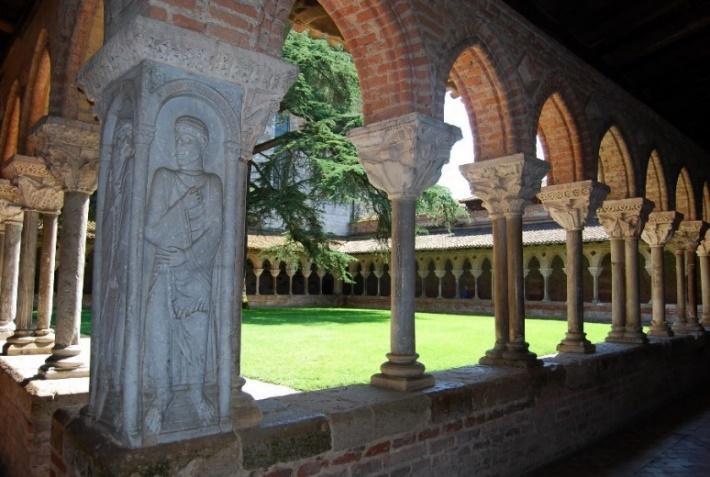
The Abbey of Saint-Pierre was a Benedictine and Cluniac monastery in Moissac, Tarn-et-Garonne, in south-western France. Several of its medieval buildings survive, including the abbey church, which has a famous Romanesque tympanum and a cloister. According to legend, the Frankish king Clovis personally founded it the day after his victory over the Visigoths in 506. Historical records indicate Saint Didier, bishop of Cahors, as a founder in the middle of the seventh century. The cloister (1100, fig. 1) exemplifies renowned Romanesque sculpture. Its capitals exhibit a diversity of creatures (lions, griffins, sirens, centaurs, and hybrid entities), whose origins are from folklore and bestiary tradition, rendering Moissac the transference of popular iconography into monastic environments. The sculptural decoration reveals a program at both the artistic and conceptual levels. Several artisans were involved in carving the capitals, adhering to a uniform canon of structural form. They were trained in the sculptural school developed in the basilica of Saint-Sernin in Toulouse (1096), and the fluid iconographic transitions from one capital to another suggest their cooperation. Of the 76 capitals, 50 are decorated with narrative scenes, which comprise the whole of human history, the Bible, and the lives of the saints (Durliat, 1982; Rupin, 1987; Schapiro, 1985).
_along_the_.jpg)
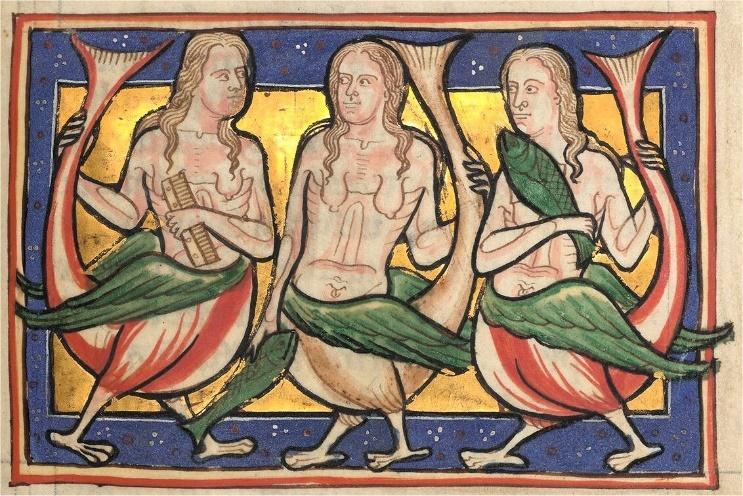
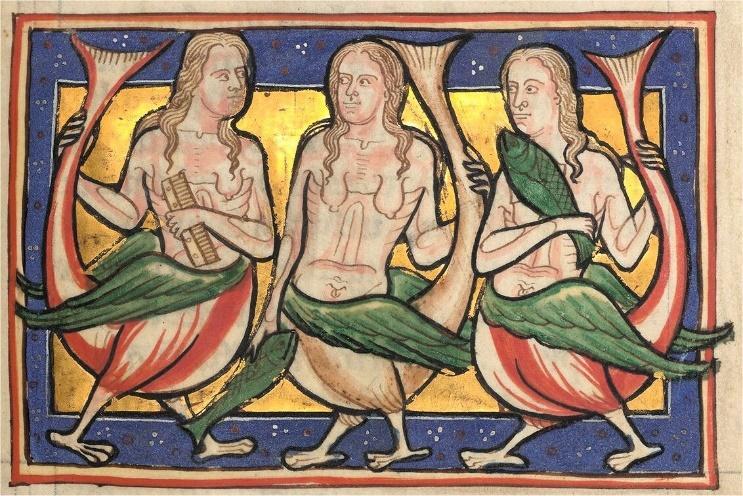
For an example of hybrid creatures, the siren (fig. 2), a folk water spirit, is a half-human, half-bird or half-fish that charms sailors with singing. When sailors fall asleep, sirens attack them and tear their flesh. In the allegory, those who take delight in worldly pleasures will become prey to the devil. The fish could represent the human soul; thus, the siren holding a fish may suggest the loss of sailors’ bodies and souls. The siren is a fusion of classical mythology and local folk beliefs about dangerous water spirits. Her divided tail, which she raises in each hand, is common in medieval sculpture but lacks a direct classical counterpart. Instead, it reflects regional storytelling traditions that connected water spirits to seduction, danger, and thresholds. Within a monastic framework, the siren was interpreted as a figure of temptation, symbolising the dangers of sensuality and the necessity of spiritual awareness. Her visual representation with exaggerated features and a folkloric tale indicates that artisans relied on popular imagery rather than textual sources. The siren epitomises the fusion of folklore and ecclesiastical knowledge, serving as both a moral emblem and a vestige of local mythology (Hassig, 1995).
The centaur has the lower body of a horse and the upper body of a human. A centaur archer originated from classical mythology and medieval folklore concerning wild men and forest spirits. The centaur’s stance, which pulls a bow at an invisible target, conjures concepts of danger, unpredictability, and the wildness of nature. In bestiaries, centaurs were interpreted allegorically as representations of the bifurcated human soul, conflicted between rationality and animal instinct. Their dynamic posture and expressive traits imply a closeness with oral storytelling, where hybrid beings resided at the periphery of the known world. The centaur embodies a synthesis of classical, Christian, and folkloric themes, sculpted by artists acquainted with regional stories.
The Moissac artisans belonged to a regional workshop tradition that traversed pilgrimage routes, spreading visual motifs from one location to another. They were lay artisans with training and heritage rooted in folk traditions. To monastery art, they introduced creatures and scenes mirroring the imaginative worlds of the laity, even when they diverged from monastic principles. Despite the ascendance of Cistercian reform, the persistence of hybrid creatures at the Benedictine-Cluniac Moissac confirms artisans’ impact on the visual landscape of the cloister. Their carvings are a visual lexicon that amalgamates the bestiary with local folklore, resulting in a sculptural program that is both didactic and popular in culture.
Santo Domingo de Silos: The Grotesque as Cultural Memory
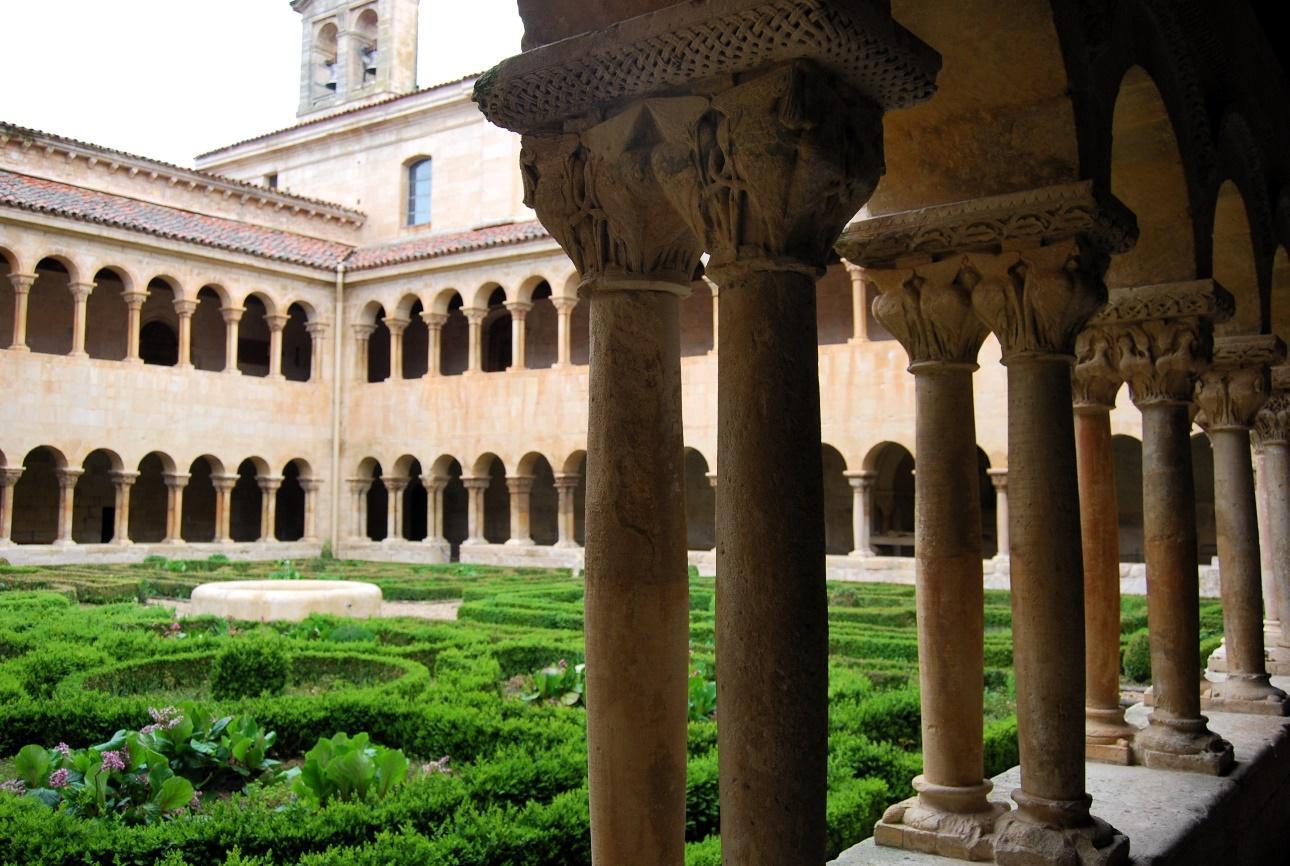
Santo Domingo is a Benedictine monastery in the village of Santo Domingo de Silos in northern Spain. The monastery dates to the Visigothic period (7C). In the tenth century, the abbey was called “San Sebastián de Silos” but acquired its current name when Dominic of Silos was entrusted to renovate the abbey by Fernando the Great, King of Castile and León. When Santo Domingo died in 1073, work on the church and the cloister was handed over to Abbot Fortunius, who saw the rest of the construction to its completion. The cloister (fig. 3) has elaborate capitals and a diversity of grotesque figures with a visual program of biblical narratives with grotesques, hybrid creatures, and mythical entities. Numerous creatures linked to Iberian folk traditions render Silos a site for the transference of popular imagery into monastery contexts (Schapiro, 1939; Williams, 1972).
_with_hybrid_creatures.__he.jpg)
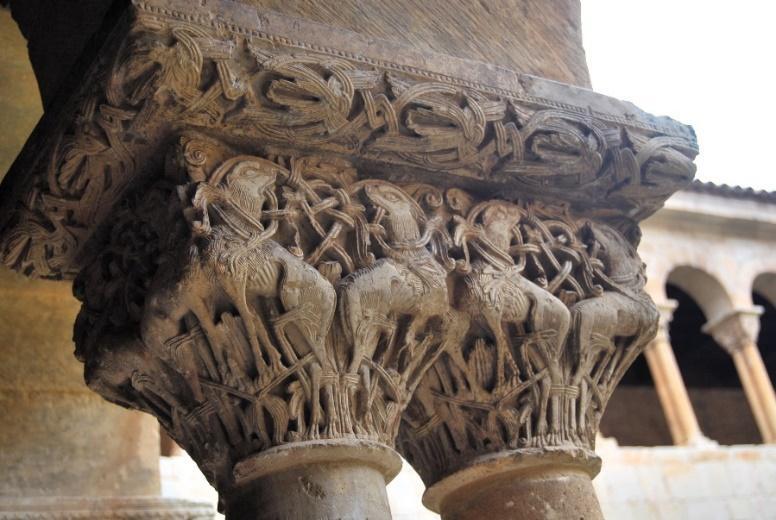
As the king of the animal world, the lion (fig. 4) was described at length in the bestiary. In Christian allegory, it carries specific meanings: (a) the lion erasing its tracks with its tail represents Jesus hiding his divinity and only revealing to his followers, (b) the lion sleeping with its eyes open signifies the resurrected Jesus after crucifixion, being alive in his divine nature, and (c) the lion roaring over his dead cubs to bring them to life represents God the Father waking Jesus after three days from his tomb.
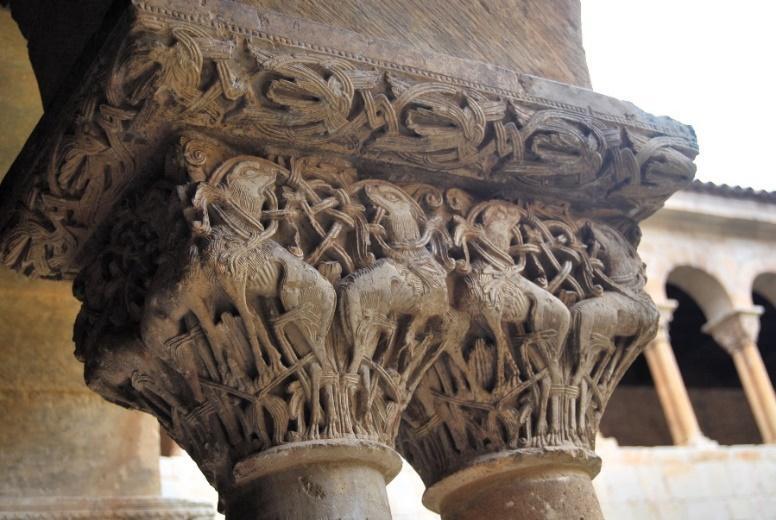
Often illustrated in conflict with a serpent or dragon, the lion holds biblical and bestiary connotations, symbolising Christ, sovereignty, or moral fortitude; yet its representation also embodies local folklore, considering the lion a guardian figure. In Iberian folklore, it represented protection and might, despite its absence as native fauna in the region. The appearance in cloister sculpture suggests that monks and artisans used a symbolic vocabulary that combined biblical, bestiary, and folk meanings. The serpent signifies both the biblical emblem of malevolence and the folkloric archetype of the perilous, concealed entity that endangers the community. The interplay between the lion and the snake exemplifies a layered symbolic system wherein folk animal lore reinforces Christian moral teaching.
The acephalous, or headless man, is from medieval ethnographic accounts of monstrous races residing in remote territories. The motif is referenced in classical texts such as Pliny’s Natural History (77-79) and was also prevalent in oral storytelling traditions, linked to the peripheries of the known world. Its existence in a monastic cloister prompts the monks’ perceptions of the limits of humanity and the nature of the “other”. In bestiaries and travel literature, monstrous races served to examine themes of sin, alterity, and the boundaries of Christian universality (Friedman, 1981). The visual form of the acephalous with exaggerated features and a grotesque posture suggests artisans’ dependence on folk imagery and textual sources. It is a convergence of ethnographic lore, folk narratives, and monastic contemplation about the nature of humanity.
The grotesques are on transitional architectural features, such as corner capitals, indicating their role in safeguarding the boundaries between various sections of the cloister. This spatial arrangement corresponds with theories of liminality, highlighting border figures in mediating transitions (Turner, 1969). Within the monastic framework, the monstrous are reminders of the dangers beyond the cloister walls, warning of the necessity for spiritual vigilance. The motifs were a visual manifestation of the tension between the ordered cloister space and the disordered external world, mirroring the overarching cultural dynamics of medieval monasticism.
Bestiary and Folk Motifs in Moissac and Silos
The comparison (table 2) reveals that the monstrous figures in the cloister sculptures are not anomalies but integral components of medieval monastic culture. Their forms encapsulate the influence of folklore, bestiary mythology, and artisanal craftsmanship traditions. Their meanings were shaped by the interplay between quotidian beliefs and monastic knowledge, and their persistence illustrates intricate medieval perspectives on visual art, imagination, and the delineation of sacred space.
Scholarly Position and Contribution
The analytic discussion, grounded in a theoretical framework that incorporates folklore, bestiary tradition, itinerant sculpture practice, and monastery interpretation, allows the author’s scholarly contribution in this paper. Although influential works such as Eco’s theory of the medieval “marvellous” (2007), Dale’s analysis of Romanesque sculpture (1997), Camille’s investigation of marginal imagery (1992), Cohen’s cultural theory of monstrosity (1996), and Hassig’s work on bestiaries (1995) have shaped the study of Romanesque monstrosity, none of these scholars have methodically linked oral folklore to cloister sculpture. A partial interpretation of Romanesque monstrosity has resulted from this absence; it ignores the popular cultural roots of many monstrous elements in favour of theological allegory and manuscript tradition.
This paper’s first contribution is to identify folklore as the missing basis for Romanesque monstrous imagery. The paper shows that the monstrous animals of Moissac and Silos are manifestations of a rich narrative substratum that influenced medieval imagination rather than the result of textual exegesis or artistic invention by following the migration of folkloric motifs from oral tradition into bestiary manuscripts, sculptural workshops, and monastic interpretation (Lecouteux, 2003; Schmitt, 1983). This insight broadens Romanesque art history by incorporating folklore studies, cultural anthropology, and oral tradition history.
The second contribution is the development of a new model of cultural transmission (folklore-bestiary-artisan-monastic interpretation-cloister). This paradigm reveals the interaction among popular culture, manuscript tradition, artisanal practice, and monastic theology, offering a framework for understanding how monstrous animals infiltrated monastic sites (Clark, 2006; McCulloch, 1960). It disproves the notion that monastic art was created in isolation, far from secular culture, by demonstrating how deeply ingrained monastic communities were in their local cultural networks.
Reinterpreting the Romanesque cloister as a liminal space between sacred and secular, oral and written, and popular and elite were negotiated and changed is the third contribution. Monstrous creatures were central manifestations of monastic spirituality, representing the tensions between paradise and danger, contemplation and vigilance, and enclosure and exposure, by placing them within the architectural, liturgical, and symbolic functions of the cloister (Cassidy-Welch, 2001). By demonstrating the cloister’s function as a theological laboratory where monks faced spiritual perils that threatened their salvation, this reinterpretation contradicts conventional notions of the cloister as a contemplative sanctuary.
The re-evaluation of St Bernard’s criticism constitutes the fourth contribution. His “ridiculous monstrosities” in the Apologia reflect the aesthetic austerity of Cistercian reform rather than a normative monastic attitude, despite his criticism being considered monastic animosity toward imagery (Bernard of Clairvaux, 1970). The prevalence of monstrous creatures in Moissac and Silos, with different geographical areas and monastery customs, indicates that Benedictine and Cluniac houses tolerated and enjoyed monstrous imagery. St Bernard’s criticism as a diagnostic tool highlights the variety of monastic perspectives on imagery and the importance of monstrous creatures in Romanesque spirituality.
The incorporation of regional analysis into the study of Romanesque monstrosity constitutes the fifth contribution. The monstrous creatures of Romanesque cloisters reflect both transregional networks of artistic interchange and regional variations in folklore (Bonne, 2015; Seidel, 1986). This insight exposes the complex interaction between regional customs and pan-regional visual languages, challenging the propensity to view Romanesque art as a uniform phenomenon. These contributions place this paper at the nexus of bestiary and folklore studies and monastic history. By combining with studies of oral tradition and cultural transmission, it broadens the scope of Romanesque art history and provides a fresh interpretative framework for comprehending the hideous creatures that inhabit Romanesque cloisters.
Concluding Thoughts
Romanesque stone carvings served the church as a communicative tool for the illiterate. For the didactic purpose, inserting figures into the capitals was a Romanesque achievement. Focillon (1931) argues that the function of capital ornamentation dictated its form. The use of figural motifs was the best outcome of Romanesque sculpture to assist functional activity. The sculptures of the capitals were initiated within a metaphorical context. The symbol of the column (base and capital as the cosmos) was shaped like trees (root and crown as earth and heaven). Romanesque sculptures connected architectural forms with a didactic yet ornamental power. By leaving an obligation to depict realistic images, the mystery of the sacred message could be preserved. Biblical and historiated, anthropomorphic, zoomorphic and plant motifs were the objects of metamorphoses in ambiguity, allowing spectators to perceive the illusion of a double image. The symbolic connection strengthened the mysterious meanings of religion through characteristic ornamentation.
The depiction of monstrous creatures in medieval cloister sculpture offers a glimpse of the complicated link between folk knowledge, monastery intellectualism, and medieval craftsmanship. They describe the permeability of medieval knowledge systems and the dynamic cultural interactions that influenced monastery life. In this regard, St Bernard’s Apologia is a key foundation for grasping medieval attitudes toward visual culture. His denunciation of grotesque beings symbolises his anxiety about imagination, spiritual rigour, and the limits of monastic identity. The cloister is a realm of orderly contemplation; any imagery against this order jeopardises the monk’s spiritual life, revealing a wish to control the physical surroundings and the cognitive landscape of monastic imagination. St Bernard’s view constitutes an aspect of medieval monastic philosophy.
Nevertheless, the persistence of monstrous animals in cloister sculpture indicates monks’ esteem for these creatures for their symbolic, pedagogical, and imaginative significance. Bestiaries, integrated with classical natural history, Christian allegory, and folk animal lore, provided a framework for interpreting monstrous beings as moral exemplars. Their imagery rendered them vehicles for meditation and memory, consistent with monastic practices that relied on imaginative visualisation. Monks tolerated horrific images and interacted with them as an aspect of their intellectual and spiritual lives.
Romanesque cloisters accommodated folk animals from artists whose training and culture were embedded in local traditions. These artisans included oral narratives, regional myths, and workshop repertoires, creating sculptural programs that mirrored the imaginative realms of the laity. Their work elucidates the monastery as a cultural crossroads where popular and elite traditions converged. The cloister, serving as a liminal space between the sacred and the secular, evolved into a transformative site that integrated folk knowledge with Christian moral symbolism. Instead of separating religious from secular knowledge, it facilitated debate. The hybrid creatures, characterised by their grotesque appearances and multifaceted significance, represented this negotiation. They unveiled a realm where knowledge was dynamic, stratified, and interwoven. Monastic culture was formed by the imaginative realms of the laity; it was not insular. Folk animals entered monastic spaces not as intruders but as contributors to a collective symbolic lexicon beyond social, intellectual, and artistic boundaries.
This paper aims to comprehend medieval knowledge systems by analysing the integration of folk creatures in monastic visual cultures and their influence on intellectual and spiritual lives. Romanesque cloisters testify to the richness and intricacy of medieval culture; thus, the distinctions between folk and monastic knowledge were never definitive. Strict classifications did not constrain the medieval imagination but rather allowed it to flourish through hybridity, ambiguity, and the interplay of various traditions. The medieval monastery was a cultural intermediary due to the monks’ interpretations and recontextualisations of folk animals in allegory, morality, and visual exegesis, which converted popular imagery into instruments of spiritual education.
St Augustine (354-430), in his On Christian Teaching (De Doctrina Christiana, 1997), laid the foundation for medieval sign theory. The treatise supplied regulations for interpreting sacred scripture and was intended for readers to experience the ambiguity in biblical texts. St Augustine included pictorial representations to assist in setting up the meaning of words. His hermeneutical distinctions, transferred from verbal to visual signs, clarify the procedure for deciphering pictorial imagery that visualises, interprets, or alludes to biblical words. However, the reader can be lost astray and faced with “unknown signs” (ignota signa) or “ambiguous signs” (ambigua signa). St Augustine suggested learning methods for the Christian exegete with attention to “ambiguous signs” to avoid the vagueness of the texts: (a) it should be decided whether the sign is read literally or figuratively; (b) readers should examine its context because “ambiguous signs” signify contrasting or numerous things in different places.
No one disputes that it is much more pleasant to learn lessons presented through imagery (similitudines) and much more rewarding to discover meanings that are won only through difficulty. (Augustine, De Doctrina Christiana II.13)
Signs are systems of related conventions for correlating signifiers and signified in specific domains. A question arises: if this definition had a place for cognitive and perceptive St Bernard’s monks and lay brothers in the medieval cloisters, how would the status of monstrous creatures and their roles have been perceived, comprehended, and interpreted through St Augustine?