
Introduction
Incense is used in a variety of ways. It does not serve a single purpose, though how individuals encounter incense often makes it appear that way. To some, it is ritual, and for others, it is pleasure. And for some of us, these uses are not mutually-exclusive. They evolve through lived experience, changing not only the meaning of incense itself, but also the significance of the places in which it is used. As a three-decade resident of Japan, my relationship with incense occupies what anthropologist Sally Pirie (2018) argues is the middle-position, neither fully inside the incense system, nor fully outside of it either. The position made here is that participation, sometimes limited and at others fully participatory, became a way of knowing. This paper explores how aesthetic appreciation gradually became ritual participation, and how that participation transformed understanding.
This paper adopts an autoethnographic (introspective) approach to examine my own experiences with Japanese incense culture, and the understandings that emerged through participation in Japanese daily life. When I first became interested in incense, I did not do so as a researcher. It began through aesthetic appreciation, gradually developing through participation. It is only in retrospect that my life with incense became recognizable as an autoethnographic account. Yet, in constructing my thoughts, I found myself internally comparing and contrasting the approach taken in Grydehøj (2024), where he argues for an “experience of relations,” an immersive approach into the event where the actor tries to live the experience on the terms of its participants. As incense use in Japan is largely religious ritual, I have inadvertently adopted the same approach without consciously planning it that way. What I am suggesting here is that the experience dictated the methodology. What follows therefore is largely explained in hindsight, not as research planned from the onset.
In Japan, the study of incense is called kōdō or koudou (香道), and as with other similar Japanese aesthetics such as the tea ceremony, sadou (茶道), or calligraphy, shodou (書道), formal study may require years of study, apprenticeships, tests, and demonstrations of skill. I have none, and worth noting, a fair argument can be made that, in my case, none of that would have fundamentally altered the path by which I came to understand incense. And the reason for this is where my approach and my experience in Japanese incense culture diverges from the experiential study of religious ritual found in Grydehøj (2024).
Being a non-Japanese person, even one living permanently in Japan, trying to study an art form many Japanese themselves would consider their specialized art form (even when incense itself was largely an import to Japan via Buddhism), is a question of access. As Japanese cultural arts are often transmitted through long-established social relationships, such as those between maker and temple, or between apprentice and maker, access is not simply a matter of interest or commitment. As Lebra (1976) observed in her explanation of uchi (inside) and soto (outside), social participation shapes participation itself. This largely meant that if I wanted to learn about incense culture, I would largely be doing it alone, finding my own way, following ritual when opportunities permitted, and when they did not, following my own path, and that path would be different from the Japanese themselves. My appearance alone altered many of the situations I wished to observe and/or participate in. I do not look Japanese or even Asian in appearance. Labov (1972) described this problem in linguistic fieldwork as the observer’s paradox; the act of observation changes the phenomenon under study. Although developed for linguistic field research, the same problem arises in the study of cultural practice. I’m a 184 cm tall, 100+kg white male with red hair and blue eyes. I cannot simply blend in here. So where Grydehøj followed a path of immersion –> participation –> understanding, Japan’s pathway is structurally restricted. It is not a failure of method, but a limitation of the social structure.
However, before turning to my own experience, it is important to briefly introduce kōdō Japan’s formalized art of incense appreciation. The central practice of kōdō is “listening” to the incense, a secular aesthetic practice in which fragrance is experienced not only through smell, but through attentive, embodied perception. A fair analogy of this is to compare what wine connoisseurs do when tasting a wine, or what one may do with a beautiful painting, allowing their mind to enter the scene.
Kōdō is most closely associated with Kyoto, and is traditionally approached through licensing and mastery. As my interest in incense has always been self-directed rather than institutional, unlike introductory kōdō experiences designed for visitors such as that described by Bolsey (2016), my engagement with incense developed outside institutional instruction. A further point of explanation is necessary here. My experience in anthropology and in linguistics was shaped in large part by my educational experience as a doctoral student while living and working in Hawai’i. There, knowledge was transmitted not only through written scholarship, but also through oral tradition, lived experience, and participation. That educational experience parallels both the way I came to understand incense culture in Japan and how I present that understanding here.
Much of the remainder of this paper relies upon a ‘talk story’ narrative approach (Cook, 2023; Simpson Steele, 2012). This is not simply a stylistic choice. It reflects one way I learned to understand cultural practice: through stories, participation, and reflection, rather than through observation alone. Professors I worked under at the University of Hawai’i repeatedly stressed that oral speech events are neither casual nor unstructured (Forman, 1983; Schütz, 1994). Conversations with Native Hawaiian classmates like K. Laiana Wong further reinforced the value of indirect, relational ways of knowing, later expressed through his concept of intentional indirection (Wong, 2011). This framework provides the intellectual foundation for navigating the cultural landscape described by Lebra (1976). As a non-Japanese permanent resident of Japan, I occupy what Pirie (2018) describes as the ‘middle position’—neither fully outside the Japanese system, nor fully within its formal inner core. Because my access to kōdō was necessarily limited, my understanding of incense in the Japanese context emerged through participation rather than instruction. The structure of this paper mirrors that journey, following the gradual transformation from aesthetic appreciation to personal participation, and finally to ritual practice.
Incense as an olfactory representation of place
In traditional descriptions of place, whether in travelogues such as Ferguson’s (1998) Hokkaido highway blues or in encyclopedia entries, place is usually understood as a physical location in this world. Place in much of incense tradition however, is both the physical and the metaphysical. In Buddhist practice, incense is the link between the physical world—the altar, that place in the physical world where the observer seeks connection, and the spiritual world—the place where the spirits of those deceased, primarily familial relations, or where the deity they are praying to resides. The smoke of the incense becomes that connection. The person before the altar must light the incense and send the smoke upward in the hope that it will reach, and please, its recipients in the realm beyond this one.
What follows is the brief historical retelling of the events leading from my use of incense primarily for olfactory pleasure to today where incense is ritual, the sticks lit with purpose, and meaning, depending upon the occasion. I do not mean to suggest that I no longer burn incense for pleasure. It is one of my favorite pleasures, to burn incense, pour a glass of wine, and watch the stick burn. But, even that too, is perhaps ritual now—or habit, the healing of the soul and spirit after a trying day. But, 30 years in Japan does not allow one to escape ritual and social expectation without being changed by them. What follows is that change.
Why incense? Chasing the ethereal
My earliest encounters with incense did not with occur in Japan, but as a child growing up in a small Midwestern town in Illinois in the United States. Nearly a half century later, it is hard to place where I first experienced incense, but the Christmas season comes to mind. As part of our Christmas decorations, my mother had somehow acquired a hollow ceramic Christmas scene, specifically a house with a chimney. The top was removable, allowing one to place an incense cone (strawberry is the fragrance I remember most vividly) inside, and then watch the smoke rise and exit the chimney. The purpose of this burning of incense was purely for pleasure—the visual and olfactory pleasure of the strawberry-scented smoke carried through the small living room of our cinderblock duplex. These incense cones could be easily found at any big box store such as K-Mart, and that is most likely where the ceramic house came from. I no longer remember. It was the 1970s. For most people, the cones were simply air fresheners—or alternatively as a way to mask the odors associated with the drug subculture of the 1970s. I loved burning the cones, and still do today, even those in unrefined, fruity scents. The recounting of this story is a non-religious one, and I came to incense along a very different path from most people in my adopted home country of Japan. At that stage of my life, incense belonged strictly to the secular world. It was fragrance and pleasure, and nothing more.
The Bipartite Use of Incense in Japanese Daily Life
For a significant portion of the Japanese public, the first exposure to incense comes primarily through Buddhist ritual. As children, they are introduced to incense via the family altar, or butsudan (仏壇), where as children they are taught to pray to their ancestors and/or to Buddha during the morning (朝勤) or late afternoon (夕勤) rituals of the opening and closing of the butsudan. The burning of incense on the family altar is a daily occurrence, and there is always a box of incense sticks and a box of matches or a lighter on the table before the altar, along with the candles, bronze bowl, fruit and sometimes alcohol, and other implements connected to the rituals surrounding the prayer. Here, burning incense is often viewed simply as one element of the ritual, one component among many, similar to the striking of the bronze bowl (おりん), all essential to the ritual, but secondary to the act of prayer itself (as with Jodo Shinshu, the most prevalent school of Buddhism in Japan) or the chanting of sutras (as found with Soka Gakkai practitioners). Some of my earliest and fondest memories of incense in Japan are my memories of afternoon walks in 1993 from my faculty apartment through the neighborhoods of residential Hirakata city (Osaka) in the heat and humidity of the Kansai summer, and passing open windows, suddenly noticing the fragrance of the incense that had just been lit, drifting on the dense humid air from the open windows, and hearing the striking of the bronze bowl with its bell-like resonance, the sound announcing the daily prayer to the ancestors. This memory sticks with me still today, continually reinforcing my appreciation for this simplest of rituals.
My memories of Hirakata afternoons were not however, my first encounter with the ritual use of incense. That occurred three years earlier, during my first visit to Japan in 1990 before I ever imagined this would become my permanent home. Then, I visited Japan as a student traveling the world. During that first visit, the first temple I can remember visiting is the one most first-time visitors entering Japan through Tokyo Narita Airport experience, Senso-ji temple at Asakusa in Tokyo. It is hard to miss the incense at Senso-ji, the smoke rising from two giant cauldrons before the main temple and worshippers waving the smoke with their hands towards the part or parts of their bodies that are ailing, in the belief that the incense smoke will purify and soothe, if not wholly cure, the ailing parts. For the first time, incense became something other than fragrance to me. This was my first direct encounter of incense in ritual, not just as a call to the Gods or to one’s ancestors, but also to some as a purifier, and to others as something with potential healing properties that go not only to mental healing, but also to healing of the physical.
I brought the smoke toward my forehead, hoping maybe it would rid me of tension headaches and migraines (It did not.). Yet, by waving the smoke towards me before entering the main temple, I had learned the ritual in the same manner as a Japanese child, because this is also how Japanese children first experience ritual incense: through visits to historical temples. Throughout their young lives, Japanese children make regular and periodic visits to temples. These visits occur regardless of religious affiliation, as temples function as accessible public spaces for both worshippers and visitors alike. Those who do pray, may pray for something specific (academic success, good health, or prosperity), for example, during the New Year’s holiday (初詣), during the entrance exam period (入学試験) in January and February, or as a participant on a one of the periodic school trips (修学旅行) that are a part of Japanese childhood. For many children, the temple visits are simply a part of growing up.
For most Japanese children, the association of incense to Buddhist ritual is fortified via the home altar and via periodic temple visits. So deep is the experience, that it is a hard image to shake for many, the idea that incense can be burned simply for pleasure, with no association to ancestor worship or to deity.
Where pleasure and ritual collide
Even after years of quietly accumulating, burning, and learning about incense and its applications, there remained another barrier to understanding: one of access. About five years ago, I was in Kyoto, the heart of Japan’s Buddhist and incense cultures. As I normally do when I’m there, I stop by a few of the incense makers to see what is new and, when possible, to talk to anyone in the industry willing to talk to me.
On this day, I visited one of the oldest and most respected incense houses. Their flagship shop, with the company headquarters above it, is along Nijo-dori near Nijo Castle. This company supplies incense to many temples, not only in Kyoto, but throughout Japan. It is highly regarded in the incense world.
I entered the modern shop and spent about twenty minutes walking among the displays on the counters, taking in the fragrance of different samples. There were only a few other customers, all Japanese, and four or five members of staff. During that twenty minutes, not once was I asked if I needed assistance. The Japanese customers were served. I was simply ignored.
This is not uncommon in the larger shops, but it is nevertheless disheartening, especially when one arrives with a genuine interest in the craft and its products. On face value, the assumption is often that a foreign-looking person can only be a tourist, not someone whose collection spans several hundred boxes of incense, reaching well beyond Japan, and includes more than a century of incense craftsmanship.
I remember leaving quite bothered. Reflecting on the experience now, I recognize that the staff did not know me from someone recently arrived in Japan, and that is precisely the problem. A judgement had been made on appearance rather than on knowledge. Had I simply been asked whether I needed assistance, my first answer in Japanese would have revealed that I was neither a novice nor a tourist.
Megumi
Although incense has always been deeply personal, it unexpectedly became something I shared. In the small mountain hamlet near Sapporo where I live, there was a young child to whom I was teaching English. She took an interest in the weird foreigner always burning incense. Over the years, as she grew up, I burned different kinds of incense for her, explained their fragrances, and discussed everything from their ingredients, to the paste from which they are formed, to both handmade and machine production. Her name is Megumi, and when she graduated from high school, she chose to move from Hokkaido to a university in Kyoto. During her university years, we were still in contact, occasionally exchanging incense when something caught her or my attention. I did not know at that time, when she began job hunting in her third year, that she would enter the world of centuries-old incense makers. In 2023, she was one of five graduates hired by one of the oldest and most prestigious makers in Kyoto, the same company whose workers had ignored me years earlier. She was told at her interview, that in general, the hires had religious connections or grew up in Kyoto with relatives already in the incense business. In other words, generational hires. When asked at her interview how she had learned about incense living in Hokkaido where there are far fewer temples and no incense makers, she replied that everything she had learned was from the foreign teacher in her neighborhood where she grew up. She also recounted what had happened when I had gone into the shop years earlier. It would have been nice to have seen their reaction.
Each year now, Megumi sends me a gift of incense for the Christmas/New Year’s holidays. Her first gift was a special incense, among the rarest incense produced in Kyoto. Only three bundles of thirty sticks of Ambergris incense are produced annually, so difficult are the ingredients to obtain. We had seen one of the three bundles in a shop together in Kyoto, but I had scoffed at the price. She had bought that bundle to send to me as a thank you for teaching her about incense. And each year since, she has sent me unique incense—some meant for market, some test products never released, and some last-of-its kind. Knowing that I come from the Midwest in America, two years ago she sent a small packet of incense sticks with the place-inspired name, Chicago Funk. Only a handful of six-stick packages were made as a test-product. It never went to market. The raw ingredients to make it were too difficult to secure and the idea had been dropped. In my six-stick package, I have burned two sticks. One alone upon receiving it. And one when Megumi was on a visit to Sapporo. Even she had never experienced this one. She recounted that the company is still trying to make it, but can’t yet secure the materials. Sometimes the healing is not only when the incense is burned, but in seeing an unlikely apprentice walk through the door which had remained closed to me.
Learning incense in Buddhism firsthand: Experiences
As noted previously, I entered incense through the olfactory, a small boy burning cheap incense for pleasure at the holidays. My experience therefore differs from that of Japanese people, for whom incense is first encountered primarily in a religious context. Unless one isolates oneself completely from contact with Japanese society, there will inevitably come a time when the sacred use of incense will become personal. And it is one of those rare moments, when the metaphorical wall between Japanese and non-Japanese may briefly disappear: death.
In 1993, I lit incense at the family altar for the 49-day Buddhist memorial service (四十九日法要) of a Japanese friend who died in an off-campus arson fire (Littrell, 1992, p. 1) at Southern Illinois University, which we had attended together. We were friends and had lived in that same building, just two floors apart, six months earlier. She was one of eight who died that night. Having just arrived in Osaka at the time, I had asked to visit the family directly in Osaka, with two Japanese friends. Burning incense on this occasion was no longer pleasure, but solely out of respect and sorrow for a friend murdered, and doing so on her terms. It was my first experience with incense beyond the superficial level. Lighting incense at a temple as a tourist is part pleasure, part curiosity, seeing the smoke rising and for a moment being a part of an event in a foreign country. Lighting incense at the death of a friend, before her family and in her home, is a direct prayer to that friend, for a moment connecting to her through the smoke at the altar where she had prayed to her ancestors. On that occasion, God, any God, was simply a witness, playing no role in the thoughts expressed to the dead.
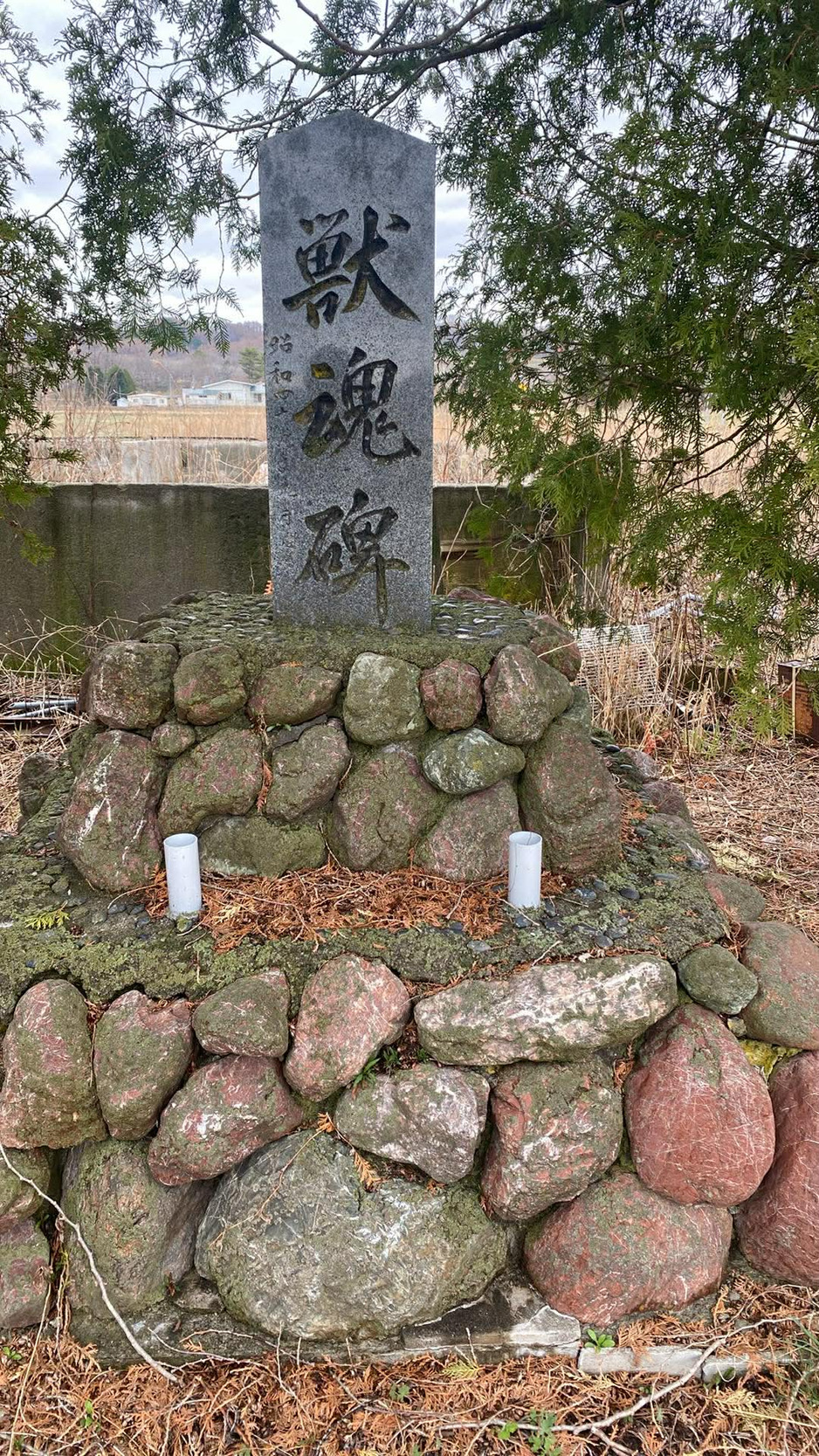
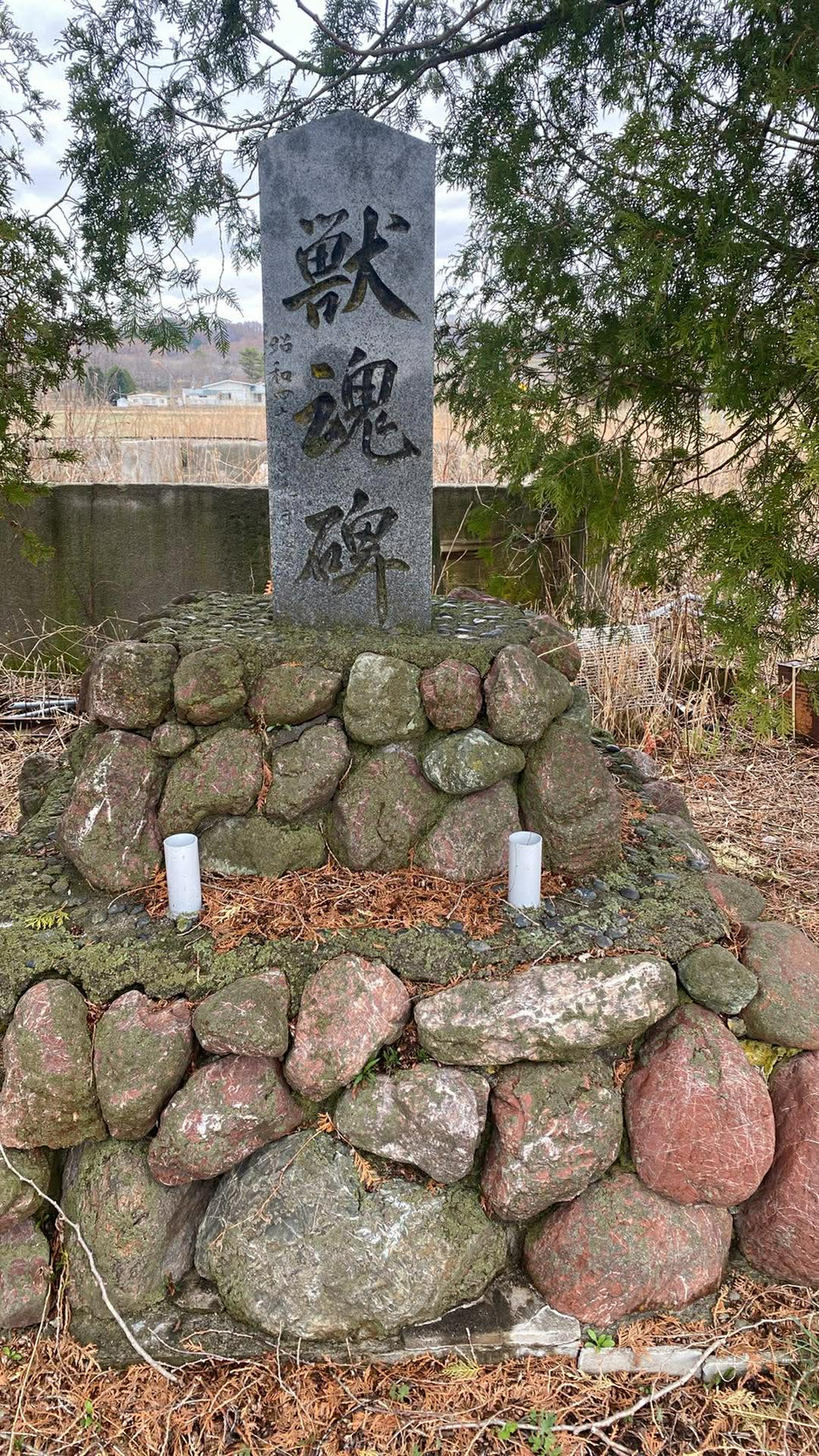
Much later, in 2022, when a fellow expat who had entered farming bought the bankrupt neighboring farm, it came with a stone altar. When he found it, located beyond the main buildings, and out near the pig barns, it was covered in weed growth. He sent me a photo and asked me to explain what it was. He had not seen one like it. I sadly had. A similar one exists near the veterinary sciences building at Hokkaido University in Sapporo, where animal experiments take place. I recognized the altar and the wording immediately. The altar was to pray for the souls of the animals that were sacrificed. After explaining the significance, I visited the farm the following week. There, I found the altar much as I’d imagined from the photograph: near the pig barns, close enough that the farmer could visit it when necessary, but far enough away that it would not be visible to most visitors to the farm. I cleaned up the overgrown altar area and lit two bundles of incense, placing one on each side of the altar, with the thought of the incense purifying the altar and the site and marking the transition from the previous owner to the new owner. And I thought of the pigs. The burning of incense was solemn ritual. The pigs themselves most likely had no knowledge of the ritual occurring, even with my thoughts directed towards them in that moment, any more than the new owner of the farm had understood or recognized the need to burn incense. He chose not to attend. But, clearly Mr. Koizumi, the previous owner, had felt the gravity of his actions as a farmer, to the extent that he had constructed, at considerable cost, the stone altar.
The subtle smell of plum, then ash: the incense burning out.
Today, April 21st, 2026, my mother passed away. I could not be there. It’s the expatriate contract. Those of us who choose a life abroad understand that we will not be there when our family pass. I had to work. The ritual was delayed. I was with my assistant that day. She knew what had happened, and when I returned home, thought it best that I not be alone.
I have no family altar in my house. I do burn incense though. I unlocked the front door, turned on the light in the darkened entranceway, and we entered. I pulled an incense stick and lit it, my assistant right behind me. With the incense beginning to smoke, I placed it on the contemporary holder, a stone holding the stick at 45 degrees to burn rather than the ash normally used to hold the sticks upright. I turned back towards my assistant, and removed my shoes. She caught my eye and I could see the slightly strange, slightly frightened look on her face. Having been around me long enough, she knew from the scent that I had lit Hakubai. It was not normally an incense for death. It is a heady plum-scented incense, a masterpiece in the Japanese incense world. And her look alone told me she knew that, and she knew that that is the closest thing I have to a personal incense. It is the one I have chosen for my own death, the request already written into my will. In that moment, no words were spoken, but a full conversation was had in a moment of eye contact and in the fragrance. We entered my dining room and I lit the second stick of Hakubai, this one in a small pot that I had bought at auction, recycled from a funeral home. It is a death pot, one filled with ash. It is a gift to the deceased’s family from the funeral home. Standing the stick upright, I watched it burn for a moment and then poured a glass of wine from the bottle on the table. My assistant stood back a few feet away, silent. When I turned back towards her, the ritual was over. We both knew it, carried on a wave of smoke drifting out the open window of late afternoon, much in the same way as I had noticed the incense smoke carrying on the breeze from the closing of residential butsudans in Osaka so many years earlier.
Epilogue
So what is incense?
The simple truth? Incense is what we make it.
A child’s curiosity, a student’s gratitude, a farmer’s remorse, and a son’s farewell.