
1. Introduction
In East Asian cosmologies, the dragon never appears alone: it emerges from clouds, merges into the mist where it unfolds with the wind (Ebrey, 2011, p. 42). It is a creature inseparable from air, movement, and the invisible, less an isolated figure than a being whose presence is felt through everything that surrounds it. By observing dragon tattoos produced today in East Asia—Taiwan, Japan, and mainland China—we notice something interesting: while the dragon itself remains fairly stable from one place to another, the clouds, smoke, and breath that accompany it vary greatly depending on the contexts. We take a multi-sited approach and divide the continental setting of mainland China, the island setting of Taiwan, and the archipelagic setting of Japan into three distinct regions to better elucidate the impact of geography on folklore. We will focus on these graphic differences, not as simple stylistic variations, but as indicators of how folklore and the supernatural become localized and reinvented. How do these clouds and this smoke, which may seem secondary, become essential for depicting a dragon rooted in a place and a culture? What do they reveal about ways of representing the invisible in contemporary tattooing?
To do so, we draw primarily on the work of Tim Ingold, and in particular on his idea of the world as a set of lines, flows, and atmospheric relations (Ingold, 2007, 2011, 2023). Clouds, smoke, and breath are thus no longer simple decorative motifs: they are mediations between the visible and the invisible, between the human body and supernatural forces (Merleau-Ponty, 1969b, pp. 173–180). The same logic can be found in certain details of the dragon itself (Ding et al., 2022). In contemporary tattoos, it almost always has three or more, often four claws, the five-clawed motif having historically been reserved for the emperor (Picerno, 2013; Xu, 2024, p. 265). This choice, which tattoo artists often explain, shows how the dragon adapts to the body and the status of the person who wears it, and how folklore is modulated rather than reproduced identically. The methodology is based on long-term observations and interviews conducted over several years with tattoo artists in Taipei, as well as during international tattoo conventions in Taipei and Kaohsiung—spaces where styles, techniques, and imaginaries circulate on an international scale. This approach makes it possible to grasp both everyday practices and the transnational dynamics of contemporary tattooing.
In sum, this article shows that folklore is not only contained in the dragons themselves, but also in everything that surrounds them: clouds, smoke, and even the number of claws. The tattooed body thus becomes a true living site of contemporary folklore, where cultural geographies of the invisible take shape.
2. Dragons in East Asia
The dragon has always occupied a singular place in the visual and symbolic imaginaries of East Asia. This fascination persists today, as the dragon continues to circulate across cultural contexts and take on locally situated meanings (Kasarhérou, 2025, p. 6), as shown by the recent exhibition devoted to dragons at the musée du quai Branly - Jacques Chirac in Paris, produced in collaboration with Taiwanese institutions.
The dragon has long been characterized by a striking visual and symbolic complexity. As Patricia Ebrey observes, “It must be admitted that the dragon was a very complex image. By Song times dragon (lóng 龍) imagery already had a long history, one that involved many different strands that over time became tangled” (Ebrey, 2011, p. 41). Its origins can be traced back to early Chinese cosmologies (X. L. Li, 2025, p. 17), where serpent-like figures mediated between human and natural forces (Allan, 1991, p. 14), before the dragon progressively stabilized as a composite creature (Keightley, 1978, p. 62) and often associated with water, rain, and atmospheric phenomena, which relate more to an abstraction of movement than to an animal representation (Qiu, 2000, pp. 63–65). It is only from bronze inscriptions (jinwen) and later scripts that the dragon gradually stabilizes as a composite figure, combining serpent, claws, horns, and clouds, and becomes a central operator of cosmological and political order (X. Li, 2018, p. 9; Wu, 2025, p. 12). This progressive stabilization of the dragon as a composite figure is inseparable from broader graphic and gestural regimes through which cosmological forces were made visible and intelligible.
Once formalized, this figure then spreads toward the cultural margins of the Sinic or Sinophone sphere of influence, notably to Japan around the 7th century (Varley, 2000, p. 12), and with Han migrants from the 17th century onward, especially under the Ming and then Qing dynasties, the dragon of continental China begins to appear on the island of Taiwan (Shepherd, 1993, pp. 137–140). As the dragon spread, it was reinterpreted according to local cosmologies and visual traditions. From this perspective, “every being is instantiated in the world not as a bounded entity but as a thoroughfare, along the line of its own movement and activity,” a mode of existence defined not by point-to-point transport but by a continual “moving around” or coming and going, characteristic of wayfaring (Ingold, 2007, p. 117). The dragon is thus reinterpreted on the basis of local cosmologies, specific relationships to water and atmosphere, and distinct visual traditions. It appears not as a universal and immutable form, but as a figure in circulation, whose features and functions are modulated according to cultural and geographical environments.
In these contexts, the dragon is not an isolated figure but a relational presence, emerging through atmospheric elements such as clouds, wind, and mist. As Ebrey notes, the dragon “emerges from clouds and withdraws into the mist,” making visible a power that remains fundamentally elusive (Ebrey, 2011, p. 42). The dragon is closely linked to air and atmospheric phenomena, which makes it an essentially relational figure. It is not only present in the world: it is a way for the world to show itself. Its serpentine body merges with the winds and flows it traverses, and it is its movement that matters more than its fixed form. The dragon is therefore not simply an image: it is a point of encounter between natural forces, cosmological order, and symbols of power.
Contemporary tattooing in East Asia today constitutes a privileged space for observing the transformation and reactivation of these cosmic figures. Far from mechanically reproducing inherited models, tattoo artists work with multiple references: local traditions, classical iconography, transnational circulation of styles, and personal creativity, which they recombine according to bodies, requests, and social contexts. In this framework, the dragon can be understood as a legend, that is, a traditional narrative transmitted and adapted over time, which does not describe reality but embodies natural, social, and symbolic forces. It thus belongs to folklore in the sense of UNESCO (1989, 2001) and of the mythic thought analyzed by Sarah Allan, in which imagination structures the world and human relations rather than reproducing historical facts (Allan, 1991; UNESCO, 1989, 2001).
Folklore therefore does not appear as a fixed heritage, but as a reservoir of forms and relations constantly reconfigured. The dragon and the narratives that surround it can also be understood in light of the concept of “belief legend,” according to which legends are not simple stories, but vehicles of beliefs lived and shared by communities. As Linda Dégh emphasizes, “Belief is the stimulator and the purpose of telling any narrative within the larger category of the legend genre; it is also the instigator of the legend dialectic (. …) The current confusion caused by the whimsical application of terms such as ‘truth,’ ‘rationality,’ ‘belief,’ and ‘believability’ in scholarly legend interpretations, should caution us to avoid making biased, outsider’s judgements instead of presenting the viewpoint of tellers and audiences” (Degh, 1996; Dégh, 2001, pp. 13, 40). Accordingly and as we decided to approach folklore as a dynamic process, what is “folk” in contemporary tattooing does not lie in the persistence of inherited motifs such as the dragon, but in the ongoing circulation of interpretive narratives, embodied techniques, and shared regimes of meaning between practitioners and clients. This understanding also resonates with East Asian traditions of folklore research. In Japan, Yanagita Kunio emphasized the role of ordinary people (jōmin) in the transmission and transformation of vernacular beliefs and practices, highlighting the intimate relationship between everyday life, place, and cultural continuity (Yanagita, 1975). Rather than viewing folklore as a fixed inheritance, Yanagita approached it as a living process embedded in everyday experience and local worlds where people tell each other stories. Such a perspective reinforces our understanding of dragon tattooing as an embodied and situated practice through which cosmological narratives are continually reinterpreted and localized.
However, if folklore is constituted through these dynamics of belief and narration, it also presupposes conditions of perception and embodiment that render such meanings intelligible and experientially effective. In this sense, following Shigehisa Kuriyama’s (1999) analysis of the culturally constructed relationship between exterior forces and bodily interiority, the boundary between external influences and internal experience cannot be taken as given. Meaning is therefore not reducible to symbolic content alone, but emerges from historically situated regimes of perception and embodiment that structure how bodies are experienced, interpreted, and made meaningful. Thus, in contemporary tattooing, narrating or representing the dragon is not reduced to a decorative motif: it is an act of cultural mediation and belief, which makes it possible to bring memory, imagination, and bodily experience into dialogue. This practice thus becomes a site where cultural memory, individual creativity, and visual globalization intersect. This dynamic is particularly visible in the treatment of so-called “secondary” elements: clouds, smoke, breath, which vary greatly from one context to another and reveal situated ways of representing the invisible.
Based on the observation of dragon tattoos produced in Taiwan, Japan, and mainland China, this article starts from a simple observation. While the figure of the dragon remains relatively stable in its major morphological characteristics, the atmospheric motifs that surround it undergo significant variations. While the dragon’s form remains relatively stable, the atmospheric elements surrounding it vary significantly. This article asks how these elements contribute to the cultural localization of the dragon and to the representation of the invisible. We will therefore attempt to understand how folklore materializes not only in the central figure of the dragon, but above all in the lines that connect it to its graphic, bodily, and cultural environment. Drawing on Tim Ingold’s approach, we analyze these motifs as lines and flows that connect body, environment, and imagination. Applied to the tattooed dragon, this perspective changes the way we look at it: it is not only a stable form, but a graphic flow that is inscribed on the skin. Clouds, smoke, and breath are no longer simple decorations; they are the very conditions of its existence, materializing the links between the visible and the invisible, between the body and supernatural forces, and giving full meaning to the figure.
3. Theoretical Framework: the World of Tattooing as an Atmosphere of Lines
“Drawing, it is supposed, is an expressive art that human beings have practised from earliest prehistory, from the moment when they began to make inscriptions of one kind or another on wood, bone or stone” (Ingold, 2007, p. 147). From this perspective, drawing is a process of inscription and movement. It is within this understanding of the line as a trace of action and a mode of engagement with the world that Tim Ingold’s work provides the theoretical foundation for the following analysis. This approach allows us to understand tattooing as a dynamic process of lines in movement. Ingold invites us to shift attention from fixed forms to the processes that generate them (Ingold, 2007). Applied to tattooing, and in particular to the figure of the dragon in East Asia, this approach makes it possible to understand motifs not as fixed symbols, but as graphic movements inscribed within an atmosphere: clouds, breath or wind, mist or smoke.
3.1. Ingold: from the world as a network of objects to the world as a meshwork of lines
Tim Ingold proposes to move beyond a vision of the world based on closed objects connected by external relations. Instead, he develops the notion of meshwork to designate an entanglement of lines arising from the very movements of living beings. In this perspective, lines are trajectories of life rather than connections between points. Ingold recalls that, in the Chinese tradition, these lines are called hsien (pinyin: xiàn, 線/线), a term that literally means “thread” (Ingold, 2007, p. 133). The world is therefore not composed of fixed forms, but of lines in movement, arising from gestures, paths, and practices. Ingold contrasts these living lines with abstract geometric lines, which suppress movement and continuity (Ingold, 2007), transforming curved and inhabited trajectories into abstract straight lines, even though “the lines became straits but they were curves” (Ingold, 2007, p. 152).
This conception makes it possible to understand drawing, and by extension tattooing, not as a fixed image, but as the result of a gestural and relational process. Ingold shows, for example, that the learning of Chinese writing first passes through gesture: characters are first traced in the air, embodied as movements before being reduced to stabilized graphic forms (Billeter, 1990; Yen, 2005). Words are thus “remembered as gestures, not as images;” the hand knows how to form the character even when the eye has forgotten its drawing (DeFrancis, 1984, p.163, cited in Ingold, 2007, p. 135).
3.2. The atmosphere as a medium of existence: clouds, wind, mist as agents, not décor
Ingold emphasizes that meaningful lines are those of lived movement rather than abstract connections. Living lines are dynamic, irregular, and constantly in transformation. These lines unfold through gestures that produce variation, rhythm, and curvature (Ingold, 2007). This reflection connects with what Ingold calls the weather-world: a world where earth and sky are not separated by a clear boundary, but are continually linked by flows of air, water, respiration, and light. “To inhabit the open is not to be stranded on the outer surface of the earth but to be caught up in the substantial flows and aerial fluxes of the weather-world” (Ingold, 2011, p. 96). Vital processes such as respiration, growth, or movement constantly blur the interface between sky and earth.
In East Asian cosmologies, and thus in the environment of dragons, clouds, mist, and wind play precisely this role: they are active media that make the appearance of certain figures possible without ever fixing them. The dragon exists in this atmospheric in-between: neither fully visible nor completely invisible. Tattooing reproduces this logic by giving graphic thickness to the air itself, transforming the skin into a space of circulation rather than a simple decorative surface.
3.3. Application to tattooing: the skin as a surface of circulation, not fixation
Applied to tattooing, this approach leads to a rethinking of the skin. It is not a flat surface onto which an image is simply placed, but a living medium, traversed by lines of tension, movement, and perception. This resonates with Deleuze and Guattari’s idea of lines of becoming, which unfold between points rather than connecting them (Deleuze & Guattari, 1980). In the same way, the atmospheric motifs of tattooing, spirals of clouds, curls of smoke, lines of breath, follow the curves of the body, trace muscles and joints, and amplify movement rather than enclosing it within a stable form. The dragon unfolds with the body, not against it.
This idea of flux and circulation can be related to a structuralist reading. This also suggests that the identity of the dragon emerges through its relations and variations rather than a fixed form (Deleuze & Guattari, 1980). Indeed, in the same way that natural history distinguished series and structures to think the relations between animals (a series making it possible to order similarities and a structure to distribute differences relationally), dragons in tattooing retain an essential identity while modifying themselves according to their cultural environment. They are all “dragons,” but their form, their motifs, and their interaction with air, wind, or clouds change depending on whether they appear in mainland China, island Taiwan, or archipelagic Japan. This movement shows that the identity of a being is not fixed in a stable form: it is constructed and transformed according to the milieu in which it circulates.
This double reading, structuralist and dynamic, makes it possible to understand how a mythical figure can remain recognizable while adopting infinite variations according to the cultural and bodily contexts in which it unfolds.
3.4. Conceptual dialogues integrated into the Ingoldian thread – the dragon as graphic movement
This aligns with Merleau-Ponty’s account of embodied perception, in which meaning emerges through the relation between body and environment (Merleau-Ponty, 1969a). Atmospheric tattooed flows can thus be understood as perceptual mediations linking the wearer’s body to a broader cosmological imaginary. Building on work on dragon iconography (Ding et al., 2022; Picerno, 2013; Xu, 2024), features such as claw numbers appear less as fixed historical markers than as relational indicators of status. The distinction between three and four claws reflects a contextual adaptation of folklore through bodily inscription and social positioning.
We therefore hypothesise that, in contemporary tattooing, the dragon is defined less by form than by graphic movement. As Ingold notes regarding Chinese master calligraphers, writing does not consist in reproducing outlines, but in tracing “the rhythms and movements of the world” (Ingold, 2007, p. 133). In this sense, the tattooed dragon is not a static silhouette but a configuration of lines in tension, whose identity emerges through density, turbulence, and dispersion. The tattooed body thus becomes a site where folklore unfolds as process rather than representation: the tattoo is not the depiction of a dragon, but its graphic becoming, continuously enacted.
4. Methodology: observing tattooing as an ethnography of flows
To analyze dragon tattoos and their atmospheric motifs, our approach draws on the idea of analogy developed by Deleuze and Guattari (1980) where motifs must be considered as dynamic entities, whose recognition rests on an essential identity while adapting to variations of the body and the cultural environment. Tattooing is thus approached as a system of circulating lines and relations.
This perspective emphasizes movement, circulation, and process in the formation of motifs (Ingold, 2007). Observing tattooing becomes a matter of following the emergence and circulation of lines.
4.1. A multi-sited approach that is both transversal and longitudinal
The study adopts a multi-sited ethnographic perspective (Bocquet, 2019; Marcus, 1995), both longitudinal and transversal (Bidart et al., 2025; Mercklé, 2020). It combines short-term observation with long-term follow-up to capture both current practices and their evolution.
As Ingold notes, citing Bruce Chatwin on Australian Aboriginal peoples, territory is not conceived as a surface divided into parcels, but as “an interlocking network of lines or ‘ways through’,” where terms for “country” overlap with those for “line” (Chatwin, 1987, p. 62, cited in Ingold, 2007, p. 80). This understanding of space as a network of lines informs our approach: sites of tattoo practice (studios, conventions, festivals) are not treated as isolated points, but as nodes within flows of knowledge, gestures, and imaginaries. In Taipei and Kaohsiung, international tattoo conventions in particular function as key spaces for the circulation and transformation of styles, where local and international artists meet, exchange, and enable motifs to circulate and adapt across cultural contexts.
Finally, and following Ingold, the aim is not to compare final images or completed tattoos, but to follow the genesis of lines: their emergence, their circulation, and the milieus in which they take shape. Tattooing must be understood as a situated practice, inscribed within a network of multiple relations between the body, the gesture of the tattoo artist, cultural motifs, and the atmosphere in which the drawing comes to life. This perspective emphasizes continuity and the inscription of the past in the present, highlighting that each line is not a simple image but the result of a living process, in which memory, prior practices, and present interactions combine to guide the gesture and form the motif (Ingold, 2007). Tattooing thus becomes a flow of lines in movement, a dynamic process that brings forth forms and meanings through experience and the circulation of knowledge.
The choice of island Taiwan, continental mainland China, and archipelagic Japan as field sites does not result from a simple regional division, but from a deep historical and aesthetic coherence. Indeed, these three geographical spaces are linked by long-standing circulations of motifs, techniques, and visual cosmologies, notably from Sino-Japanese pictorial and mythological traditions, within which figures such as the dragon, the tiger, or protective entities have undergone constant reinterpretation.
Taiwan occupies, within this network, a pivotal position: it is a maritime and colonial crossroads, marked by continental Chinese, archipelagic Japanese, and Indigenous influences, allowing a comparison between closed traditions, but of following the lines of continuity and transformation that connect these spaces across the long term and through current tattooing practices. As Stéphanie Lima indicates (in Bocquet, 2019), this type of approach aims at “a territory held together by the links of individuals dispersed across discontinuous places.” This thus allows us to apprehend Taiwan beyond spatial discontinuities (Bocquet, 2019). It follows connections between dispersed sites rather than fixed territories. The island of Taiwan therefore does not constitute an isolated case, but an analytical anchoring point from which regional continuities and variations can be examined.
4.2. Graphic observation: analyzing lines
Visual analysis is based on a close observation of motifs, considered not as static images, but as lines in tension, turbulence, or dispersion. These analytical categories, inspired by Ingold’s work (2007), make it possible to grasp tattooing as a relational and dynamic process, in which each line is at once a trace of the tattoo artist’s gesture, a bodily expression of the client, and an inscription within a cultural and atmospheric context. This approach also makes it possible to understand how these atmospheric motifs structure the overall composition (Ingold, 2007). Thus, graphic observation combined with interviews makes it possible to grasp tattooing as a milieu in flux, where motifs are neither fixed nor isolated: they circulate between body, gesture, and atmosphere, and continuously transform through practices, cultural references, and interactions with space.
4.3. Interviews with tattoo artists: creation as process
The corpus combines visual materials (tattoos, photographs, and works in progress) and ethnographic data (observations and interviews). This combination of visual anthropology and ethnographic fieldwork makes it possible to cross gesture and trace (Ingold, 2007), allowing analysis of both the process (lines in action) and the final product, while situating each motif within a continuum of practices, transmissions, and influences.
Fieldwork was conducted between 2019 and 2026 in Taiwan, mainland China, and Japan. It included observations in tattoo studios, participation in international tattoo conventions in Taipei and Kaohsiung (every year in March and June), and the construction of a visual corpus composed of approximately 150 dragon tattoos.
International tattoo conventions in Taipei and Kaohsiung were particularly important sites of circulation and encounter. In Kaohsiung, fieldwork included encounters with resident and visiting tattoo artists from all three sites, as well as several Japanese tattoo artists present during the convention. Across all field sites, three Japanese tattoo artists were observed, alongside four Taiwanese tattoo artists, including one Taiwanese artist trained by a Japanese master. These trajectories illustrate the transnational circulation of techniques, stylistic lineages, and professional training within contemporary tattoo practice.
The analytical corpus focuses specifically on dragon tattoos and associated atmospheric motifs (clouds, smoke, wind, breath), which repeatedly emerged across all three regional contexts.
At the same time, semi-structured, in-depth interviews (Kaufmann, 2016) were conducted with five tattoo artists based in Taiwan, specialising in Japanizing, Sinicizing, or Taiwanizing traditional tattoo styles. These interviews were conducted over several years in order to document their ways of conceiving dragons, atmospheric elements, and stylistic variation, as well as the evolution of their practice over time. Interviews lasted between 60 and 120 minutes and were conducted in Mandarin Chinese. All interviews were transcribed and coded thematically. Particular attention was given to recurring analytical categories such as atmosphere, movement, bodily adaptation, dragon symbolism, and regional stylistic differentiation.
All interviewed artists are anonymised due to the relatively closed nature of the tattooing milieu and the sensitivity of the field. Access to the field was partly constrained, as many practitioners are reluctant to engage in fully open or transparent discourse regarding their practices, trajectories, and stylistic lineages. Anonymisation therefore also responds to the need to protect participants in a context where professional networks are highly visible, and discourse is often carefully managed.
The following interviewed artists reflect diverse trajectories, stylistic affiliations, and training lineages:
The aim of the interviews was not only to document descriptions of motifs, but to understand tattooing as a creative process in which aesthetic traditions, bodily constraints, and client expectations are continuously negotiated. These interviews reveal the adaptive dynamics of tattooing practice: each motif emerges within a situated configuration of cultural references and material conditions, including placement on the body, muscular structure, and spatial constraints of inscription. Within this framework, dragon motifs are not treated as fixed iconographic forms. Their configuration is continuously modulated according to bodily surfaces and atmospheric composition, producing a relational network between body, gesture, motif, and cultural reference.
The ethnographic corpus—composed of interviews, studio observations, convention participation, and photographic documentation of finished and in-progress works—thus allows tattooing to be approached not as a final image, but as a process in flux, in which each line is shaped by movement, memory, and situated interaction.
5. The tattooed dragon: formal stability, relational mobility
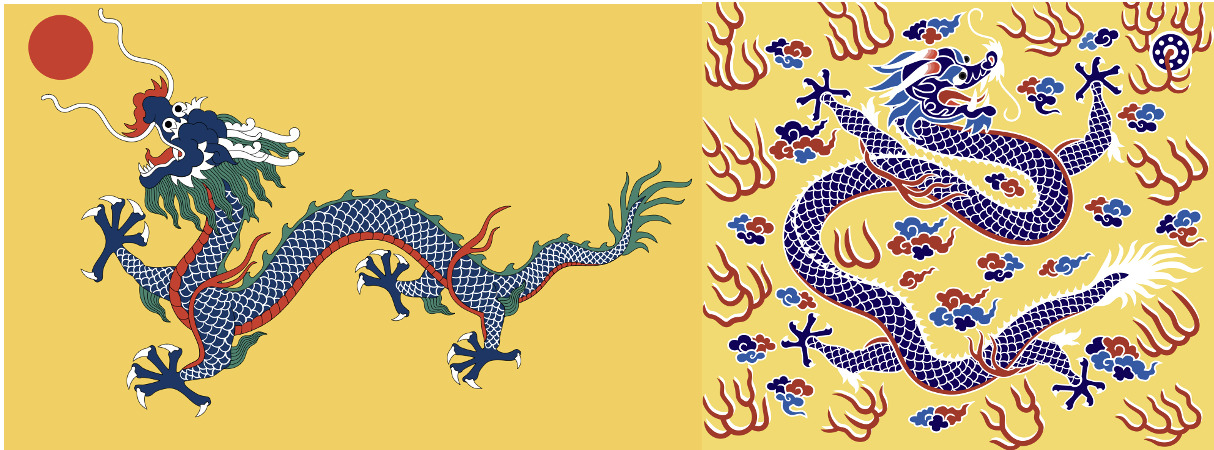
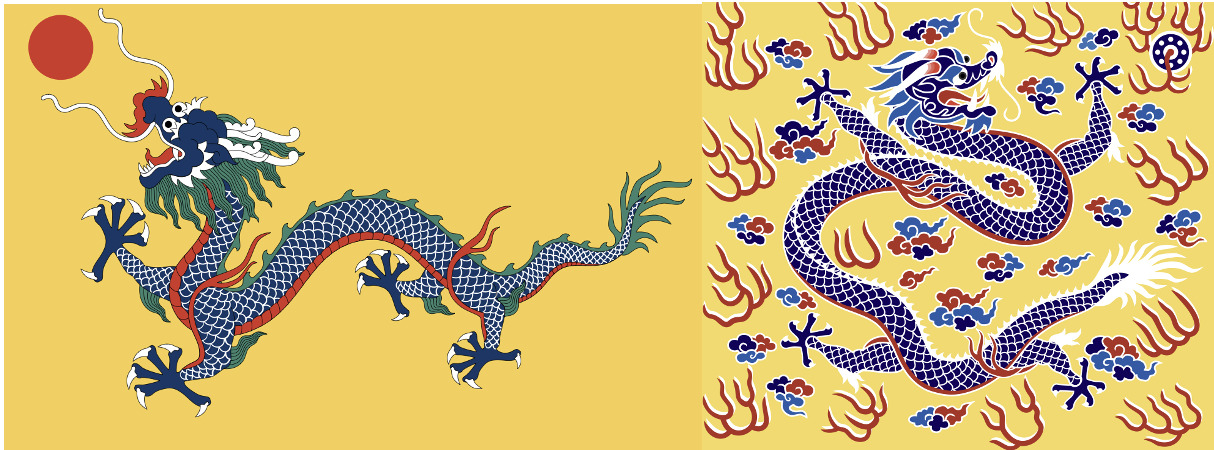
The dragon thus constitutes a privileged motif for examining the tensions between formal continuity and relational transformations in contemporary tattooing. It is a creature associated with luck, power, and favorable omens; the dragon appears very early in Chinese written sources: “The dragon is a well-known creature in East Asia, where it symbolizes luck and favorable omens; its earliest descriptions appear as early as the year 100 in the Shuowen Jiezi” (Yu, 2025, p. 10). This textual and iconographic antiquity contributes to stabilizing a set of immediately recognizable formal traits, while still allowing, over the centuries and across places, for stylistic, symbolic, and technical variations. This iconographic stabilization of the dragon is particularly visible in the political emblems of the Qing dynasty (1644–1912). On imperial flags, the dragon appears in a relatively standardized form: serpentine body, extended claws, dynamic orientation, and a close association with clouds and atmospheric flows. These representations contribute to the visual codification of the dragon as a symbol of imperial power and help to fix certain morphological traits that remain recognizable in later representations.
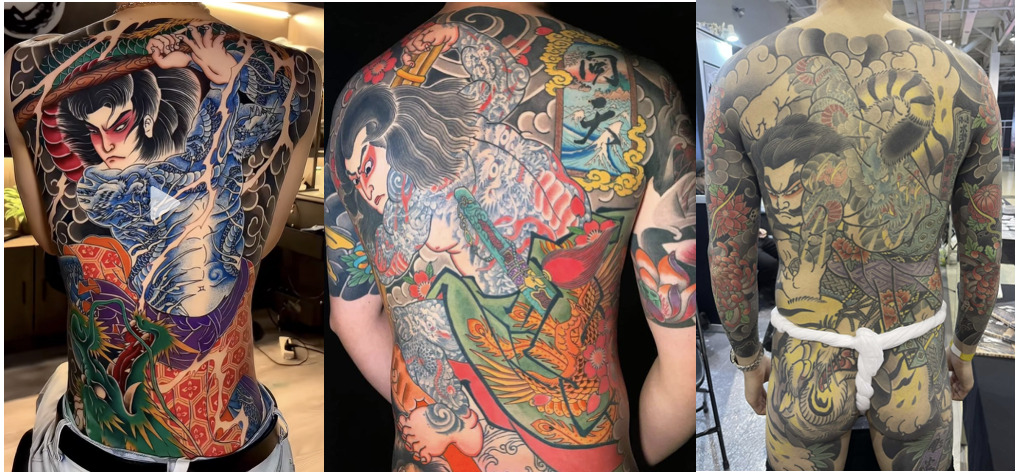
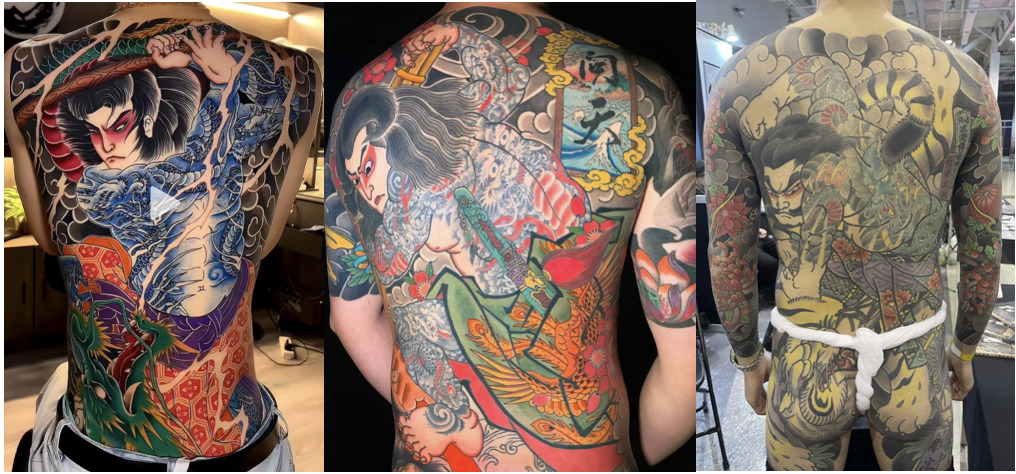
Japan, with the tradition of irezumi, developed a strongly codified bodily aesthetic influenced by ukiyo-e prints and Chinese popular narratives (Calza, 2003; Guinot Hsueh, 2025), notably the martial novel Water Margin (Luo & Shi, 1978), itself part of a broader imaginary circulating in East Asia for centuries. The figure of Shi Jin, the “blue dragon” (Luo & Shi, 1978, p. 82), known as Shi Shin in the Japanese Suikoden, exemplifies this transmission of tattoo aesthetics, associated with strength, virility, and heroism. Artists such as Utagawa Kuniyoshi played a key role in disseminating this motif in Japan (Hamada & Tanigawa, 2023), particularly at the end of the Edo period (Hamada & Tanigawa, 2023; Krutak, 2007), from the late 18th to early 19th century (Guinot Hsueh, 2025).
While the dragon’s formal characteristics, such as its sinuous body and marked scales, remain relatively stable, its meanings and social uses evolve. Initially associated in mainland China with heroes of popular narratives and certain marginal figures (Forrer, 1998), dragon tattoos were progressively adopted in Japan by broader social groups, including workers and artisans. Tattooing thus shifted from marginal or spiritual practices toward a more widely recognized aesthetic form (Hamada & Tanigawa, 2023; Pons, 2000), reflecting a transformation in its perception and symbolic associations. In the works of Utagawa Kuniyoshi, Utagawa Toyokuni III, and Toyohara Kunichika, the dragon retains its core visual features and continues to be associated with physical strength, warrior energy, and masculine heroism, while adapting to new cultural and social contexts.
This contemporary figure makes it possible to observe the persistence of the motif within a geographical and temporal context distinct from that of its original sources. Drawing on observations conducted in Taipei, at international conventions, and in tattoo studios, it shows that the stability of the dragon lies less in the strict reproduction of older models than in the continuity of structuring principles, namely lines, curves, and proportions, which enable the motif to circulate and be reconfigured. The tattooed dragon thus emerges as a privileged lens through which to consider the co-presence of tradition and invention, of formal recognizability and symbolic mobility, at the heart of contemporary tattoo practices in East Asia.
5.1. The dragon’s body as a relatively stable motif
The analysis of tattoos observed in Taipei, at international conventions, and in tattoo studios shows that the central figure of the dragon remains, even today, relatively stable from one tattoo artist to another and across different cultural contexts. As Taiwanese tattoo artist B explained: “Even when we change the style, people must immediately recognize the dragon. The body, the scales, and the head cannot disappear.” The head, the sinuous body, the scales, and the breath thus remain recognizable, making it possible to immediately identify the motif as a “dragon,” even outside its original context. This formal stability is also reflected in historical iconography, where certain proportions and features have structured the representation of the dragon for several centuries (Picerno, 2013; Xu, 2024).
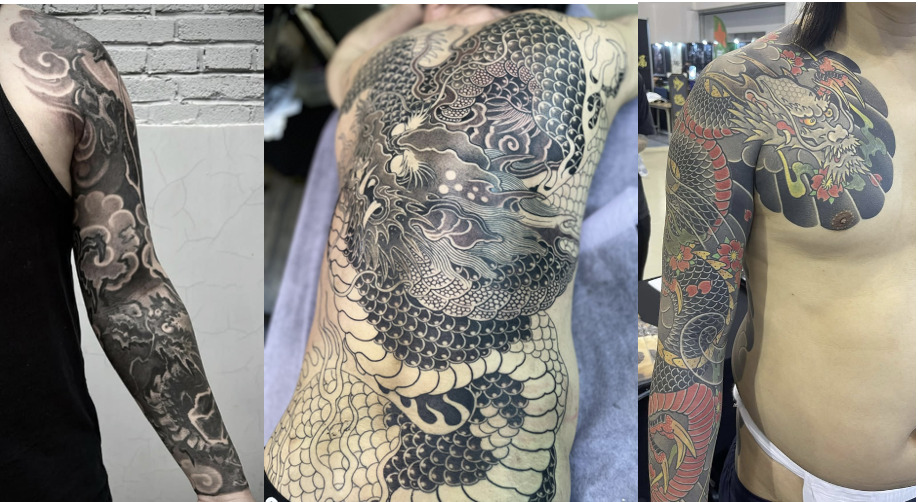
This stability functions as a shared visual framework that enables the motif to circulate across contexts. The tattooed dragon is embedded within a network of relations: the wearer’s body, the stylistic choices of the tattoo artist, the cultural context, and the circulation of imaginaries. Each instance of the dragon is thus the product of a dynamic interaction between a relatively stable formal motif and a shifting environment, whether spatial, social, or aesthetic. In other words, the stability of the central figure serves as a visual anchor, but its meaning and effects are reconfigured with each inscription on the skin, in every context of realization.
5.2. Claws as modulations of social and cosmological lines
A particularly revealing example of this interaction between stability and mobility concerns the number and structure of the claws. Historically, the five-clawed dragon was reserved for the emperor (Picerno, 2013; Xu, 2024) and became associated with imperial authority from the eleventh century under the Song dynasty (Yu, 2025). This codification in fact dates back to much earlier times: as early as the era of Emperor Taihao Fuxi, the rendering of the dragon’s claws consisted in tracing each line with elegant curves, adorning their extremities with circles, dots, and hooks, symbolizing respectively the head and the tail of the dragon, while three additional hooks were added at the ends of the lines (Fang, 2025). From the Ming dynasty, therefore from the fourteenth century onward, one observes on ceramics in particular dragon motifs “whose type of pattern (…) is the result of exchanges between mainland China and the world of West Asia” (Yu, 2025, p. 10), including representations of dragons with three claws. On trays dating from the tenth century, dragons with three claws can likewise be found, along with the curves that characterize both the surrounding environment and the extremities—the dragon’s claws themselves—whose purpose is to instill “a sense of movement in the whole” (Wu, 2025, p. 12). Here again, Ingold’s logic of flows and movement can be observed.
Each claw, and its trajectory, follows a logic of codified lines and curves, linking the individual body to a broader symbolic field. Contemporary tattoo artists take up these principles while modulating them according to context, thereby creating a dynamic continuity between tradition and invention. Thus, the claws do not alter the dragon itself, but reconfigure its relationship to the social and cosmological environment, illustrating a logic of production rather than mere adaptation. The legacy of Fuxi shows that the meaning of lines and curves is constitutive of the dragon’s identity, rather than a simple decorative detail.
In contemporary tattooing, dragons with three or four claws are observed almost systematically; this choice is not purely decorative, but reflects a relational adaptation to the wearer, both socially and cosmologically. Here again, these are not fixed models. Rather, one observes relational adjustments between the graphic form and the bearer of the image. The number of claws and the way they are drawn adapt to the status, the body, and the identity project of the tattooed individual. The higher the person’s rank or status within their group, the more claws they tend to request for their dragon. Taiwanese tattoo artist A explained: “Most customers choose three claws, but some specifically request four because they associate them with prestige and authority.” One caveat, however: tattoo artists generally default to three, or sometimes four claws for their clients, as a tacit convention within the field. The dragon thus emerges as a relational figure shaped by context rather than a fixed model. Tattoos do not simply reproduce older models, but actively participate in the contemporary creation and circulation of East Asian folklore.
6. Atmosphere and the body: lines of the invisible
If the dragon remains identifiable through relatively stable morphological features, it is equally defined by the atmospheric environment in which it appears. From early Chinese sources, the dragon is associated with clouds, rain, and meteorological transformations, situating it within a regime where visibility depends on fluctuating conditions (X. Li, 2018, p. 13). It is therefore not simply a figure represented against a background, but one that emerges through atmospheric processes.
Rather than functioning as decorative elements, clouds, mists, and vapors operate as active components of the composition. They structure the visibility of the dragon, sometimes revealing, sometimes concealing it, and participate in the construction of its presence. The motif thus exists within a dynamic interplay between appearance and disappearance, where form is inseparable from its milieu. This perspective aligns with Ingold’s (2007) approach, which understands forms not as bounded objects but as emergent within fields of forces and processes. Atmospheric elements such as clouds or smoke can therefore be understood as transient formations, not fixed entities but events that arise within continuous flows. They do not frame the dragon from the outside; rather, they participate in its very constitution.
In tattooing practices, this dynamic is particularly visible. Atmospheric motifs are not added after the figure but develop simultaneously with it, guiding the composition and adapting to the body. The dragon and its environment thus form a continuous system of lines, in which figure and milieu are co-constructed.
6.1. Local variations: Taiwan as a site of fluid continuity
Within this broader framework, the Taiwanese context offers a particularly revealing case. Atmospheric motifs in Taiwanese tattooing are characterized by rounded, continuous lines that form fluid and enveloping compositions. Taiwanese tattoo artist A explained and showed the process and the curves: “Clouds are not decoration. They connect all parts of the tattoo. You see here, this is the Taiwanese specificity: our waves and fumes are even more curvy and round. They are very different from the Chinese and the Japanese ones. It is our specificity.” Tattoo artists C and D came to the same observations. They commented respectively: “Without clouds, the dragon looks isolated.” “It is a whole which makes the piece complete. The waves, the fumes and the background along with the movement of the body allows us to identify quite easily where the tattoo artist comes from. Even though it is true nowadays more and more western artists copy it and they complicate our conventional categorizations.”
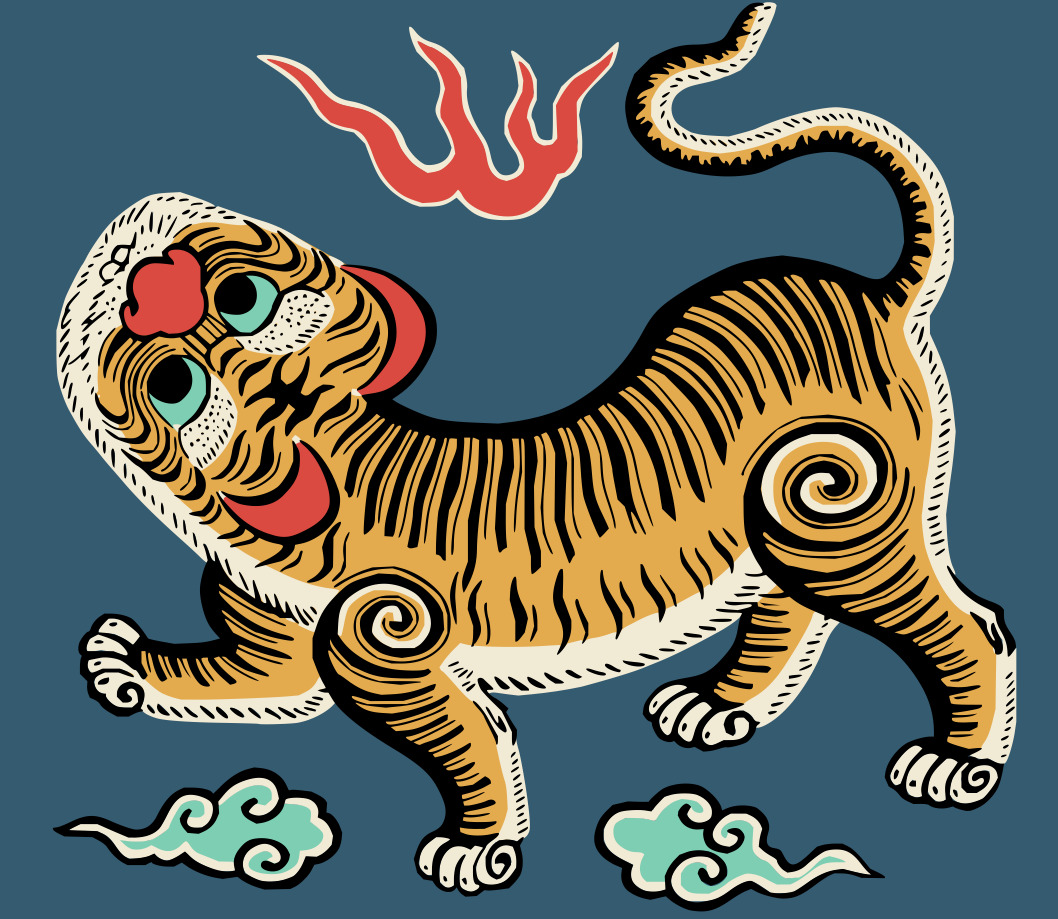
Rather than fragmenting space, these lines emphasize continuity and circulation, creating a sense of immersion in which the dragon appears as part of an ongoing movement. Historical visual sources already suggest this aesthetic orientation. For instance, representations such as the Formosan flag (1895) display curved and continuous motifs that resonate with contemporary tattoo practices.
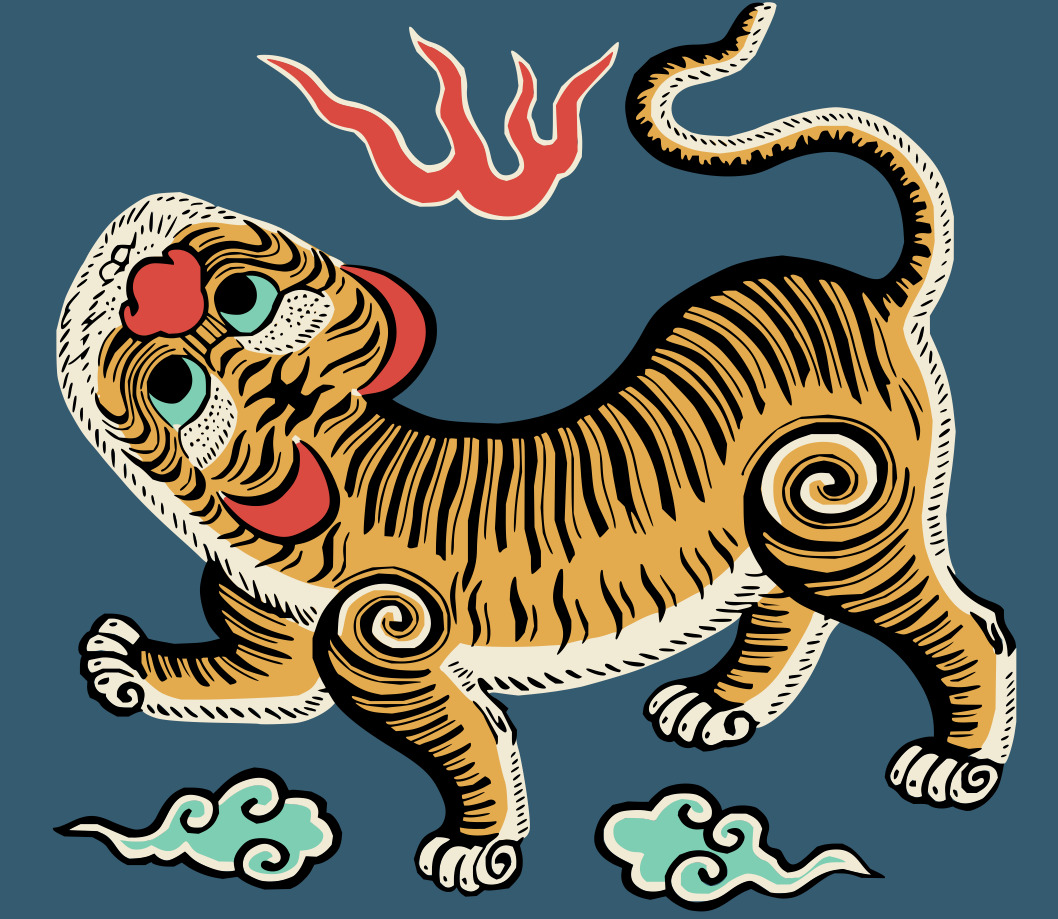
These formal continuities indicate not a direct transmission, but a shared visual logic privileging fluidity over segmentation. Ethnographic observations confirm this tendency. In many cases, clouds and atmospheric elements extend beyond the dragon itself, connecting different parts of the body and linking separate motifs into a coherent whole. This creates a compositional continuity that follows bodily movement rather than imposing rigid structures. Taiwan thus appears as a particularly dense site for observing how atmospheric motifs articulate body, gesture, and environment. It functions not as an isolated case, but as an analytical anchor from which broader regional dynamics can be examined.
6.2. Clouds, breath, and smoke: atmospheric processes
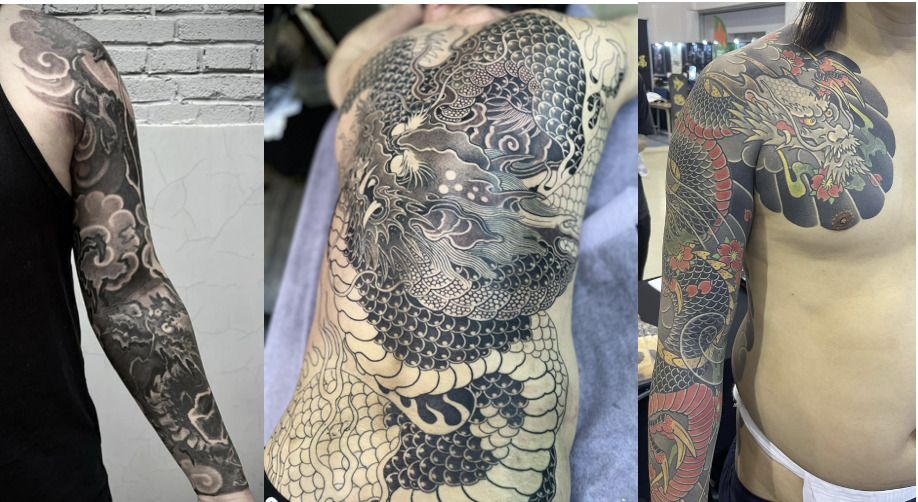
Clouds occupy a central place in the visual and symbolic construction of the dragon. Following Ingold (2007), they can be understood as processes rather than objects: temporary condensations within a field of movement. Their forms are inherently unstable, continuously transforming in relation to surrounding conditions. Atmospheric motifs vary across regions, reflecting both environmental perception and symbolic function. In Taiwan, mist and clouds appear as diffuse and enveloping lines, similar to Ingold (2011, Figure 9.2 (b), p. 120). These forms locate the invisible through a fluid, insular milieu, and in tattoo representations, they are rendered as soft curls surrounding the dragon’s body. In Japan, clouds take the form of spirals and structured wind, producing controlled swirling lines. This conveys invisibility as disciplined movement, or stylized breath, and in tattoos, these motifs appear as controlled spirals and curves. In mainland China, smoke and breath are denser, depicted through thick, directional lines that emphasize invisibility as power and the verticality of flows. In tattoos, this is expressed through thick, directional lines.
In tattooing, the inherent instability of clouds is translated into lines that suggest movement, expansion, and dispersion. Clouds are rendered not as closed shapes but as evolving forms, often characterized by spirals, curls, and open contours. These graphic choices emphasize transformation rather than fixity. A similar logic applies to motifs of breath and smoke. These elements can be interpreted as extensions of the dragon’s body, connecting internal and external spaces. Breath, in particular, materializes the passage between interior and exterior, linking the dragon’s body to the surrounding atmosphere. Smoke, fire, and vapor further reinforce this dynamic. They introduce variations in density, direction, and intensity, creating gradients that structure the composition. These elements are not secondary details; they actively participate in the construction of spatial depth and movement.
Together, clouds, breath, and smoke form a set of atmospheric processes that enable the dragon to exceed its own boundaries. The motif is no longer confined to a defined contour but expands into a broader field of relations.
6.3. The body as milieu: tattooing as a relational process
The role of the body is central in this configuration. Tattooing does not simply place an image onto a surface; it engages with a living, moving milieu. Muscles, joints, and skin curvature all influence the development of the motif, shaping both its form and its perception.
Taiwanese tattoo artists A and B both made it very clear: “The dragon changes according to the body. A shoulder is not an arm, and a back is not a chest.” “You adapt the dragon body and its movement to the customer’s body. You need to make it fit and it needs to be harmonious and aesthetic. You need to respect the traditions and the conventional rules but keep it beautiful.”
Atmospheric elements play a key role in this adaptation. By following the contours of the body, clouds and flowing lines amplify movement and create transitions between different zones. They allow the composition to unfold across the body without abrupt discontinuities, maintaining visual coherence: “It’s always the same way following the same flow. We just know how it is supposed to be done,” explains tattoo artist C. This process reflects what Ingold (2007) describes as the continuity of lines in movement. The tattoo emerges through the interaction between the gesture of the tattoo artist, the materiality of the body, and the cultural forms that guide the design. It is not the execution of a predefined image, but the result of an ongoing negotiation.
From this perspective, the dragon cannot be understood as a fixed figure applied to the skin. It is produced through a set of relations that include the body, the atmosphere, and the act of tattooing itself. Its form is always situated, contingent upon the conditions of its realization.
6.4. Circulation and transformation
Finally, the articulation between dragon, atmosphere, and body must be understood within broader processes of circulation. Motifs, techniques, and visual conventions move across regions and contexts, undergoing continuous transformation. The dragon retains identifiable features across these movements, but its expression varies according to local aesthetics, individual practices, and bodily configurations. Atmospheric elements play a crucial role in this adaptability, providing flexible structures that can be reconfigured without altering the recognizability of the motif. Tattooing thus appears as a site where continuity and transformation intersect. The dragon persists as a figure, but its form is constantly renegotiated through the interplay of lines, bodies, and environments. In this sense, the analysis of atmospheric motifs reveals more than a stylistic feature: it provides insight into the processes through which forms emerge, circulate, and take shape. The dragon is not simply represented; it is continuously produced through the dynamic relations that connect image, body, and world.
6.5. Folklore, atmosphere and embodied transmission
Beyond the regional variations outlined above, the localization of dragon tattooing across East Asia can be understood within broader processes of cultural circulation and adaptation. As motifs travel across social, historical, and geographical contexts, they are continually reshaped through local aesthetic codes, symbolic frameworks, and embodied practices. Work on transculturation highlights this dynamic well, showing that cultural forms are not simply transferred but transformed as they move between societies (Wang, 2023). Even elements such as names, from the Chinese “Djargron” to “dragon,” as well as related narratives and beliefs, are reworked in ways that reflect local contexts while still bearing traces of earlier trajectories. While this study focuses primarily on visual and material expressions rather than linguistic histories, both perspectives point to the same idea: cultural transmission is relational and constantly evolving. The atmospheric motifs examined here can thus be seen not only as mediators between visible and invisible realms, but also as indicators of ongoing processes of cultural adaptation. In this sense, dragon tattooing is less the reproduction of a fixed iconographic tradition than a situated practice of regional localization, reinterpretation of each artist, and embodied transmission on customers. Contemporary dragon tattoos belong to a folkloric continuum. In this sense, folklore is not a static repertoire of motifs, but a living process through which meanings are negotiated, transformed, and grounded in specific cultural settings.
Therefore, these findings invite a rethinking of tattooing. It appears here as a relational practice in which meaning emerges through the interaction between motifs, bodies, environments, and shared cultural imaginaries. In dragon compositions, atmospheric elements such as clouds, smoke, and breath are not decorative features but operative devices that structure movement, depth, and cosmological coherence on the skin.
Across mainland China, island Taiwan, and archipelagic Japan, atmospheric motifs do not function as neutral background elements but as distinct relational logics through which the dragon is localized and rendered intelligible. In mainland China, atmospheric effects tend to emphasize density and vertical continuity. Smoke and breath are rendered through stronger directional lines, producing a sense of concentrated force (that could be associated with qi) in which visibility is closely tied to notions of power and cosmological elevation. The dragon emerges here within a relatively compact field of flows, where atmosphere reinforces the hierarchy and energetic intensity.
In Japan, by contrast, atmospheric composition is organized through a more controlled dispersion. Clouds and wind are structured as spirals but as more segmented flows, reflecting a visual regime shaped by ukiyo-e aesthetics. It is a controlled circulation: the dragon appears through modulation and spacing rather than accumulation, producing a sense of dynamic but regulated motion.
Taiwan occupies an intermediate yet distinct position, not as a synthesis of these two logics but as a space of continuous reconfiguration. Indeed, atmospheric lines are characterized by fluid continuity and very round enveloping curves that tend to integrate figure and background into a single unfolding movement. Clouds, smoke, and breath are connective elements.
Within these three contexts, atmospheric motifs shape the way the dragon becomes perceptible and meaningful. Rather than forming fixed systems, these tacit rules emerge from specific and situated conditions which are shaped by aesthetic lineages, historical trajectories, and embodied practices. The dragon therefore moves from being a relatively stable iconographic object to a creature whose form and force are constantly reworked and rethought through localized visual operations. More broadly and following our previous logic and analysis, these differences suggest that folklore is less a repertoire of inherited motifs than a set of situated practices through which cultural forms are continually reconfigured by local (Wang, 2023) tattoo artists.
6.6. Limitations
We will try to keep in mind that this study presents several limitations. First, although the comparative analysis includes material from mainland China, Taiwan, and Japan, the interview corpus is primarily composed of tattoo artists working in Taiwan. Consequently, the interpretations proposed here should be understood as exploratory rather than exhaustive representations of East Asian tattooing practices. As previously explained, Taiwan represents a particularly fertile field at the crossroads of three cultural influences, but it cannot fully account for the diversity and depth of tattooing practices found elsewhere in East Asia with the same level of analytical granularity. Second, the analysis focuses specifically on dragon iconography and does not address other mythological figures frequently encountered in East Asian tattoo traditions. Future research could expand the corpus to include additional regional contexts and examine whether similar atmospheric processes operate in the representation of figures such as the phoenix, qilin, lion, tiger, or snake. Finally, a broader comparative corpus involving a larger number of artists and tattoo traditions would further refine our understanding of the relationships between folklore, atmosphere, and embodied visual practices, although such an expanded field is often difficult to access in practice due to its fragmented and secret nature, and the challenges of gaining sustained ethnographic entry.
7. Conclusion
Through the approach proposed by Tim Ingold, the tattooed dragon can be understood not as a fixed iconographic motif but as a graphic event produced by lines in motion. The serpentine curves of the body, spirals, and drawing trajectories extend the tattooist’s gesture and inscribe the motif within a set of flows. The dragon thus appears less as an image than as a relational process where gesture, body, and cosmology converge. Our analysis also highlights the central role of atmospheric motifs. Clouds, smoke spirals, and breath lines are no longer mere decorative fillers: they make visible the invisible environment in which the dragon moves. These graphic devices also situate the tattoos culturally, as their forms, rhythms, and dynamics vary according to mainland Chinese, Japanese, or Taiwanese visual traditions. Accordingly, the dragon tattoos studied reveal the existence of a transnational network in which styles, techniques, and imaginaries circulate between mainland China, Japan, and Taiwan. Through this network of relations, conventions, and artistic influences, the dragon functions as a mobile figure capable of integrating different visual traditions. The tattoo thus becomes a space of circulation where supernatural geographies inherited from East Asian cosmologies continue to recombine on contemporary bodies.
We have thus sought to propose an analytical shift: rather than studying folkloric tattooing solely through the motifs represented, the aim is to observe the tracing milieus that make these motifs possible. By focusing on lines, atmospheric flows, and the relations between bodies, gestures, and symbolic environments, the tattoo appears as a dynamic process of image formation rather than the mere reproduction of inherited forms. Future research could extend this approach to other East Asian mythological tattoo figures such as the phoenix and its pearl, the qilin, or the lion and its balls, in order to examine whether similar atmospheric processes or traditional accessories shape their circulation and localization across cultural contexts.